

Bangkok vs Singapore is a showdown between two titans of Southeast Asia. These are bucket-list cities to say the least; both tried-and-tested among everyone from backpackers to foodies, jet setters to culture vultures. They’ve got enthralling neighbourhoods that pulse with life, skyscrapers that really do seem to touch the sky, and culinary scenes to tickle the taste buds. What’s more, both are fantastic gateways to the region – Singapore’s Changi Airport and Bangkok’s Suvarnabhumi each serve over 60 million passengers annually.
So, where should you go? It’s a tough one, folks. I’ll vouch for that. I’ve whizzed through both megalopolises and they have unique charms all of their own. In one corner, there’s the mystique of Bangkok, where canals carve through districts of wooden chophouses, pad Thai noodles sizzle at open street stalls, and blocks of condos loom over the wet markets. In the other, you have Singapore, a city of epic efficiency, cleanliness, and sophistication, and a place to sip Singapore Slings at lunchtime before being mesmerised by the light shows of the Gardens by the Bay.
Before we get stuck in, I’ll say this: Whichever city you pick, you’re in good hands. Both in this duo can confidently count themselves in the realm of London, New York, and Tokyo, among the globe’s most iconic cities. But, just so you can be absolutely certain you’re making the right choice, this guide will delve deep, coursing through the streets of Chinatown and Yaowarat, through Little India and along the Chao Phraya River to help you pick. It’s got insights into what you can expect from each city, practical travel planning info, and more, all from someone who’s been there and done it.
All prices provided below are in USD.
Affordability: A Tale of Two Price Points
If you’re trying to keep a close eye on your Thai baht or Singaporean dollars, then you’re likely to find that one of these big cities is just an outright better pick. It’s not that one place is uber-cheap. It’s more that one has a reputation for being “a touch” pricier.
Bangkok
Bangkok is the original Southeast Asian backpacking hub. It’s been that way since the days of the great Hippie Trail in the 1950s. Later, films like The Beach solidified its rep for low-cost thrills and a boom of gap yearers duly filed in throughout the nineties and noughties (**sigh with nostalgia**). The upshot? This is a city that cut its tourism teeth on shoestring travel.
There have been changes. Beloved BKK has suffered from serious price rises in the last decade or so – some reports say food has soared something like 106% in that time! On top of that, there’s been a distinct influx of high-end travellers to the city, searching for their own slice of the old hippie aesthetic, only with sky bars, infinity pools, and condos that have floor-to-ceiling windows. British Vogue even prophesied this as the next big thing in global luxury travel.
That’s the general picture, so what about the prices? Of course, you can pay thousands a night to bed down here if you want the crème-de-la-crème. However, accommodation generally ranges from $20 hostels to $80 boutique hotels with pools, and eating out rarely dents the wallet (especially since there’s nothing better than a plate of noodles from a street vendor!). What’s more, private cars won’t do you much good here since traffic can be hell. The metro and urban boats are the best way to navigate, and they demand only pocket change.
In all, I’d estimate you’d need around $900 per week for a midrange stay in Bangkok, not including flights.
Singapore
So, it’s my first ever night in Singapore. Freshly flown in from Ho Chi Minh City, I had three nights in town and nowhere near enough dollars to get through them. At least that’s the message I got from every restaurant menu and café I breezed past: $4 for a coffee, $12 for a beer. I wasn’t used to this. Thankfully, 7/11 mashed potatoes came to the rescue and a walk around Marina Bay came gratis.
The takeaway here should be that Singapore is a wallet stress test. It’s not unusual to pay $150-plus per night for a midrange hotel, and the food – while generally excellent – isn’t quite the bargain you’ll find on the streets of the Thai capital. (Incidentally, there are pockets of Singapore with real bargains on chow – check out Little India!).
Urban transport in Singapore costs almost the same as in Bangkok, but it’s nowhere near the same hassle. You’re looking at $1 or $2 for a ride on one of the very best metro systems in Asia. Sadly, that’s probably just about the only thing with more bang for buck.
That one-week stay that’ll set you back $900 in Bangkok? Double it. I’d estimate a budget of around $1,800 per person for seven nights in this buzzing city-state at the end of the Malay Peninsula.
Verdict
When the budget’s tight, Bangkok is the better option. Simple as that. Virtually everything is going to be cheaper here. That includes the bare bones of a trip, from hotels to restaurants, but also extras like organized excursions to floating markets and whatnot. Singapore, for its part, remains one of the priciest cities in the whole of Asia, and one of the priciest in the world to boot.
Entry Requirements and Visas: Smooth Sailing for Travellers

Faffing with documents, visas, and passports is never going to be the most glamorous part of travel. That’s why I have a feeling you’re going to be pleasantly surprised by both these big cities. Singapore and Bangkok are strides ahead of other spots in the region when it comes to the ease of getting in without having to jump through too many hoops.
Bangkok
To get to Bangkok, you’ve got to get to Thailand. The good news is that Bangkok itself hosts the colossal Suvarnabhumi Airport (BKK), which is one of the largest in the region and – at least in my humble opinion – has some of the most efficient and well-staffed immigration facilities in the whole country. I’ve rarely queued for more than 10 minutes and never had an issue with my documents.
On top of that, Thai visas are now better than they’ve ever been for UK nationals. A 2024 extension to the classic visa-free access given to British citizens means it’s now possible to stay for 60 full days in the land of swinging macaques and sticky mango rice. That’s up from 30 days and involves basically zero admin – just a quick form at the airport where you need to note down the dates of your stay, the address of your first hotel, and your personal details. Stamp! Welcome to Bangkok. All arrivals will also have to complete a new Digital Arrival Card, which can be done online before you board.
Of course, the usual caveats apply: Make sure there’s enough validity on your passport at the time of travel, and never, ever overstay your visa.
Singapore
Singapore’s entry process is famously smooth – just like pretty much everything else in the rest of the city-state! Over 160 nationalities, including the UK, EU, US, Canada, Australia, and New Zealand, can visit visa-free for over 30 days, with British citizens getting the full allowance of 90 days.
The only real admin you’ll face is filling out the electronic SG Arrival Card (SGAC), which asks for your travel details and a health declaration. Do it online up to three days before you arrive. Then, you’ll breeze through the airport in Changi with barely a pause.
Simple.
Verdict
The visa policy to enter both these cities is almost identical, so there’s no way to split the difference here. If I had to pick, I’d say Singapore wins out, simply because UK citizens get 90 days visa-free entry compared to Thailand’s 60-day entry. Plus, there’s all that trademark efficiency Singapore is known for.
Transport and Connectivity: From Gridlock to Precision
This really is a tale of two cities. Bangkok and Singapore are both big, both sprawling, but could hardly be more different on the transport front. One’s a mix of tuk-tuks and traffic jams, the other’s a masterclass in clean, clockwork efficiency. No prizes for guessing which is which!
Bangkok
I remember being in a rush to catch the semifinal of the 2019 Rugby World Cup. Wales were playing South Africa and I simply had to make it to a certain Irish bar in Bangkok’s eastern Ekkamai district for kick off. Time was a-ticking, but I soon noticed my taxi slow to a snail pace. The driver turned and told me walking was probably going to be faster. So, out I got and sprinted three blocks. Wales lost. Not a great day.
What I’m getting at here is that moving around Bangkok can be a nightmare. (So too can last-minute penalties in Rugby Union!). The city is so notorious for its peak-hour traffic jams that many people simply do not use cars. There is a metro, which is cheap and clean and always on time, but it can’t get you into the heart of the city around Khaosan Road, and has limited lines more generally.
Alternative modes of transport can be fun. I still say you don’t properly know Bangkok until you’ve joined the rush-hour crowds on one of the canal barges. They cost a few baht and get crammed to bursting, but are a unique way to move from A to B. And then there are tuk-tuks. They’re mainly for tourists these days, so be sure you negotiate a price before getting in – scams are common.
Singapore
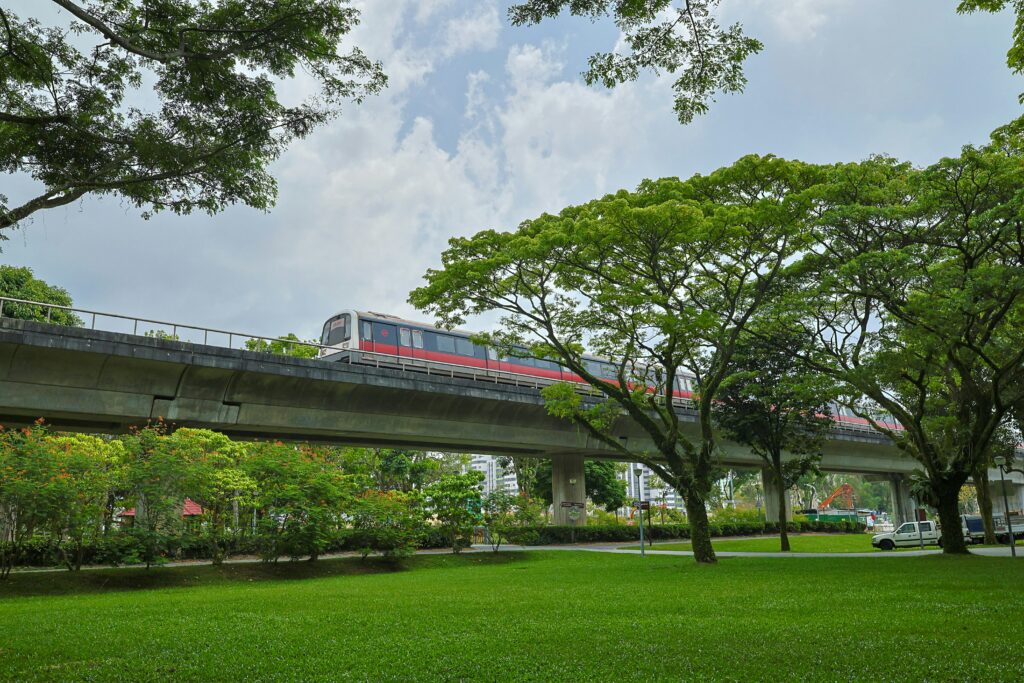
Getting around Singapore is a breeze. The MRT (metro) is spotless, punctual, and covers virtually every corner you’ll want to see – from Changi Airport to Sentosa Island (hello beaches, skyline luges, and Universal Studios!).
Fares usually fall between $1 and $2, and the tap-in, tap-out system with contactless cards or phones keeps it simple in the way London keeps things simple. Buses are just as efficient, and taxis, while pricier than in Bangkok, are metered and reliable, so there’s no haggling over the final cost before you even get going.
Honestly, I can’t think of any other city where public transport makes getting from hawker stalls to rooftop bars feel so effortless. Even walking is a joy thanks to shaded sidewalks and safe crossings – something I certainly can’t always say of Bangkok.
Verdict
I won’t lie: Moving around Bangkok is fun. It’s about whizzing on motorbike taxis and riding canal boats between skyscrapers. Fun, yes; efficient, no. Singapore, by contrast, is the gold standard of urban mobility. If you value speed, cleanliness, and stress-free journeys, Singapore wins this hands down.
Culinary Scene: Street Heritage and Haute Cuisine

Food is an area where both Bangkok and Singapore really flex their muscles. In fact, I’d argue these are two of the best eating cities on the planet. The reason? For one, it’s street food (I dream and dream of peanut-topped pad Thai noodles all the time). For the other, it’s the sheer layer cake of influences – one hawker bazaar and you can get Persian kofta, Indian thali platters, and Chinese stir fries.
Bangkok
Calling all foodies, for Bangkok is one of the undisputed kings of the street food world. Look out for bubbling pots of tom yum, skewers of moo ping pork, and mango sticky rice served from carts on just about every corner in this metropolis, invariably wedged under buzzing tangles of wires and streetlamps that don’t look like they’ve had a health and safety inspector come by for quite some time. It’s the real deal; truly authentic Asian street food.
The areas of Yaowarat Road (which is Bangkok’s Chinatown), Bang Lamphu (the main backpacker district), and Chatuchak (home to the biggest market in the whole of Asia, they say) are particular hubs for dining, street-style.
Of course, there’s more than street food. Bangkok has a growing fine-dining scene, evidenced by the impressive 30-plus Michelin-starred joints that currently make their home in the city.
Singapore
For me, dining in Singapore revolves around the institution of the hawker centre. These are massive, open-air halls where local chefs serve everything from Hainanese chicken rice to spicy laksa. And they’re cheap! What’s incredible is that there are even some stalls in hawker centres that have Michelin-star status, so you can get that hit of super-high-quality food without breaking the bank.
Beyond that, this city is a patchwork of various neighbourhoods that showcase the very best of wider Asia. It’s all down to the unique makeup of the Singapore demographic. There are people here from China, from India, from Japan, from the UK – the list goes on and on. Head down to Serangoon Road, the epicentre of Little India, and you’ll think you’ve been airdropped into Mumbai or Kochi. There, people cook up thali platters and serve them on banana leaves.
Elsewhere is a roster of Michelin-starred restaurants that push boundaries in Asian and international cuisine. You’ll find everything from Peranakan-Chinese tasting menus at Candlenut to avant-garde gastronomy at Odette, often paired with skyline views that make the experience feel extra special. It’s not cheap, mind. Expect to fork out around $150 per head for this sort of eating.
Verdict
Both of these cities are foodie paradises, but in different ways. Bangkok sports unfiltered, round-the-clock street food. Singapore has Michelin prowess but also multicultural diversity. For me, the prospect of a pad Thai overlooking the Chao Phraya River is too much to resist, so Bangkok wins here, but I can see why lovers of wider Asian cuisine and fine dining might pick Singapore instead.
Attractions and Experiences: Palaces, Pagodas, and Skyline Icons
You will not get bored in either of these cities. It really is that simple. Bangkok pulses with thousands of years of history and has the iconic sights and temple stupas to show for it. Singapore is, admittedly, much newer, much younger. But it’s established itself as one of the go-to family escapes in Asia for a reason – there are more things to keep you busy here than you can shake a Singapore Sling at.
Bangkok
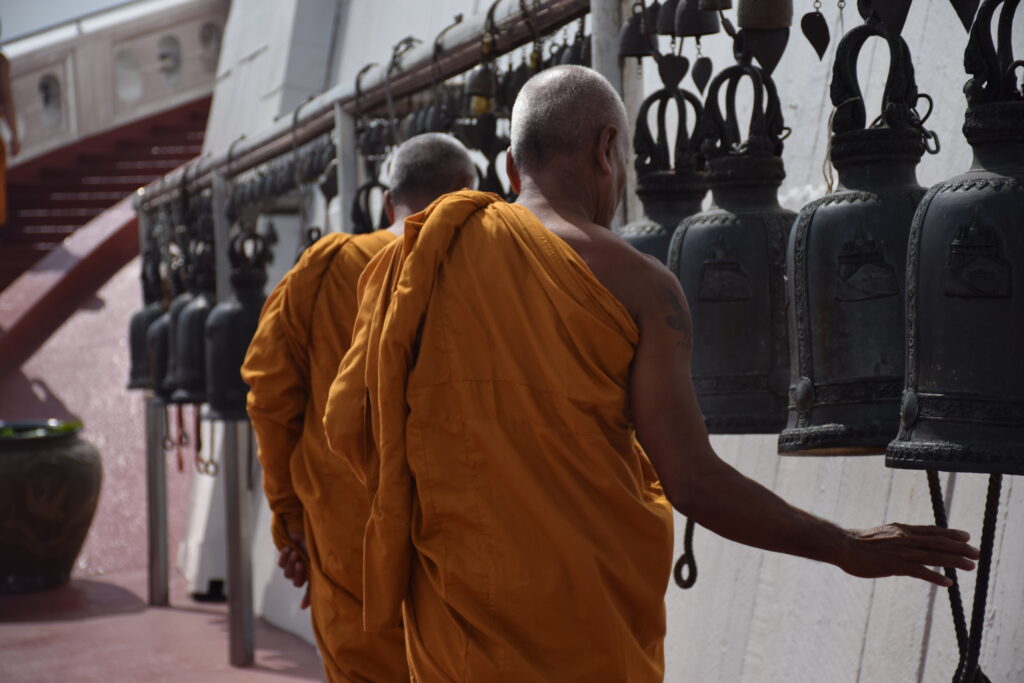
This is the very hub of Thai culture and the pinnacle of sightseeing in the Land of Smiles. The heart of Bangkok is cut through by the Chao Phraya River, which snakes past a montage of ancient temples and gold-topped palaces the likes of which you’ve never seen before.
Look one way and there’s the great central stupa of Wat Arun Ratchawararam Ratchawaramahawihan, 400 years old and still commanding the river banks. Look again and there are the gilded gables of the Grand Palace, the home of Thai royals.
Those are the headline acts. Beyond them, you’ve got floating markets in Khlong Lat Mayom and Amphawa (great day trip territory), the colossal bazaars of Chatuchak (where you can buy just about anything and shop for days and days on end – no joke), and the Jim Thompson House (an architect-built home with a unique art collection within).
That’s really just scratching the surface, too.
Singapore
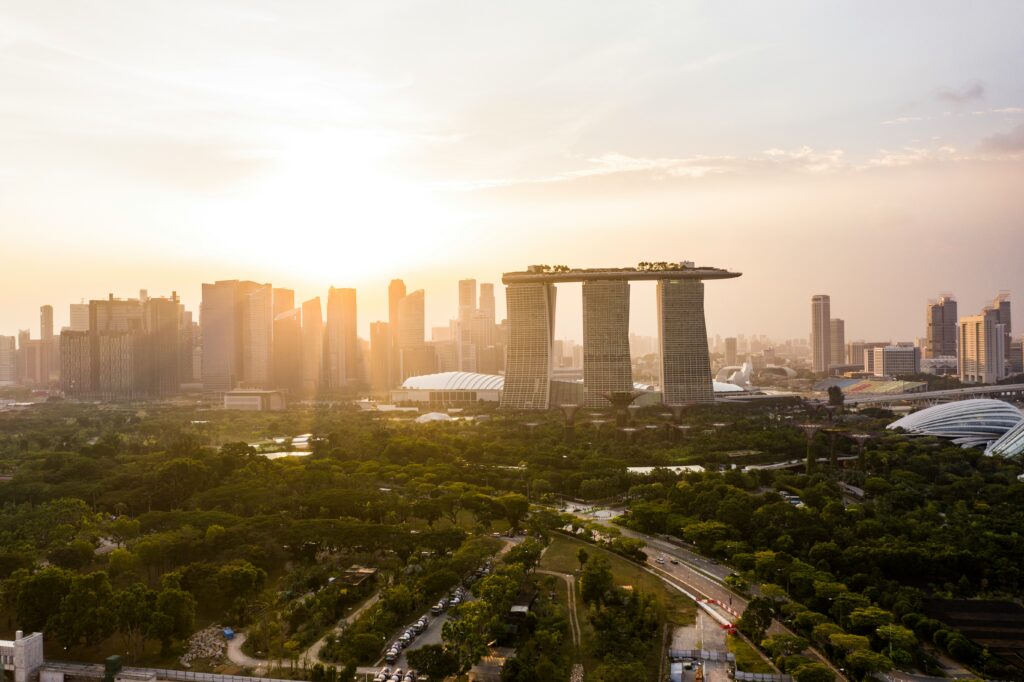
Singapore might lack the ancient history of Bangkok, but it makes up for that with its whirlwind of neon-lit modernity. The great landmarks here are the sorts of things that grace the pages of travel brochures. Surely, you’ve all seen Marina Bay Sands, that three-tower hotel with a huge platform lying across the top? The views from the upper decks are spectacular. The shopping below is legendary.
Lurking just behind the iconic sands, the curious Gardens by the Bay unfold in a medley of UFO-like structures and urban parklands. They host the largest greenhouse on the planet, collections of Southeast Asian flora, and have wondrous light shows come the evening hours. It’s just a taster of the sort of family-friendly attractions Singapore does so well.
Talking of which, Singapore also boasts a world-class zoo and one of the largest renditions of the Universal Studios brand outside of Florida. Oh yeah, and the latter even sits on Sentosa Island, which is a full theme park of a district where white-sand beaches abut cable cars and spas and hotels. And, you can’t forget the buzzing F1 Singapore, which pops up around the month of October every year.
Verdict
For big-ticket draws – theme parks, urban botanical gardens – Singapore has to win. But, if you come for culture and history, Bangkok will steal the crown. It all really depends on what you’re after from your trip. I would say that families will almost certainly prefer the Singapore way, with areas like Marina Bay and Sentosa Island offering all-in-one activity days.
Nightlife and Entertainment: Grit Meets Glamour
If you count yourself among the night owls of the world, then this section is for you. And it’s worth reading, because, honestly, there’s a big void between the after-dark energy of Bangkok and Singapore. One is refined and pricy. The other is a fizzing ball of backpacker-fuelled energy that’s gritty but cheap. Here’s a closer look…
Bangkok
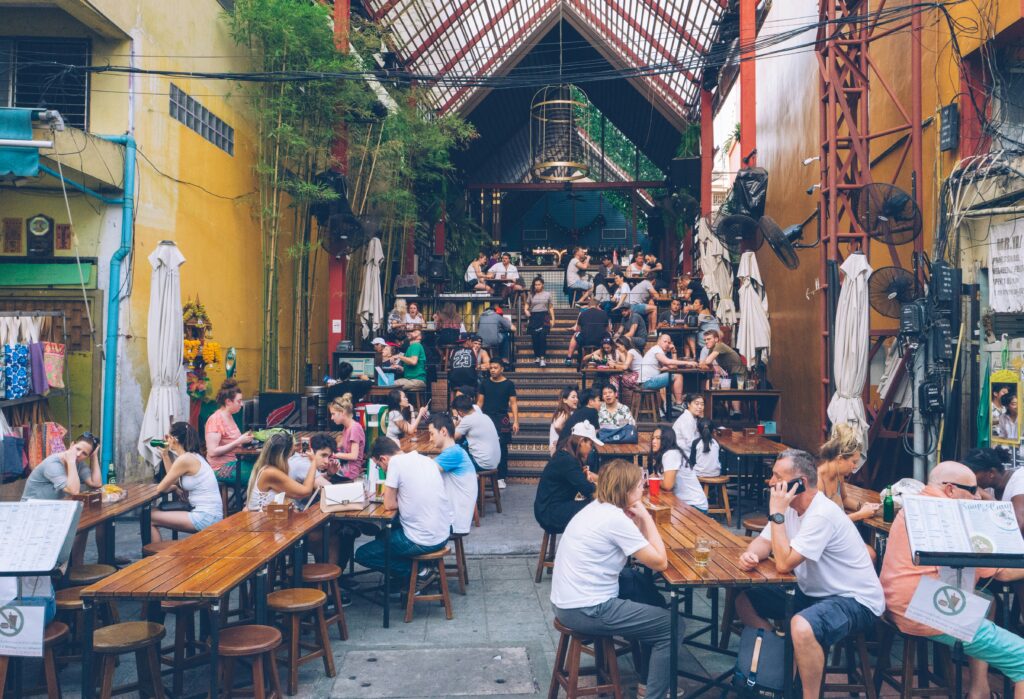
Bangkok was my introduction to nightlife in Asia, and it was an electric intro. The backpacker chaos of Khaosan Road is still seen as a sort of rite of passage for anyone wondering what partying is all about in this part of the world. It’s a haze of buckets, of neon cocktails, and live music spilling into the street.
But that’s not all that happens here once the sun dips low along the Chao Phraya River. A world of refined cocktails also awaits in the sky bars of Sukhumvit and Silom, where jazz provides the backing track to an evening of high-altitude slurping.
I’ll readily admit, too, that one of my favourite Bangkok nights was nothing fancy – just a riverside beer (Chang, of course) at a ramshackle bar watching the ferries glide past. That’s very much the MO here: Big nights out if you want them, but plenty of low-key fun too.
Singapore
The nightlife in Singapore is much more polished than in Bangkok. You don’t get go-go bars and buckets here. Nope, Clarke Quay – neon lit and buzzing with life until late at night – is probably the heart of it all. The whole strip is lined with clubs, cocktail bars, and live music venues that cater to an international crowd.
Rooftop spots are a great choice for pre-drinks. I’m talking about the likes of Skai Bar and Cé La Vi, where you’ll get dizzying views with equally dizzying bar tabs. Back on street level, Singapore also has some quirky little speakeasy-type venues that do their best impression of Chicago circa 1932.
The downside to Singapore’s nightlife will be obvious when you come to pay the check: It’s pricey.
Verdict
Bangkok simply has to win this one. The Thai capital is hailed as one of the world’s very best party cities. It hardly sleeps, has areas that pump with backpacker bars, underground jazz joints, and hidden cocktail places. You can watch international sports in classic Irish pubs, but also get cold Chang beer at ramshackle kitchens on the side of the canals. It’s fantastic.