

Planning a trip to Japan and looking for the best museums in Tokyo? Look no further.
As the world’s most populous city, you’d expect Tokyo to have a dizzying array of world-class museums. And it does – from art, architecture, anthropology and history to design, science, technology and nature, the city boasts more than 400 galleries and museums, with something for everyone. With art collections whose contents span the globe, and niche collections including Samurai, anime, parasites, paper and cup noodles, which to choose?
Our guide to the best museums in Tokyo will help you find the right ones for you, with individual entries that outline why we think they’re so special and what you can expect to find within them, as well as the amenities available in each one. We also go beyond the museum’s doors to tell you about other attractions nearby. With affordable prices and a museum pass that covers many of them, you might well find you want to do more than one!
teamLab Planets – Best for Instagrammers
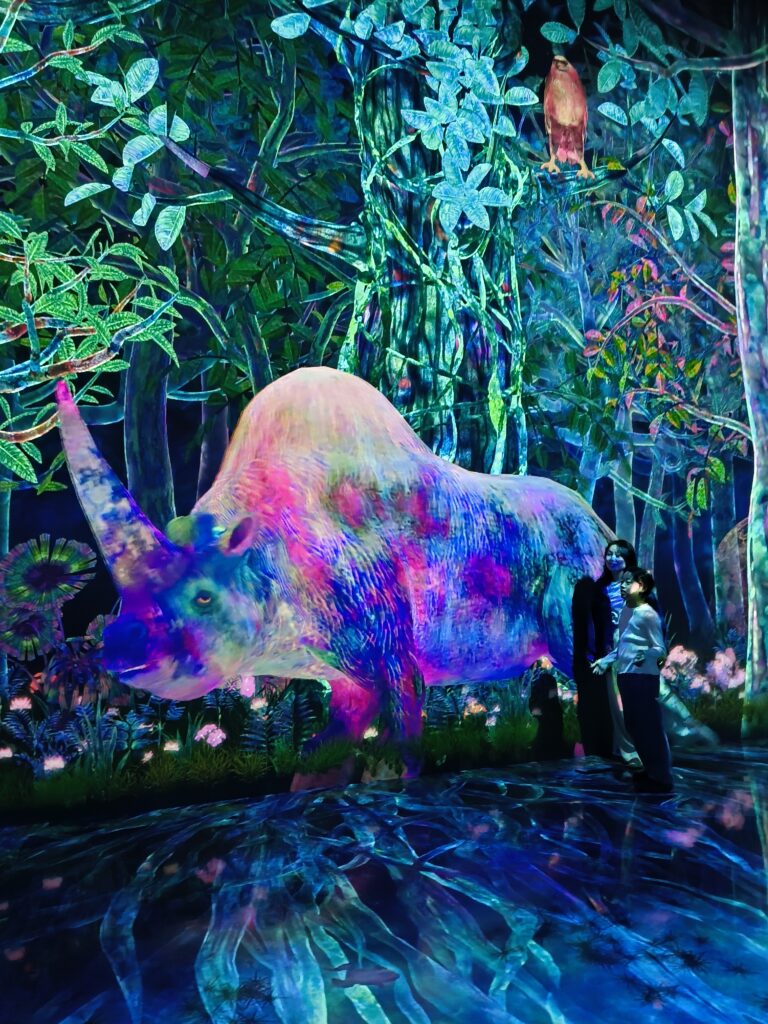
What to know: Open daily 9 am to 10 pm, Advance online tickets (¥4,000) available here.
What is it about teamLab that makes its museums so popular? With millions of visitors to its sites around the world, the international art collective’s work clearly engages audiences in a way that many other immersive and interactive ‘art’ experiences can only aspire to.
So popular is it that one of its two Tokyo spaces, teamLab Planets TOKYO, has twice won the World Travel Awards’ prize for Asia’s Leading Tourist Attraction, the last time in 2025 following a major expansion.
From a purpose-built site on Toyosu, around 30 works merge art, science, technology and the natural world in emotionally playful ways, engaging visitors through all their senses. In some, like the Sketch Factory, they can create original items to take home. In others, shoes come off to wade through responsive water works, jostle interactive spheres, jump on glowing bars, and step across stones that wobble and change colour.
It all adds up to a digital playground that’s fun but also informative, notably in works like the ‘Catching and Collecting Extinct Forest’, where visitors explore a forest of extinct animals and learn about them through interactive gameplay. Here and in other works, elements change throughout the day, making each visit unique.
More experiences enhance the visit outside. In the Glass House, visitors can drink tea and sake amid orchids that have fallen from the Floating Flower Garden artwork inside, and at the Emptiness Table, eat food from Vegan Ramen UZU.
teamLab Planets is a minute’s walk from Shin-Toyosu Station or a 10-minute walk from Toyosu Station. Its location on the man-made island offers a great chance to experience another of Tokyo’s most popular immersive attractions – albeit a very different one! Toyosu Fish Market gives early risers the chance to view its famous tuna auction, but late risers can enjoy its restaurants and shopping too.
The National Museum of Western Art – Best for Architecture Fans
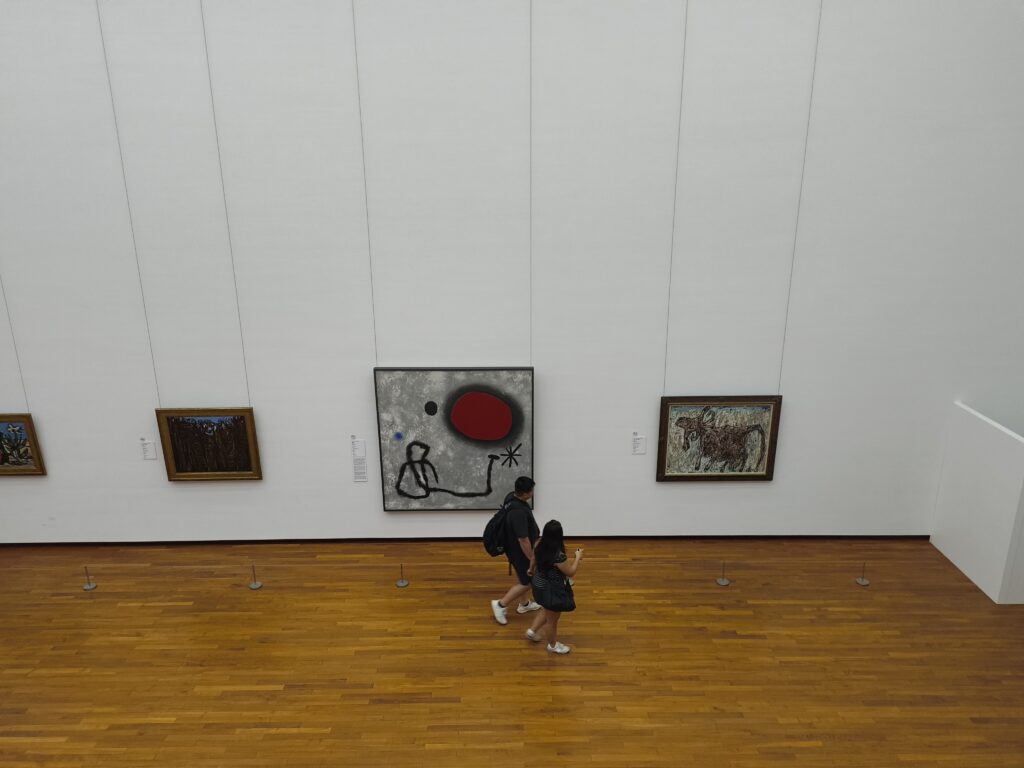
What to know: Open 9:30 am to 17:30 pm daily (closed Monday), with extended opening until 8 pm on Fri and Sat. Tickets can be bought at the door or online for ¥500.
From El Greco and Rodin to Cezanne and Gauguin, the permanent collection of artworks at the National Museum of Western Art in Ueno Park is a no-brainer for art lovers. But for architecture fans, the real star of the show is the building it’s housed in.
The museum’s main building was designed by none other than Le Corbusier in 1959 to display hundreds of works returned to Japan by the French government after World War II. With the assistance of three former Japanese apprentices – Junzo Sakakura, Kunio Maekawa and Takamasa Yoshizaka – he created a versatile space filled with a rotating selection of paintings, sculpture, decorative arts and more, spanning seven centuries of Western art drawn from the museum’s total of 6,000 pieces.
Bold, colourful canvases by Picasso, Pierre Bonnard, Fernand Léger and Chaim Soutine are given space to breathe in an airy, expansive building which is a deserved UNESCO World Heritage Site. In the New Wing from 1979 and the Special Exhibitions Wings from 1997, temporary exhibitions allow for the display of works not always on show in the main building.
Set as it is in Ueno Park, close to Ueno Station, the National Museum of Western Art also offers art lovers the first stop on a tour that could take in the National Museum and the Metropolitan Art Museum. But it could also just be a culture hit before or after a visit to the nearby Ueno Zoo, or a brief art stop en route to the family-friendly National Museum of Nature and Science, filled with hands-on exhibits, fossils of extinct species, robotics experiments and an impressive collection of stuffed animals.
Nezu Museum – Best for Garden Lovers
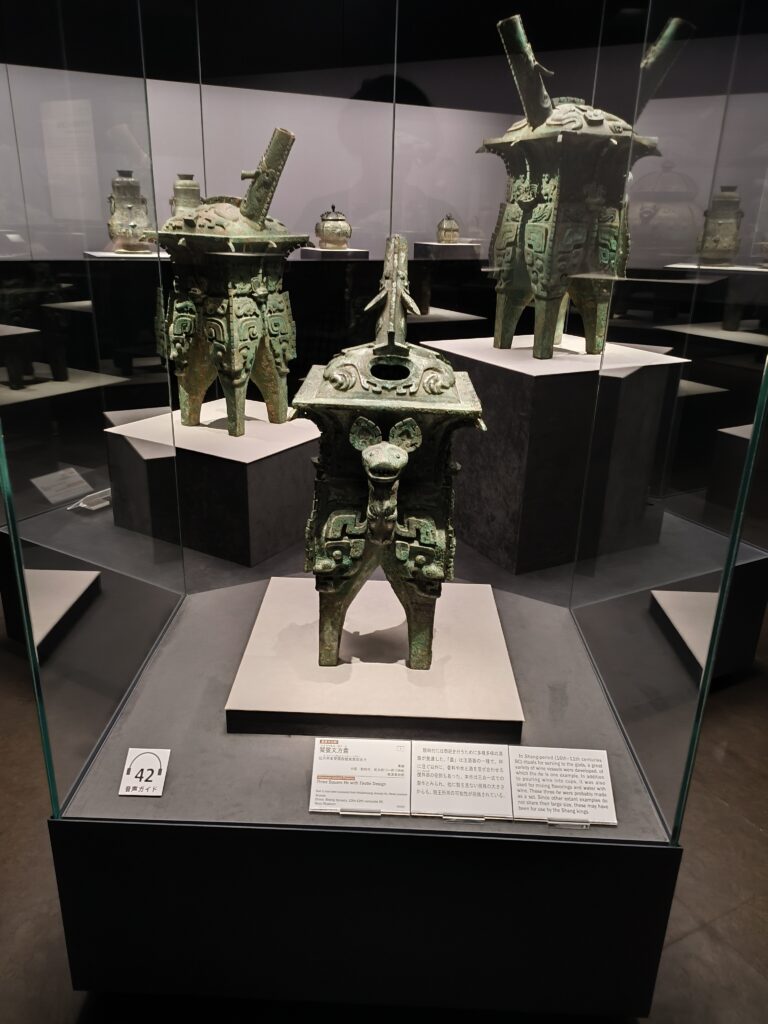
What to know: Just a 10-minute walk from Omotesando Station, the museum is open daily (closed Mondays) from 10 am to 5 pm. Tickets (¥1400) can be bought online or at the door.
Looking at a map of the Nezu Museum, what’s striking is the tiny size of the building in relation to the grounds. And what grounds they are! The 17,000 square metre space is a mix of dazzling greenery and lakes, with a bamboo grove, swathes of irises, a manmade mountain, a waterfall, small forests of maples and more, combining to create a garden that draws thousands of visitors every week.
It’s a garden that sits in serene harmony with its small museum, reached along a bamboo-lined walkway that elegantly connects the world outside with the work inside, a pre-modern Japanese and East Asian art collection amassed by businessman Nezu Kaichirō during the late 19th and early 20th centuries.
Of the approximately 7,600 works that make up the collection, a few hundred are rotated as themed exhibitions to offer a quiet, reflective experience that might have its focus on tea-related art pieces, or ancient Chinese bronzes, or calligraphy, or sculpture… Kaichirō was magpie-like in his collecting, buying not just fine art but all manner of decorative arts, including metalwork, ceramics, lacquerware, wooden and bamboo craft, textiles and armour.
On our visit, the exhibition was centred around 17th-century Yakishime Ceramics, with previous exhibitions celebrating Medieval Japanese Ink-Wash Paintings and Masterpieces of Buddhist Painting.
Each spring, Ogata Kōrin’s famed gold Irises screens, an icon of Japanese painting history, are displayed in an exhibition that perfectly connects Nezu’s collection with its gardens. To see these incredible 18th-century works and take tea in one of the garden’s many teahouses at this time of year, surrounded by the bright blues and yellows of the thousands of flowers, is an unforgettable experience.
National Museum of Modern Art (MOMAT) – Best for Meiji Period Art
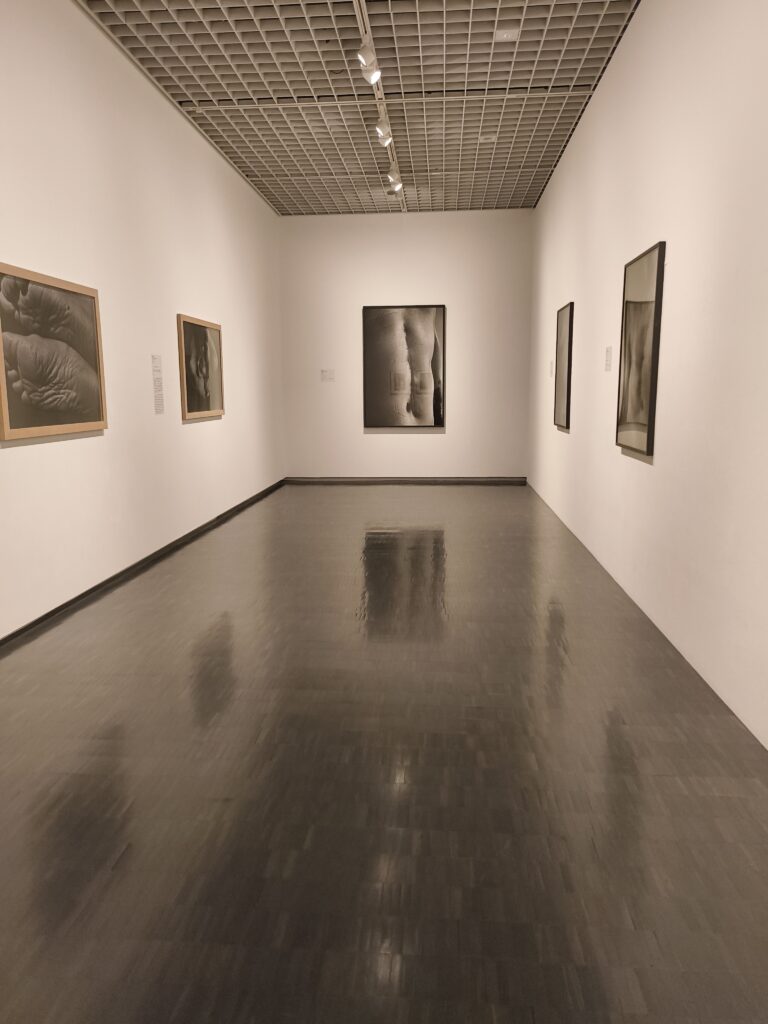
What to know: Entry is just ¥500, which drops to ¥300 after 5 pm on Fridays and Saturdays, when the museum is open until 8 pm. On other days, it’s open from 10 am to 5 pm (closed Mondays).
A few steps from Takebashi Station and the Imperial Palace, the National Museum of Modern Art is a treasure trove of Japanese art from the Meiji Period (end of the 19th century) to the present day. As such, it offers a fascinating chance to see artworks from the biggest names in Eastern art, among them Kishida Ryusei, Kawai Gyokudō, Yoruzo Tetsugoro and Ota Chou.
Contemporary Japanese artists can also be found here, with the likes of Yayoi Kusama and Yoshitomo Nara displayed alongside influential Western painters, including Henri Rousseau, Cézanne and Paul Klee. It’s a 13,000-strong collection, but only around 200 artworks are exhibited at any one time.
Throughout the four-storey space, extended captions explore the links between western and eastern art, particularly pieces like Kishida Ryusei’s Road Cut through a Hill, 1915, in which the painter began to escape the “influence of classical” Western paintings to create a work regarded as one of the foremost of the Taisho period (1912-26).
The 4th floor’s ‘Room with a View’ offers views of the Imperial Palace gardens and Kitanomaru Park, and it’s worth stopping for lunch at the highly regarded French restaurant L’Art et Mikuni, overseen by chef Mikuni Kiyomi, while the museum shop is filled with lovely omiyage (traditional gifts) to take home.
The museum holds regular English guided museum tours, Let’s Talk Art!, as well as temporary themed exhibitions, and an annual Spring Festival featuring Nihon-ga (Japanese-style) paintings themed around Japan’s seasonal features and natural landscapes, such as Kawai Gyokudo’s Parting Spring.
If this stunning work leaves you wanting more of Gyokudo’s delicately lyrical paintings of Japan’s natural world, the Yamatane Museum of Art has 71 works by the painter, as part of its fantastic collection of Nihon-ga.
✈️ Jetsetter Tip: Looking to get out of the city to explore some of Japan’s hidden gems? Make sure to check out our guide to the best day trips from Tokyo!
Tokyo National Museum – Best for Completists

What to know: Open 9:30 am to 5 pm daily (8 pm on Sunday if the following Monday is a holiday), with tickets (¥1000) available online here.
Set across six buildings, the Tokyo National Museum is an exhaustive overview of the art and archaeological history of Asia, in particular Japan, with a 120,000-strong collection drawn from across the region.
While exploring such a collection might seem daunting, the ability to take breaks in the lovely grounds, where food and drinks vans offer refreshments, can turn it into a few hours of discovery that never feels boring. But if time or attention spans don’t allow for seeing the thousands of works on show at any one time (excluding temporary exhibitions, whose scope and scale can be museum-sized in their own right), here’s a highlights list.
Definitely don’t miss the Japanese Gallery (Honkan), which shows Japanese art dating from pre-history to the 19th century. The Highlights of Japanese Art on the second floor is a fine capsule collection.
Heiseikan, where the museum’s temporary exhibitions are usually held, houses the museum’s archaeology collection, including wondrous haniwa (earthenware figures).
The Asian Gallery (Toyokan) features art and artifacts from China, Korea, Southeast Asia, Central Asia, India, and Egypt.
The Gallery of Horyuji Treasures contains more than 300 objects, mainly from the 7th-8th centuries, from the ancient Buddhist Horyu-ji Temple, and also houses a renowned restaurant in a purpose-built building by Yoshio Taniguchi.
And lastly, a 60-minute architecture walk and/or the museum garden and its lovely teahouses shouldn’t be missed.
Set in Ueno Park, there are plenty of things to do nearby, with the Shitamachi Museum, picturesquely set on the shores of Shinobazu Pond, being one of the most curious and original. Celebrating the city’s unique Shitamachi culture of craftsmen, fishermen, sailors and merchants, the diminutive museum contains a full-size replica of a lantern shop and rear tenement, the entrance of a public bath donated by its original owner, and thousands of items used in the daily lives of the residents.
Edo-Tokyo Open Air Architectural Museum – Best for Outdoor Art
What to know: The museum is a 25-minute train ride from Shinjuku, and is open from 9:30 am to 5:40 pm (4:30 pm from October to March) Tues-Sun. Entry is just ¥400 and may be purchased in person or online here (Japanese only).
Modern-day Japan has a number of fascinating open-air museums displaying full-scale architecture from the country’s varied periods, or one particular period. The Edo-Tokyo Open Air Architectural Museum (a branch of the Edo-Tokyo Museum) is a fine example of the latter, with more than 30 buildings relocated or reconstructed here to preserve a chapter of architectural history lost in fires, earthquakes, wars and city redevelopment.
The majority of the buildings date from the Meiji Period (1868-1912), but there are several other modern edifices too from the later Showa and Taisho eras, including a politician’s elegant former residence, a farmhouse, a public bathhouse, a photo studio, a hardware store, an izakaya and a police box.
It’s a lot of fun to wander around these buildings, which are set in three zones – the west zone, featuring Musashino farm homes and Yamanote houses; the centre zone, where prestigious historic buildings can be found; and the east zone, a reproduction of Edo’s old downtown areas, Yamanote, and Shitamachi.
There’s lots more to the park than just buildings too; dotted around the leafy site in West Tokyo’s Koganei Park are a bright yellow Toden tram (almost entirely phased out of the city’s transport system in the 1960s), the upper watchtower from Ueno Fire Station, prehistoric tomb sites and a 1968 Bonnet bus.
At the museum shop, you can pick up its mascot character, Edomaru, created by Ghibli Studios’ director Hayao Miyazaki, while the Kura restaurant and retro-style café complete the appeal of this lovely park. Come in spring to see the 1,400 sakura trees in full glorious blossom, or at any time of year to enjoy some of Tokyo’s best children’s playground facilities, including an artificial turf sledding hill.
Ghibli Museum – Best for Children (and the Young at Heart)
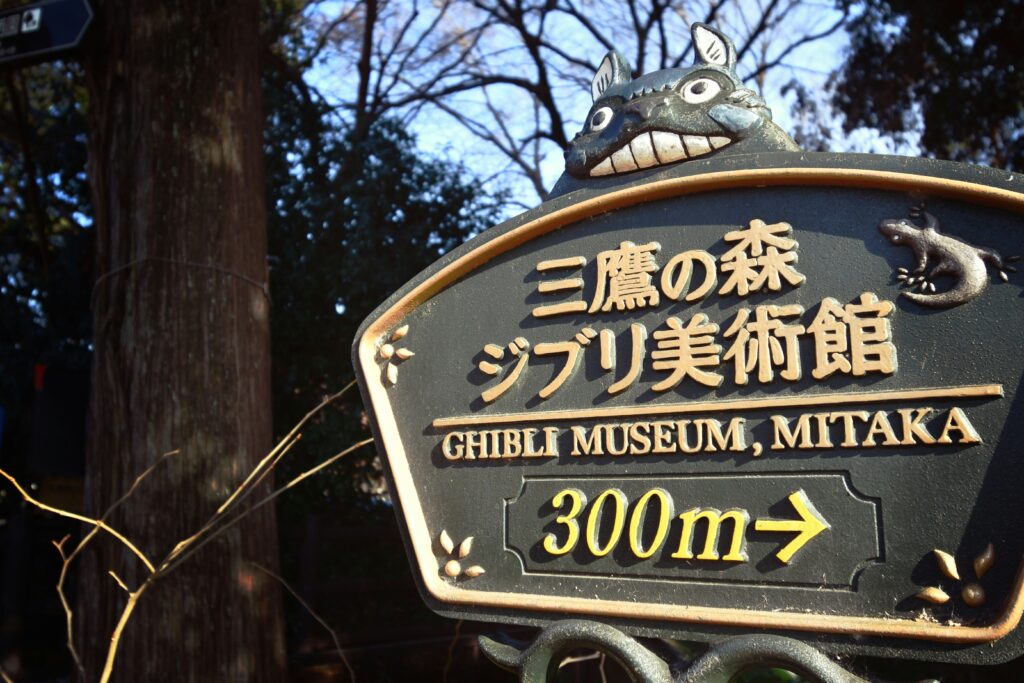
What to know: The museum is open from 10 am to 6 pm daily and is a 15-minute walk from JR Mitaka Station (20 minutes from JR Shinjuku Station).
From its brightly coloured buildings popping out of an avenue of tall trees in Mitaka’s Inokashira Park to the world of wonders that lie inside them, the Ghibli Museum’s appeal to fans of the animation studio’s films is assured, but it’s also a delight for anyone interested in animation and imagination.
That’s because its long list of founding principles, as outlined by Studio Ghibli founder and principal director Hayao Miyazaki, has resulted in a space ‘suffused with ideas and new challenges’ and displays that are ‘not only for the benefit of people who are already fans of Studio Ghibli.’
Still, those fans will be thrilled by the five-metre-tall robot soldier from Castle in the Sky gazing down at them from the rooftop garden, and the familiar friend greeting them as they arrive – a giant-sized Totoro.
Thoughtful touches aimed at creating an experience suffused in wonder and delight can be found at every turn and in every interaction; tickets are made of 35mm film strips from Ghibli films, toilets look like they’ve come straight out of Spirited Away, there’s a giant soft Cat Bus from My Neighbor Totoro for children to play on, and in the whimsical Saturn Theater, visitors get to watch a museum-exclusive short animated feature from Ghibli.
It all adds up to an immersive experience that is as enchanting as you’d expect. What you might not expect are the reasonable prices, not just for entry tickets but also souvenirs from Mamma Aiuto (named after the sky pirates in Porco Rosso), and food and drink at the Straw Hat Cafe.
Getting tickets to enter this magical museum involves its own bit of magic – or at least luck. Tickets become available at 10 am (JST) on the 10th of each month for the subsequent month – and they go fast. If you do get a ticket, end your visit with a ride on the lovely park’s pond in a swan boat.
National Museum of Emerging Science and Innovation (Miraikan) – Best for Curious Minds
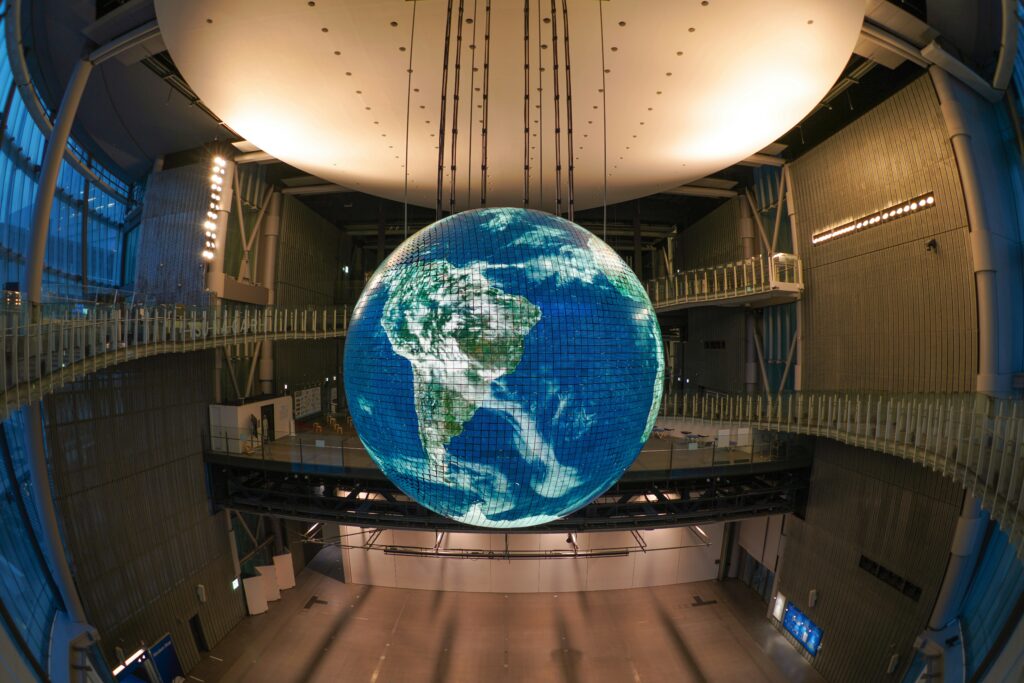
What to know: Miraikan is open daily from 10 am to 5 pm (closed Tuesdays); buy tickets (¥630) online here.
Odaiba’s Miraikan is a must for people who like lots of hands-on interaction in an absorbing museum whose exhibits about environmental issues, robots, information technology, biology and space exploration engage in imaginative ways with universal appeal.
It achieves this through three permanent exhibition spaces – Explore the Frontiers, Create your Future and Discover your Earth – covering space exploration, possible future worlds and how humans should move into our future.
In Explore the Frontiers, the chance to enter an International Space Station or experience the workings and functions of the brain through interaction is great fun.
Hello Robots!, located in the Create Your Future zone, allows visitors to imagine what it might be like to live alongside artificial intelligence in the future, through interacting with a variety of robots.
And in the Discover your Earth zone, visitors can experience what astronauts see in the awe-inspiring Feel the Earth Geo-Cosmos experience.
The areas and exhibits are distinct enough from each other to deliver engaging but widely differing experiences, so that it’s impossible to get bored.
Miraikan’s location on the manmade island of Odaiba ensures lots of other things to do and see. Buildings like the Fuji TV Building, Telecom Center and Tokyo Big Sight look like they’re straight out of a future-set sci-fi movie. The ever-popular Decks Tokyo Beach offers shopping, dining and leisure options.
And the charming Small Worlds Tokyo is a miniature theme park with a space centre, global village and airport. Even the journey to the island is fun, particularly if you ride the Yurikamome elevated train line, which has great views of the Rainbow Bridge and waterfront.