

There truly is no place like Ubud. Bali’s spiritual capital, this sleepy highlands locale is steeped in culture and tradition like no other place in the world – it’s in incense smoke in the air, the sacred waters flowing through the time-weathered temples, and in the Hindu chanting that lingers into the night.
Not only is Ubud a fascinating place to explore all on its own, but it’s also a great destination from which to base yourself for some of Bali’s best day trips, for when you want to delve into the island’s authentic self.
Ubud and its surrounding rural landscapes are all about rice terraces, welcoming traditional villages and meditation sessions rather than the DJ sets and dance floors of the South coast.
Located in the central highlands (away from most of the traffic jams), Ubud is a natural gateway to Bali’s many natural wonders, from plummeting waterfalls and brooding volcanoes to the mist-shrouded spice plantations and the idyllic beaches of the North coast. Whether you’re a curious traveller looking to find inner peace, a first timer seeking the serenity for which the island is famed, or a return visitor looking to delve deeper and uncover new, unique experiences, a day trip from Ubud is all about discovering the real Bali.
And to make life a little easier, we’ve rounded out the very best day trips from Ubud, Bali, chosen by residents, that will give travellers a chance to enjoy the best cultural and natural attractions from across this fascinating island.
Mount Batur and Kintamani: Volcano Views and Highland Escapes
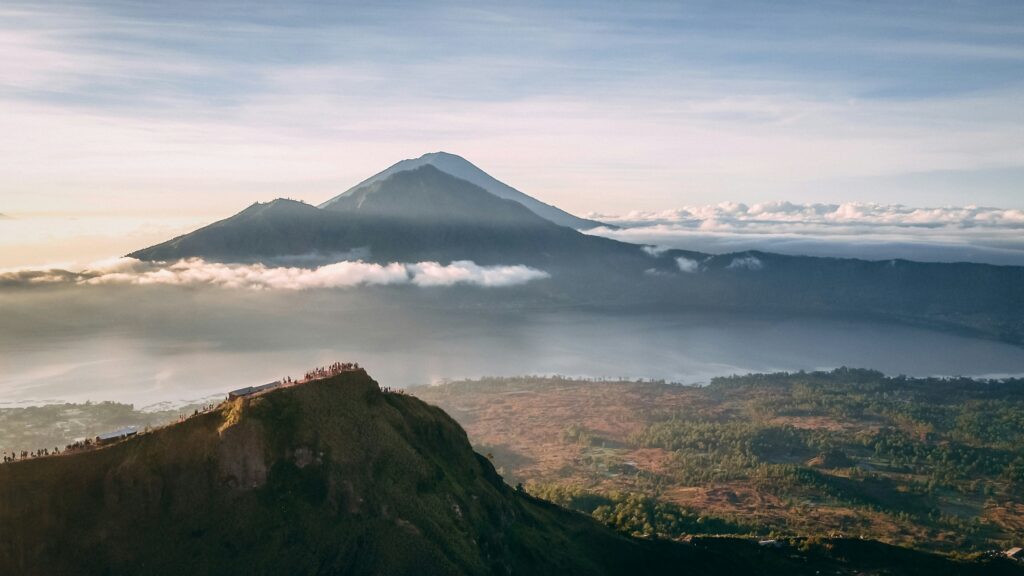
The closest thing Bali has to an Alpine playground, lush, fertile (and often chilly) Kintamani, is the island’s fruit bowl and gateway to the iconic Mount Batur, an active volcano.
One of my favourite day trips (if only to escape the heat of the coast), Kintamani is a tranquil and beautiful town famed for its coffee production, traditional culture and of course, its iconic peak.
Mount Batur Sunrise Hike
One of the most popular day trips in Bali, a dawn climb to the summit of Mount Batur is an unforgettable experience. Located 90 minutes from Ubud, this sacred, UNESCO-recognised peak is 1,717 metres high and last erupted in 2000.
Located at the centre of a double caldera and with an expansive crater lake at its base, Mount Batur is considered the dwelling place of the gods so to make the 3-4 hour climb you’ll need a local guide (there are several companies to choose from) and leave your accommodation around 3 am to make the summit by dawn.
However, once you do, you’ll be rewarded with spectacular views across to Mount Agung and even Mount Rinjani on Lombok. Don’t forget to take appropriate footwear, sunscreen and a jacket for those chilly mornings.
Crater Activities
If climbing isn’t your thing or if you still have energy once you’ve made it to the summit and back, there are plenty of activities on offer in Mount Batur’s double caldera. You can take a Mount Batur Jeep Tour, which descends the steep trail from the crater’s edge into the lava fields.
While these tours also leave well before sunrise, they offer a chance to explore the peak without the strenuous hike and along the way you’ll enjoy some exciting off-roading across the lava and black sand landscape and learn about past eruptions and the spiritual role the mountain plays in Bali’s culture (the Balinese believe Mount Batur and Mount Agung on the east coast are the dwelling place of the Gods).
Bring your appetite as your guide will stop to cook eggs in one of the crater’s many natural hot springs.
You can also take two or four wheels on enduro motorbike and ATV tours of the lava fields or hike the lower reaches of the mountains to see lava formations and ancient temples.
Crater-Edge Cafés and Breakfast Views
Talking of food, Kintamani has also made a name for itself with its contemporary culinary scene and its stunning cafes and restaurants, many of which offer mesmerising views across the caldera to the volcano from high up on the crater rim.
Even if you’re not a climber, you’ll want to make the day trip up to one of these IG-ready spots (I personally love Paperhills as its part cafe part pool club) for a great breakfast laced with local fruits and vegetables, as well as the chance to try locally produced Kintamani coffee, which is rich and earthy thanks to the region’s volcanic soil.
Toya Bungkah Hot Springs
Once you’ve finished your hike (or even if you haven’t, we won’t tell), you’ll want to soothe those aching muscles in a natural hot spring. Toya Bungkah Hot Springs is a popular spot with locals and travellers alike.
Fed by mineral-rich water heated by the lava beneath Mount Batur, the sulfur-infused springs, a 90-minute drive from Ubud, have long been revered for their healing attributes, which include relieving joint pain and skin conditions.
You can opt for the rustic, simple Batur Natural Hot Springs, which offers a series of outdoor, lakeside stone pools with different temperatures, or splurge (relatively) on the Toya Devasya Natural Hot Spring and Wellness Resort (my favourite), which offers a more refined soaking experience, complete with clean, modern changing facilities, private soaking areas, a series of spa treatments, and seven communal pools ranging from warm to almost egg-boiling for the more adventurous.
Whichever venue you opt for, be sure to bring a sarong or robe to wear when you’re out of the pool and opt for more conservative swimwear, as this is still sacred ground.
Ulun Danu Batur Temple
While you’re in Kintamani, be sure to stop by Pura Ulun Danu Batur, the region’s most sacred and important temple.
Located on the edge of Lake Batur, Pura Ulun Danu Batur is one of the island’s nine directional temples and is dedicated to Dewi Danu, the goddess of water, lakes and rivers, an enormously important deity in Balinese Hinduism thanks to her role in agriculture and fertility.
Located a 90-minute drive from Ubud, the temple, which protects the island from evil spirits coming from the northern direction, was relocated after the original pura was destroyed in Mount Batur’s 1926 eruption, and consists of a main temple complex with nine courtyards and over 285 shrines and pavilions.
While visitors can explore the outer areas of the temple, including the stone gates and bale pavilions, internal spaces are reserved only for worshippers. Remember to dress appropriately, including.
Bali’s Sacred Side: Temples, Rituals and Water Blessings Near Ubud
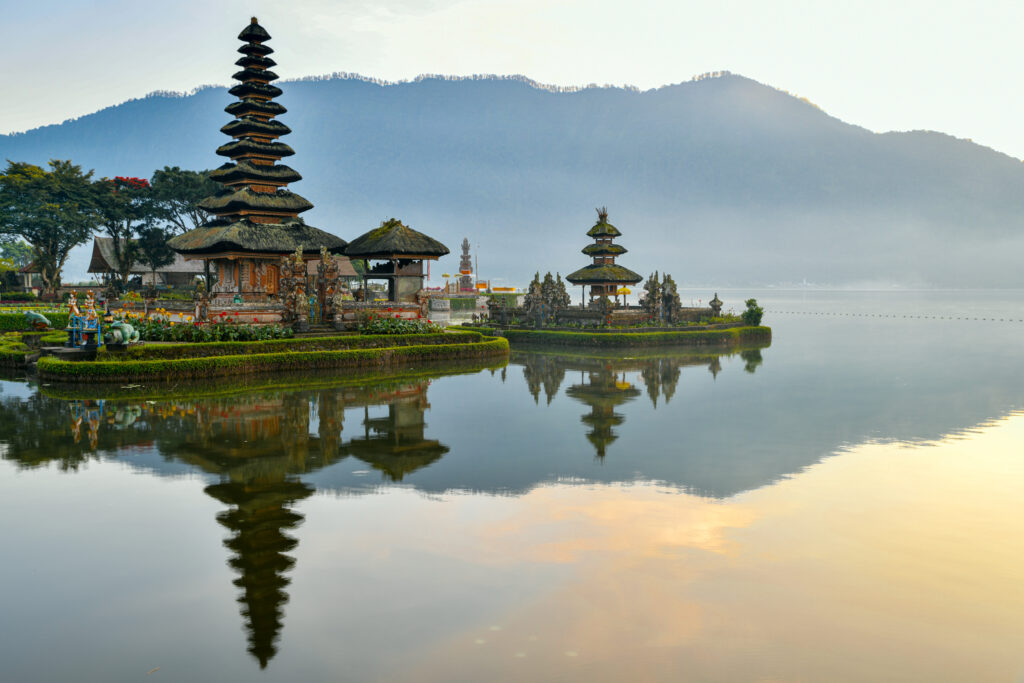
Bali’s Hindu culture has survived for 5,000 years and is infused into every facet of life on the island, so any Bali day trip from Ubud should include a little spirituality and there’s plenty on offer, from ancient temples to modern meditation studios.
Tirta Empul Water Purification
One of the most important spiritual experiences available to tourists on Bali is the water purification ceremony, or Melukat, and one of the best places to enjoy this unique experience is at Pura Tirta Empul, one of Bali’s most sacred and iconic Hindu temples (its name means “holy spring”.
Located approximately 40 minutes from Ubud, this temple, which is dedicated to Vishnu, dates back to 926 CE (yep, over 1,000 years) and continues to be an important place of pilgrimage for Balinese and spiritual experience seekers alike.
During the Melukat, you’ll dress in a traditional sarong (you can wear your swimwear underneath) and, moving from left to right, stand under each of the 30 spring-fed spouts while praying and meditating. I can tell you, it’s a tranquil yet moving experience and a Bali must.
A great alternative to Pura Tirta Empul, which can get pretty busy, especially during the full moon, is Gunung Kawi Sebatu, located in the village of Sebatu, a short drive from Pura Tirta Empul and 30 minutes from Ubud, and where you can also enjoy a guided Melukat experience.
Tanah Lot Temple: Bali’s Iconic Ocean Shrine
One of Bali’s most iconic and popular temples can be found on the southern coast at Tanah Lot, an hour and a half’s drive from Ubud (depending on the time of day, it can take longer). This sacred sea temple is located on a rocky outcrop surrounded by pounding surf breaks and is very popular as a backdrop to dramatic sunset pics.
One of Bali’s directional temples, in this case dedicated to Dewa Baruna, the Hindu sea god, the temple was built in the 16th century and is said to be protected by sacred snakes. You can walk to the base of the temple (just be careful on the rocks as they can get slippery), but only worshippers can climb to the actual temple.
Afterward, climb back to the tourist village located on the clifftops for a cold beer and one of the best sunsets you’ve ever seen.
Goa Gajah (Elephant Cave)
A favourite with history buffs and culture creatures, Goa Gajah, or the Elephant Cave, is located in Gianyar Regency, making it an ideal day trip from Ubud (which is just a 15-minute drive away).
This 9th-century Hindu-Buddhist temple complex is made up of spring-fed pools, tranquil gardens (designed for monk meditation) and an iconic cave with an ornate cave entrance.
While it’s not exactly known where it got its name from, the site, which was once covered by volcanic ash, is a fascinating example of Hindu temple design and includes courtyards with shrines, koi ponds, and a Ganesha statue.
You can also enjoy the water purification ceremony here, so don’t forget your swimwear or a t-shirt if you don’t mind getting wet.
You’ll also want to arrive early, as, in my experience, it can get super busy by noon.
Lempuyang Temple (Gates of Heaven)
Another of the most iconic (and photogenic) temples of Bali, Lempuyang Temple is accessed via 1,700 steps (hence the name, Gates of Heaven) and is located in the island’s east, near Mount Agung.
Another of Bali’s important directional temples, Lempuyang, is a three-hour drive from Ubud, making it one of the most popular Bali day trips.
The actual split gateway – Candi Bentar or the Gates of Heaven – is located at Pura Penataran Agung, the lowest of seven temples on the mountain, and is famed for its views of Mount Agung, which can be caught in a “mirror” effect by your guide. Leave a couple of hours for the climb and a chance to explore the lowest temple and expect crowds, especially at the gates, as it’s a very popular spot for Instagram posts.
Also, look out for cheeky monkeys that know you can’t live without your phone and will steal it to sell back to you if you let them.
Rice Terraces and Rural Bali: Trekking, Swings, and Scenic Escapes from Ubud

Exploring the rice terraces of Bali is a chance to step back in time to when terraces covered much of the island, nourishing its people for centuries.
Tegalalang Rice Terraces and Jungle Swings
To get a sense of what central Bali would have looked like, head to the UNESCO-protected
Tegalalang Rice Terraces are one of Bali’s most iconic and picturesque landscapes.
Located a short drive from central Ubud, and a popular spot on the way to Lake Beratan or the north Bali coast, these lush, terraced fields are fed by Bali’s traditional irrigation system, known as subak.
You’ll pay a small entrance fee on the main road in, and then you’re free to hike through the fields, take photos of the undulating emerald green terraces, pause for a turn on the Instagrammable swings and nests set up by the local community, and then grab a coffee in one of the cool little cafes in the nearby villages.
I love the Waterfall Warung, which is a short drive from the fields and features bamboo construction and jungle views.
Sidemen Valley Trekking
Another great way to delve into Bali’s natural landscapes is with a hike through the Sidemen Valley, which is a 90-minute drive northeast from Ubud.
The valley is famed for its rustic beauty, rice terraces, quaint little villages and stunning views of Mount Agung and offers a quieter, less visited alternative to some of the well-beaten tourist paths.
Part of Bali’s UNESCO-listed subak irrigation system, there are a series of hiking trails available ranging from 2-7 hours and easy to challenging skill levels. All roam through verdant jungles, forests and plantations – think of it like a time machine that whisks you back to the 9th century when the subak system was first established.
Just be sure to bring water and check the weather for rain before you venture out.
Mupu Rice Terraces: A Local Alternative
Another popular spot for nature lovers is the Mupu Rice Terraces, which are located in Gianyar, an easy drive from Ubud towards Mount Agung. Managed by the local community, these stunning rice terraces are located near the UNESCO-recognised Tegalalang terraces but are far less touristy.
A 30-minute drive from Ubud, this pint-sized preservation is a great spot to see traditional methods of planting, plowing and harvesting in action (if you’re lucky, you might even witness the Byukukung (field preparation) and Nyungsung (harvest blessings) ceremonies conducted by the local community.
Explore East Bali: Water Palaces, Viewpoints and Hidden Culture
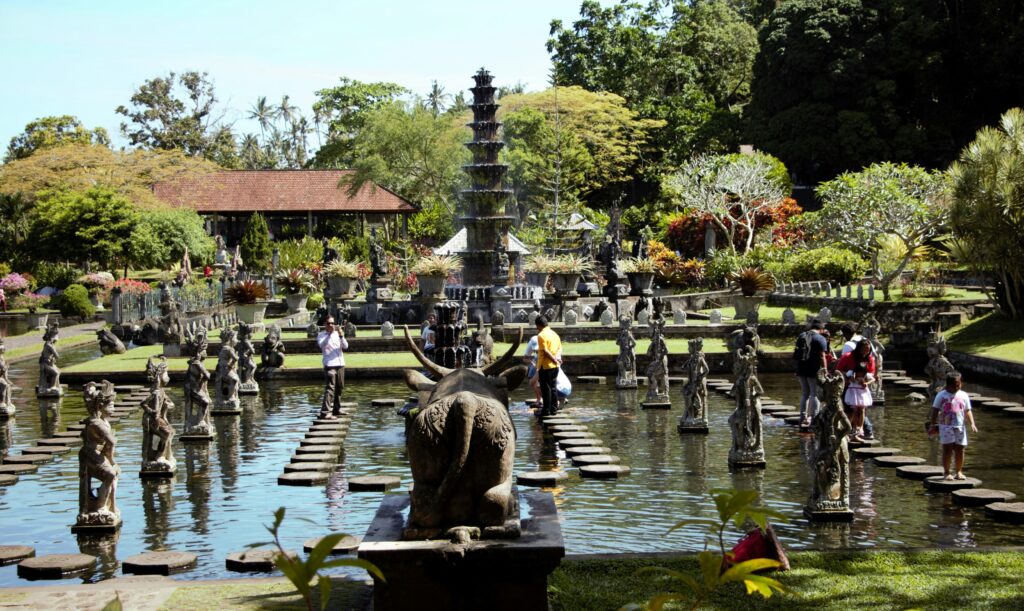
Less visited than the south coast and even the north, the east of the island, with its black sand beaches, smoke-stained temples and verdant jungles, offers a chance to visit rural Bali at its very best.
Tirta Gangga Water Palace
Probably the most popular attraction on the east coast, and an easy day trip from Ubud, the Tirta Gangga Water Palace is a hidden royal garden and temple complex in Karangasem Regency.
Here, you’ll be able to wander the ornate pools filled with greedy koi, marvel at the intricately carved European-esque fountains, fed by sacred springs, and pose for photos with a myriad of characters from Bali mythology.
While the palace may look ancient, it was only built in 1948 by the last king of Karangasem, with its name translated as the “Sacred water from the Ganges”. However, it’s still an important cultural meeting point and hosts cultural performances and ceremonies throughout the year, especially during the Purnama or full moon.
I’d recommend visiting early as the gardens offer little in the way of shelter, meaning you can avoid both the crowds and the heat.
Taman Ujung Palace
If you now have a taste for intricate water palaces, you’re in luck. Taman Ujung Palace was also created by Anak Agung Anggrah Ketut Karangasem, the last king of Karangasem, but this time in 1921.
A blend of Balinese, European and Chinese architectural styles, this “floating palace” is a remarkable complex set against a backdrop of Mount Agung, and it’s easy to visit both Taman Ujung and Tirta Gangga in one easy day trip from Ubud.
Once a royal retreat, Taman Ujung is connected to the same sacred springs but is often less crowded, offering a more serene and authentic experience.
Lahangan Sweet Viewpoint
If you’re visiting the east coast on a day trip from Ubud, you’ll want to get a great photo of towering Mount Agung, and the best place to get photos is the community-owned Lahangan Sweet Viewpoint, a relatively new and less crowded scenic viewpoint in Karangasem Regency.
The lookout offers spectacular views of 3,031-metre-high Mount Agung and the coastline that leads up towards Amed. Here, you’ll get dramatic images of the mountain, which often has a halo of cloud near its summit, without having to battle the crowds often associated with the Gates of Heaven and other popular Instagram spots.
Lontar Museum and Balinese Script Carving
For a little insight into the creation of lontar manuscripts, ancient palm-leaf documents inscribed with ancient Balinese Aksara script that hold the collective knowledge of this ancient civilisation, I’d recommend a visit to the Museum Pustaka Lontar.
Located in Dukuh Penaban Village, it’s just a 45-minute drive from Ubud (it’s a 25-minute drive from both of the water palaces, making it a great stop for any Bali day trip from Ubud).
At the museum, which is managed by local mangku or priests and which houses more than 700 volumes and thousands of lontar leaves, you’ll learn how these manuscripts, crafted from dried lontar palm leaves, are made and preserved.
Southern Bali Day Trips: Beaches, Cliffs and Culture Near Uluwatu and Nusa Dua

Even if you’re staying in Ubud and enjoy the quiet life, you might like to take a day trip to the vibrant south Bali coast, famed for its beaches, restaurants and nightlife.
Uluwatu Beach and Suluban Cave
Uluwatu’s acclaimed beaches are a great destination for a day trip from Ubud.
Located on a peninsula that juts out from the southeast of Bali, Uluwatu, a 90-minute drive from Ubud, is a surfing mecca, with beaches like Nyang Nyang and Padang Padang regularly drawing crowds of surfers and sun-worshippers.
One of the most popular spots in Uluwatu is the Suluban Beach Cave, a hidden gem that’s accessed via a cave-like hole in the natural limestone. Here, you’ll discover a white sandy beach, turquoise waters and a welcoming, chilled-out vibe.
Catch some rays before climbing back up to sample the many cool warungs and surf shack bars of Uluwatu.
Karang Boma Cliff Sunset Spot
Another great spot on the Bukit Peninsula is the Karang Boma Cliff, located in Pecatu, a 90-minute drive from Ubud.
This popular sunset spot, also known as Tanjung Mebulu, offers brilliant views across the Indian Ocean and is said to have once been a popular meditation spot for Bali’s royal family.
You’ll be able to capture those picture-perfect sunset photos and its proximity to the Uluwatu Temple, home to nightly cultural performances, makes it a great spot on any south coast itinerary.
✈️ Jetsetter Travel Tip: Looking for more inspiration for your trip to the Island of the Gods? We’ve got you covered with this ultimate 5-day Bali itinerary (for first-timers and seasoned vets).
Mengiat Beach and Devdan Show (Nusa Dua)
If you love your sea and sand, I’d recommend you head to Nusa Dua, where Mengiat Beach (known locally as Nusa Dua Beach) is one of the island’s best strips of coastal bliss.
There are many resorts along the coast, each of which has a dedicated beach space, as well as restaurants and top Bali beach clubs like Le Blu, where you can soak up the sun and be doted on by friendly staff.
After you’ve worked on your tan, leave time for the Devdan Show, a thrilling nightly performance at the nearby Bali Nusa Dua Theatre that showcases traditional dance and culture but with a modern twist. The kids will love it.
Museum Pasifika and Peninsula Island
Talking of culture, the nearby Museum Pasifika is another fascinating (and air-conditioned) cultural space that showcases Asia-Pacific art and heritage and Bali’s role in it.
Founded in 2006, this quiet little museum is often missed by the big tour groups, allowing you to immerse yourself in the region’s history across its eight pavilions and 11 galleries, which include over 600 artworks from 200 artists, including Gauguin and Adrien Le Mayeur, who captured Bali’s essence.
Nusa Islands Day Trips: What to See in Penida, Lembongan and Ceningan

You might not know this, but the province of Bali also includes three beautiful little islands off the east coast that offer travellers a laid-back and welcoming step back in time to Bali’s tourism industry infancy.
West Penida: Kelingking and Angel’s Billabong
If you like your nature a little wild, head to the west coast of Nusa Penida, the largest of the three islands, famed for its rugged scenery and unspoiled beaches.
It’s an easy one hour boat ride from Sanur on Bali to Nusa Penida, where I’d recommend hiring a scooter (be sure to bring your international licence and wear a helmet) so you can make your way down sleepy rural lanes to the west coast, where you’ll find Angel’s Billabong, a natural infinity pool located in Sakti village that’s popular with swimmers (aim for low tide when the waters are calmest).
If you love your Instagram, you might want to visit the famous Kelingking viewpoint, which looks down dramatic cliffs to what is often regarded as Indonesia’s most beautiful beach. However, expect lengthy queues and long delays.
You can book your fast boat from Nusa Penida to Sanur here.
East Penida: Diamond and Atuh Beach
The east of Nusa Penida is also beautiful, and is best known for its serene beaches and dramatic limestone cliffs.
Make for Diamond Beach in the village of Pejukutan, where you’ll discover diamond-shaped rock formations that are especially popular with early birds hoping for stunning sunrise photos.
Diamond Beach is another one of these Instagram celebrity locations, so don’t expect to have the space to yourself.
Alternatively, make for Atuh Beach, a secluded cove nearby with turquoise waters and a clutch of friendly warungs where you can fuel up for the day ahead (the stairs, carved into the cliff, are a lot easier than those at Diamond Beach).
Lembongan: Devil’s Tear and Jungutbatu
Nusa Lembongan (my personal favourite) is one of the two smaller islands in the Nusa group, and is even more laid back than Nusa Penida.
Here, apart from walking or riding your way through the little villages, you can make for the dramatic Devil’s Tear, a partially submerged sea cave where huge swells crashing in from the ocean pound and burst into clouds of spray (just be careful with those phones and cameras as the waves can get very big).
Afterwards, make for the village of Jungutbatu, which is a popular starting point for exploration of the island and is home to great little local bars and restaurants overlooking the water.
Ceningan: Yellow Bridge and Blue Lagoon
Tiny Nusa Ceningan is the third of the Nusa islands and probably the least visited (you can see most of it in an hour).
You’ll arrive by ferry and pass under the iconic yellow bridge that connects Ceningan with Lembongan (you’ll need to take a local boat from Penida) before venturing to the Blue Lagoon, a popular photography site thanks to its stunning azure waters.
There’s not much else going on here, but you can bring a picnic (or grab a local bite at one of the warungs along the route) and soak up the serenity of this little-known corner of Bali.
Bali For Thrill-Seekers: Whitewater, Cliff Jumps and Surf Lessons

While you might think of Bali as a land of sea and sun, it’s also made a name for itself with its adrenaline activities, which range from canyoning and white water rafting to surfing and cliff jumping.
Whitewater Rafting on the Ayung River
One of the most popular activities for adrenaline lovers is white water rafting on Ubud’s Ayung River.
Ayung is Bali’s longest river, at 75 km, and passes through a lush valley of rice terraces, luxury resorts and ancient temples, The river is ideal for beginners as well as families thanks to its Class II and III rapids and there are a wide range of operators who will pick you up from your accommodation and then provide you with a guide and all the gear you might need.
Be prepared for a steep climb down to the river and back up again, but that’s a small price to pay for an unforgettable memory in the Balinese heartland.
Surf Lessons in Kuta or Uluwatu
You can’t visit Bali without trying out the island’s world-famous breaks with a surf lesson. You can make your way down to Kuta and Seminyak beaches for more sedate breaks, where a host of local surf schools will teach you the basics and guide you through your first rides.
If you’re a little more daring or advanced, you might want to tackle the breaks off Uluwatu, Bali’s surf mecca, where you’ll hit the water with locals and visitors alike.
Be sure to bring plenty of sunscreen and your swimwear, but everything else will be provided, and some companies even provide hi-res images and video of your rides as mementos.
Cliff Jumping in Nusa Ceningan
Not an activity for the faint of heart, cliff jumping on Nusa Ceningan has been a popular activity for centuries and takes place around the Blue Lagoon and Mahana Point at specialised platforms operated by the local community.
At many sites, you’ll have the option to jump from four to over 13 metres, with all jumping taking place at high tide. This activity is only advisable for those who are strong swimmers, as the ocean currents can make exiting after your jump challenging.
Once you’re out, grab an ice-cold Bintang and watch others make the leap of faith.
✈️ Jetsetter Travel Tip: While there’s no ‘wrong time’ to visit Bali, some months are better than others. Learn more about how many days to spend in Bali and the best time to visit Bali (hint: there’s a dry vs wet season).
Family-Friendly Day Trips From Ubud: Waterfalls, Gardens and Waterparks

Water is an essential element to Balinese culture and identity, but it’s also a great reason to explore the island, home to both water parks and stunning waterfalls.
Waterbom Bali
Located in the heart of Kuta, a 90-minute drive from Ubud, Waterbom is the most popular and most international of Bali’s many water parks.
Located on 3.8 hectares of lush tropical gardens (which is fed through a sophisticated system of water preserving grey water filters), the park, which was established in 1993, features 26 world-class slides, including the heart-thumping Smashdown 2.0, a 27m near-vertical drop.
If you’re travelling with the little ones, Waterbom offers a Lazy River experience as well as plenty of smaller slides, water cannons and a Funtastic Kids area that the whole family will love.
Sekumpul and Tibumana Waterfalls
Waterfalls make for a great day trip from Ubud, and while there are plenty to choose from, Sekumpul and Tibumana are firm favourites.
Sekumpul is located on the island’s north, an hour’s drive from Ubud, and requires a 40-minute hike along verdant (and often steep) jungle trails, so be sure to bring the right footwear. At the end of the trail, you’ll be rewarded with falls that plunge 80 metres.
Aim for the end of the rainy season (May-June) when the waters are at their peak, and don’t forget a camera and tripod for those iconic waterfall selfies.
A nice alternative is Tibumana, which is often less crowded and which is much closer to Ubud and features a single cascading fall that’s 20 metres high and which tumbles into a serene pool that is great for a mid-afternoon dip.
Bali Botanic Gardens
A great day trip from Ubud for families, the Bali Botanic Garden was established in 1959 and features over 150 hectares of tropical plants (more than 21,000), making it the largest botanic garden in Indonesia.
Located in Bedugul, in the centre of the island, the gardens are a 90-minute drive from Ubud and are a great addition to visit the Tegallalang Rice Terraces or Lake Beratan’s Ulun Danu Beratan Temple.
Highlights of the gardens include rare orchids, a cactus greenhouse, and some great birdwatching. You can also learn about traditional Balinese medicine in the Usada medical garden.
Bali Farm House and Rumah Gemuk
One of Bali’s newest attractions, Bali Farm House, located in Buleleng (1 2.5 hour drive from Ubud), is a family-friendly agrotourism adventure that the kids will love.
Home to alpacas, ostriches, and ponies, which the little ones can help feed, Bali Farm is a great spot for a picnic and to break up the drive to the north coast.
On the way, you can also add on a visit to nearby Rumah Gemuk Bali, located in Bedugul, which serves delectable Asian cuisine amidst a breathtaking glasshouse that boasts stunning views across the lake.
✈️ Jetsetter Travel Tip: Knowing where to base yourself in Bali can make or break a trip. Here are what we consider to be the best areas to stay in Bali (for every type of traveler).
Ambitious Escapes: Overnight or Long Day Trips from Ubud

Just because you’ve travelled to Bali doesn’t mean you’re restricted to where you explore. The ambitious will find a range of destinations within a day or two’s reach.
Lombok Preview: Day or Overnight Escape
Bali’s sister island (or some might say one of its biggest competitors), Lombok, is a very quick 45-minute flight away (or a 75-minute high-speed ferry ride from Padang Bai on the east coast of Bali – making it easier from Ubud) and offers spectacular beaches, towering volcanoes and lush highlands to explore.
Make for the south coast and Kuta Beach (yes, Lombok has one too) for the island’s contemporary hotspot, home to cool restaurants and boutique resorts, or delve into the interior to climb some of the island’s peaks, including Mt Rinjani, the tallest.
✈️ Jetsetter Travel Tip: Curious what Lombok is all about? Check out our guide breaking down Bali vs Lombok, which walks through everything – from vibes to wellness retreats (and more).
Overnight in Nusa Penida or Lembongan
With a ferry ride of only an hour from Sanur (which is a 90-minute drive from Ubud), travellers can certainly explore Nusa Penida or Nusa Lembongan and Ceningan (it’s not easy to do all three) in a day.
You’ll leave from Sanur and be in either island destination in the time it takes to read this article, and from there, grab a scooter or hire a private driver to make the most of your time in paradise, with a local bite, a swim at one of the awesome beaches and sundowners before you make the final ferry home.
Munduk Highlands and Twin Lakes
Lush and serene, the Munduk Highlands are an easy day trip from Ubud and a welcome respite from the heat of the south coast.
You’ll discover lush jungle, rice terraces, tranquil lakes, beautiful temples and plenty of cheeky monkeys as you climb the mountain range, which is often covered in mist.
Make sure to visit the local spice plantations, which specialise in cinnamon and cloves; take photos of the valley far below during a coffee stop at one of the ridgeline warungs, and stop in at Bedugul’s Ulun Danu Beratan Temple on the way home.