

Singapore’s famous hawker centres emerged in the 1950s and 1960s as a way to consolidate independent street hawkers in a clean, monitored environment. Now, these bustling, affordable, open-air food centres are the lifeblood of Singaporean society. But the question of which is the best hawker centre in Singapore has yet to be definitively answered.
As much social hubs as dining spaces, hawker centres are a microcosm of the city’s rich cultural history. At every one, you’ll find dishes influenced by the island’s far-flung cultural influences: the wok-frying of China, the spices of India, the ingredients of Malaysia, and more. And, it’s this culinary melting pot, and a status as an increasingly rare third space, that has given Singapore’s hawker centres UNESCO Intangible Cultural Heritage status.
This guide will highlight five of the must-try hawker centres in Singapore, while also breaking down some of their most iconic dishes, offering tips for navigating these spaces, and sharing the appropriate etiquette (because yes, there is one, even if it’s more unspoken than official). Whether you’re a first-time visitor to the city or a long-time resident, you’ll be ready to enjoy an authentic, affordable taste of Singapore.
Maxwell Food Centre – The All-Rounder
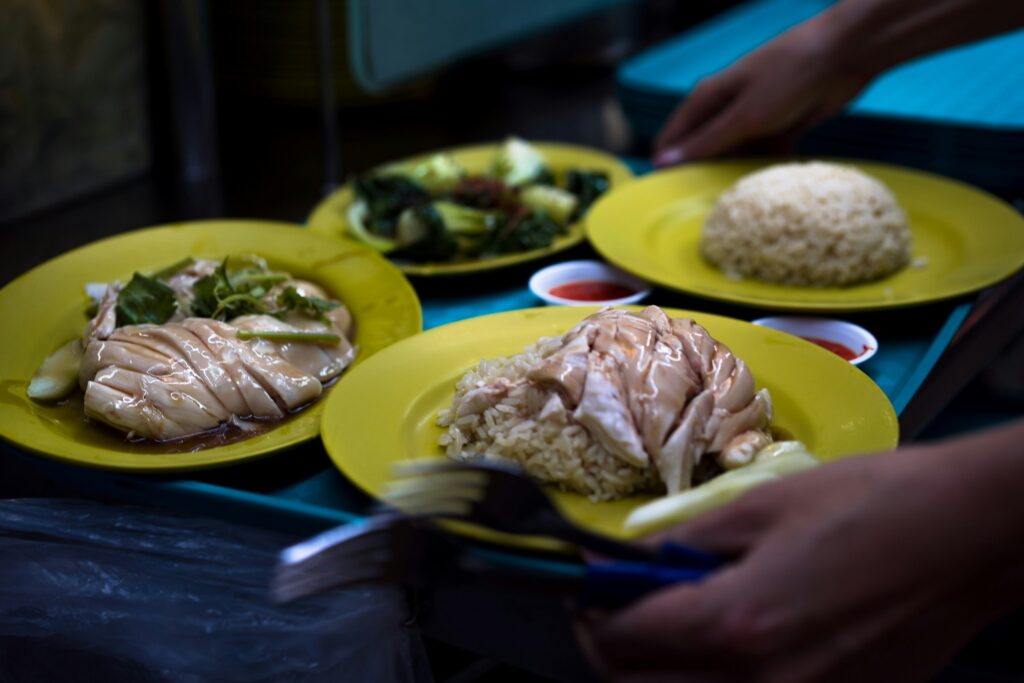
Occupying a prime position in the heart of the Lion City’s historic Chinatown district, this quintessential food centre often ranks as one of the best hawker centres in Singapore. Originally established as a traditional wet market in 1929, it’s now a bustling food spot that’s a true reflection of Singapore’s multicultural culinary scene. Within the open-air setting shielded from the weather by high ceilings, you’ll find rows of stalls from which enticing aromas of sizzling woks and rich broths fill the air.
Before making your selections, spend a few minutes wandering through the rows of stalls to familiarise yourself with what’s on offer at the more than 100 vendors. You’ll find everything from traditional Peranakan dishes at Old Nyonya and authentic Thai at Sisaket Thai Food to steamed seafood at Fish Village and a rare, heritage snack at Maxwell Fuzhou Oyster Cake. There’s even an outpost of the famous, Michelin-recognised Tian Tian Hainanese Chicken Rice.
Despite being in the city centre, meals here are still on the more affordable end of the scale, with most dishes ranging between SG$4 and SG$8—perfect for a quick, casual feed. While some vendors now accept digital payments, some only use local systems such as the PayNow QR codes—it’s best to have some cash on hand just in case. And, because it’s near the Central Business District and surrounded by many offices and businesses around the Tanjong Pagar area, Maxwell tends to get incredibly busy during the weekday lunch hours—try to avoid going between 12 pm and 2 pm, when it’s packed. You’re better off going for an early lunch around 11 am or an afternoon snack.
Still, it’s one of the most accessible food centres in Singapore, in every sense of the word. It’s on the ground floor, which means most wheelchairs and strollers can get into the space, though navigating through the tables and stalls can be a little challenging in the relatively tight space. In addition, the bigger communal tables allow for convivial group dining—though this also means it can get noisy. Finally, you can get to Maxwell Food Centre easily from the Maxwell, Tanjong Pagar, and Chinatown MRT stations.
Old Airport Road Food Centre – For Foodies and History Buffs
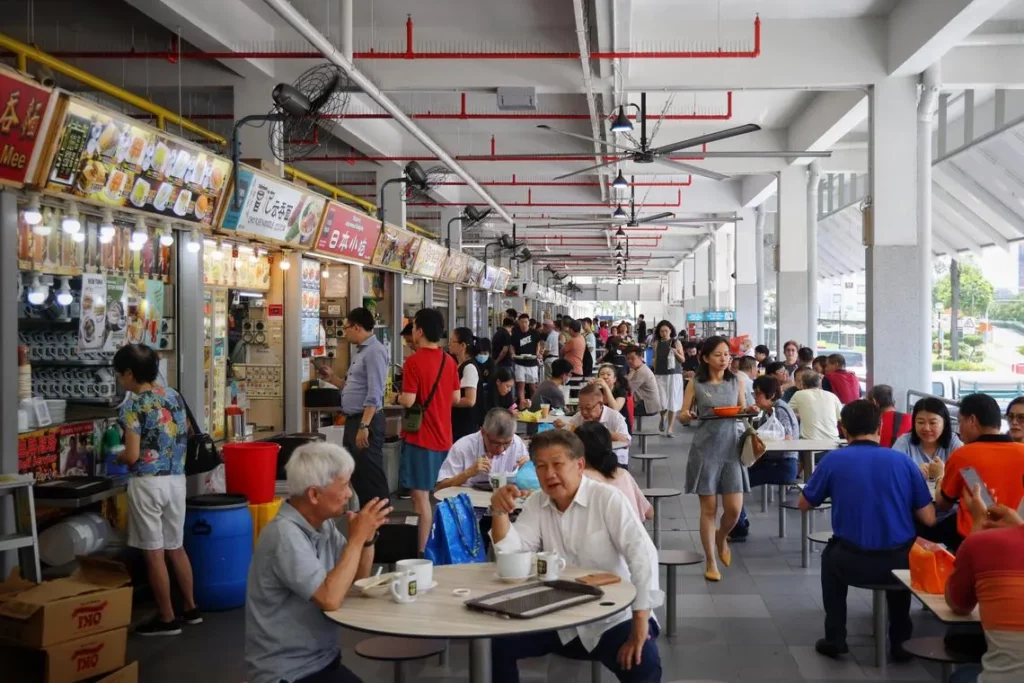
Image courtesy of Old Airport Road Food Centre’s website.
First created on the site of the former Kallang Airport runway in 1973, this iconic institution is among the best hawker centres in Singapore—and that’s only partly because of its rich heritage. Larger, older and more utilitarian-looking than your average neighbourhood food centre, this is a vibrant testament to Singapore’s diverse local culinary culture. Its off-the-beaten-path location is also a great draw for visitors who want to embed themselves a little more in local life.
What makes this one of the most compelling hawker centres in Singapore is its high concentration of legendary stalls that have been run by generations of the same family, all 168 of which serve authentic dishes. This also means competition among vendors is high, so you can expect consistently high-quality dishes—look for the stores with the longest lines for the best. Visitors can indulge in a true smorgasbord of local flavours, from Nam Sing Hokkien Mee (stir-fried prawn noodles) and classic Toa Payoh Rojak (fruit and vegetable salad in sauce) to Dong Ji Fried Kway Teow (Penang-style fried noodles) and the classic oyster omelette at Famous Old Airport Fried Oyster. Finish with a refreshing dessert from Nyonya Cendol, which has perfected the icy sweet treat.
Dishes here are generally very affordable, ranging between SG$3.50 and SG$7 each. Many vendors accept local e-payments (some also do contactless cards), but cash can be handy for visitors who don’t have access to these. The centre gets very busy during lunch (12 pm-2 pm) and dinner (6 pm-8 pm), so try to skip these peak hours, when lines will be longest. Instead, slip in early for breakfast, or perhaps a later dinner around 9 pm. There are abundant communal tables, but if it’s packed, don’t be shy about asking to share a table—it’s common practice. Families particularly love this food centre, so it can be noisy when it’s busy. But thanks to its larger size, it tends to be easy to navigate and find seats.
While it’s further out than most visitors venture, it’s not hard to get here. Simply catch the Circle Line to the Dakota MRT station—the food centre is a short walk away. There are also several bus lines that can drop you off within a five-minute walk.
Chinatown Complex Food Centre – For Authentic Chinese Street Food
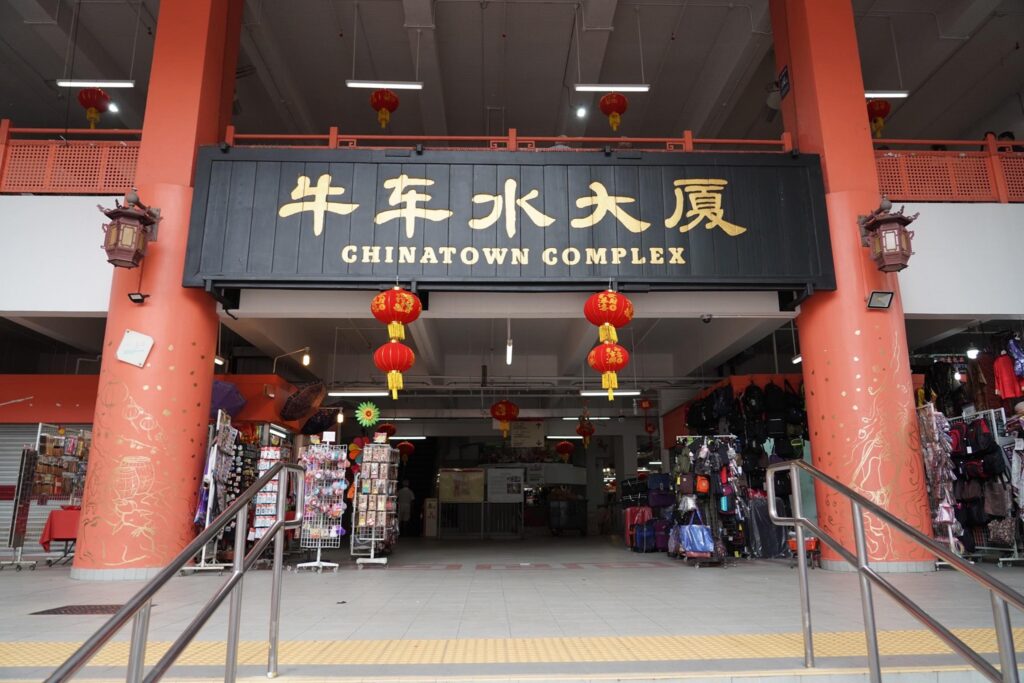
Image courtesy of Chinatown Complex Food Centre’s Facebook page.
Not far from Maxwell and located on the other side of Singapore’s historic Chinatown district, the Chinatown Complex Food Centre is a repository of local Chinese culinary heritage. It opened in 1983 to bring together the area’s many itinerant street hawkers under one roof. Now, this distinctly old-school, vibrant space is the largest hawker centre in Singapore, housing over 260 stalls across multiple zones (these are identifiable by their differently coloured tables).
This is the best hawker centre in Singapore if you want to dive into the city’s rich Chinese gastronomy. Here, you’ll find everything from claypot rice and dim sum to traditional xiao long bao and noodles. Standouts include Zhong Guo La Mian Xiao Long Bao—which offers an array of dumplings—Lian He Ben Ji Claypot, Hill Street Fried Kway Teow, Ann Chin Popiah, and Chang Le Chee Chong Fan (rice noodle rolls). Many stalls are Michelin-recognised, so expect approachable yet high-quality cooking.
As with most Singaporean hawker centres, the food here tends to be very affordable. Dishes are typically priced between SG$3 and SG$8 each, offering great value. Many stores here are cash only, simply for efficiency, so be prepared; occasionally, though, some will take local e-payments. As you can imagine, seating can be challenging during peak hours. But, even outside of these times, this is an incredibly popular spot, so you may struggle. Be open to sharing a table, and have someone in your group hold your spot while the other gets the food.
Because of its central location, getting to and around the Chinatown Complex Food Centre is easy. The Downtown and North-East lines on the MRT both go to the Chinatown station, which is right by the centre; Maxwell is about a 10-minute walk away, and there are also buses that will get you close. While the space is suitable for groups and families, it can get noisy and busy—parents, you’ll want to keep your young children close. And, because the building is older, somewhat cramped, and has a wet market in the basement, wheelchairs and strollers can be tricky to operate. Still, this is a unique, unfiltered deep-dive into one of Singapore’s major cultural heritage spots.
Tekka Centre – For Indian Fare in a Colourful Setting
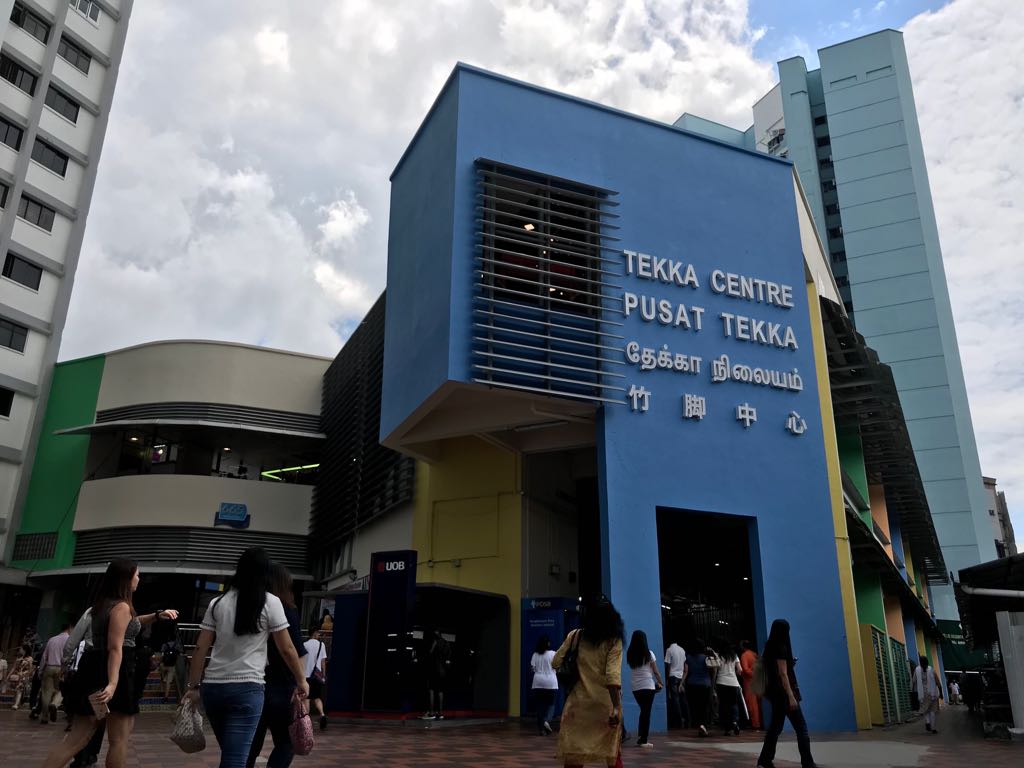
Image courtesy of the National Environment Agency of Singapore’s website.
Situated in the beating heart of Singapore’s Little India, Tekka Centre is a quintessential hawker centre infused with the rich cultural heritage of the sub-continent. In the early 1900s, this was known as Kandang Kerbau Market (loosely translated as “buffalo pens” from Malay, a reference to the slaughterhouses that once stood nearby). In 2000, it got its current moniker and now, it’s a utilitarian yet colourful hub that houses a hawker centre, wet market, and retail shops in one vibrant setting.
Expect a full-on multisensory explosion. Here, the air is rich with the scent of spices and Hindi music vies with loud conversation and the clatter of woks. Expect to see fresh ingredients for sale in the basement and everything from saris to jewellery in the upper retail stores.
The signature here is, of course, the broad diversity of Indian cuisine—though South Indian classics are the most represented. Many of the long-standing, authentic stalls here have garnered Michelin Guide attention, including Allauddin’s Biriyani, which has served the classic rice dish since 1968. Build a full Indian feast with appam (spiced pancakes) from Sri Aachi Aappakadai, roti prata from Neha Tiffin Centre, and dosa from Sri Tiffan. You’ll also find Bib Gourmand-winning north Indian and Pakistani dishes at Delhi Lahori, as well as other classic hawker dishes like mee siam and duck rice.
As with most hawker centres, prices are reasonable, so expect to pay between SG$4 and SG$8. Keep cash handy—it’s king here, though, some of the bigger stalls will allow digital payments. Crowds can get intense during the lunch and dinner rush, so try and visit during off-peak hours for a less overwhelming experience—though, as always, make sure to nab a table before you go hunting for food.
Also located near the city centre, Tekka Centre is easily accessible from the Little India MRT station, which connects to the Downtown and North-East lines. Because of its relatively large size, the ground floor can be manageable for wheelchairs and strollers, though crowds and tight table arrangements can make things challenging.
Tiong Bahru Market & Food Centre – For Classics in Art Deco Surroundings
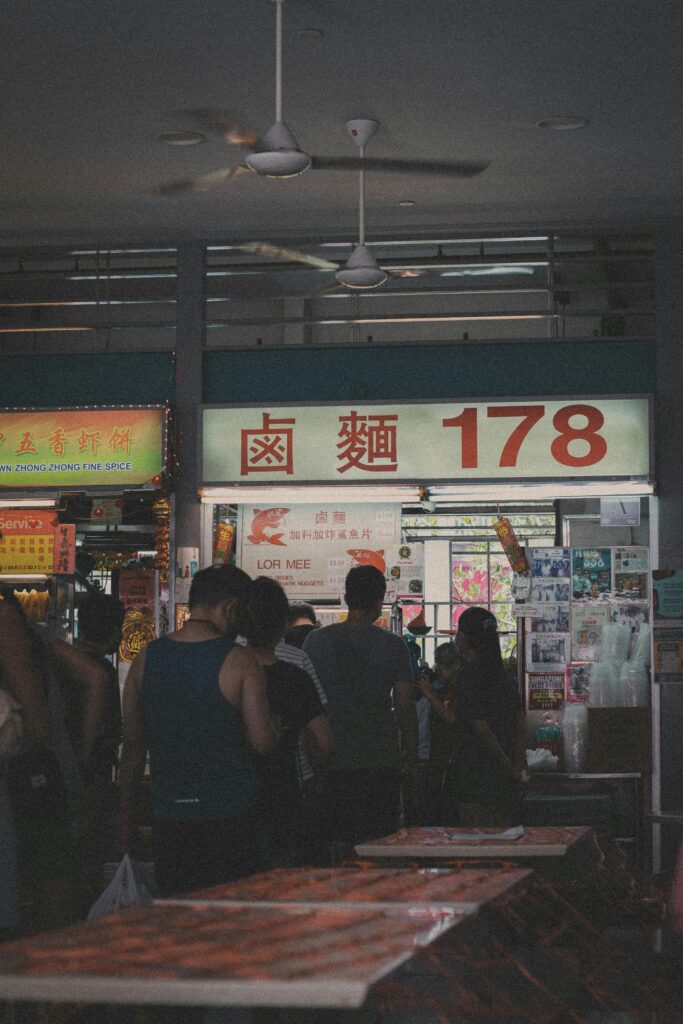
Situated in Singapore’s historic Tiong Bahru residential estate—the city’s first public housing project—this food hub is a cornerstone of the city’s culinary heritage set amid notable architecture. It began life as Seng Poh Market in the 1950s but eventually evolved into the iteration still beloved today. The market and its surrounding buildings are prime examples of Singapore’s low-rise, pre-war Art Deco architecture, offering a charming, slightly retro backdrop to gastronomic feasts here. The Tiong Bahru Market and Food Centre reopened in July 2025 after a renovation, but the two-storey building still retains its lively, authentic vibe.
The highlight here is the strong selection of traditional Chinese breakfast foods and local specialities, along with the stalls that are mostly run by second and third-generation hawkers. Can’t-miss stalls include Tiong Bahru Fried Kway Teow for noodles, Jian Bo Shui Kueh for chwee kueh (steamed rice cakes with toppings), and Tiong Bahru Hainanese Boneless Chicken Rice, though you’ll also find everything from lor mee (noodles in gravy), prawn noodles, and nasi lemak. Expect to pay SG$3 to SG$7 for each dish, and make sure to have cash—it’s preferred here.
The Tiong Bahru Market and Food Centre reopened in July 2025 after a renovation, but the two-storey building still retains its lively, authentic vibe. But, there are some welcome upgrades such as new tables and chairs (secure these quickly when you arrive!), larger fans and awnings, and improved toilet facilities. Come early, especially on weekends. The most popular stalls have long lines, and many sell out just after lunch.
To get here, you can take the MRT to the Havelock (Thomson-East Coast Line) or Tiong Bahru (East-West Line) stations—though you’ll still need a 10-minute walk to get to the market. For convenience, a Grab or taxi can drop you right outside the building entrance. While walking in the area, keep an eye out for the murals by local artist Yip Yew Chong, which offer glimpses into a Singapore of a bygone era.
Must-Try Hawker Dishes Across Singapore
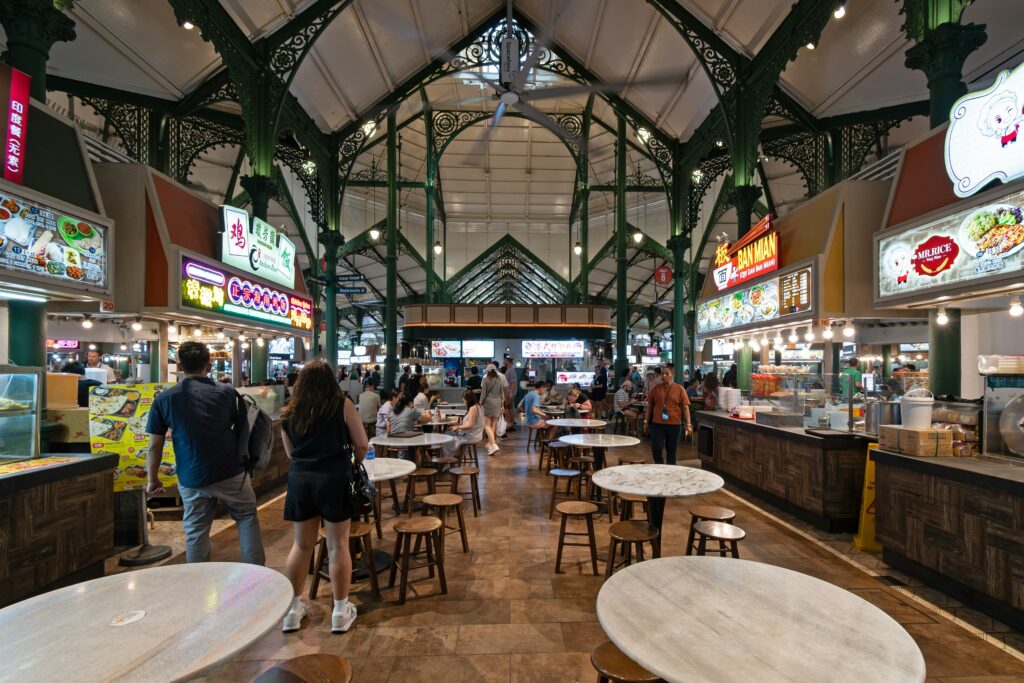
Finding the best hawker centre in Singapore is one thing. But arguably the more important question is: what do you eat when you get there? All of the food centres across the city offer an array of dishes, highlighting the melting pot that is the local culinary scene. Of course, there are some that are considered integral to the hawker centre experience and shouldn’t be missed.
Here are just a few enduring favourites (all priced between SG$3 and SG$10). You can sample most of the below at the hawker centres above, but here are a few other places worth trying:
- Lau Pa Sat: A popular spot offering a wide range of hawker stalls in a Victorian-era structure built in 1894.
- Newton Food Centre: Opened in 1971 and specialising in local seafood and barbecue—featured in Crazy Rich Asians.
- Amoy Street Food Centre: Vibrant hawker centre created in 1983 and housing well-known vendors.
- Golden Mile Food Centre: Centrally-located spot specialising in Peranakan and Chinese dishes.
Hainanese Chicken Rice
Available steamed or roasted, this is the quintessential Singapore dish, a legacy of the immigrants that arrived from China’s Hainan province. Expect tender chicken pieces served with fragrant rice and zesty chilli.
Laksa
Its origins are much debated, but this is a classic dish of thick rice noodles in a rich, spicy coconut curry broth laced with shrimp, fish cake, and other protein—look for a thick, aromatic broth.
Satay
These popular skewers of marinated and grilled meat (available in chicken, beef, or mutton) are traditionally served with a peanut dipping sauce, cucumber slices, and compressed rice cakes (called ketupat). Smoky grills produce the most flavourful sticks.
Char Kway Teow
Featuring southern Chinese and Malaysian influence, this is deliciously smoky, stir-fried flat rice noodles cooked in a wok with dark soy sauce, chilli, Chinese sausage, and bean sprouts—a good version has lots of ingredients and isn’t as thickly saucy.
Hokkien Mee
Drawing from China’s Fujian cuisine, this dish consists of yellow egg noodles and white vermicelli noodles stir-fried in a rich, savoury prawn and pork stock and served with seafood and sambal chilli.
Chai Tow Kway (Fried Carrot Cake)
Not to be confused with a dessert, this is a savoury dish inspired by Chinese Teochow cuisine and made of radish cake cubes stir-fried with egg, preserved radish, and either a dark or light soy sauce (the dark offers a richer, more umami flavour).
Roti Prata
Drawing on both Indian and Malaysian roots, this dish consists of buttery, flaky flatbread—served plain or with egg filling—and a rich curry made of either fish or mutton—the best have slightly softer roti and thicker curries.
Nasi Lemak
A combination dish that has Malaysian origins, this traditional dish pairs fragrant coconut rice with fried chicken, a hard-boiled egg, ikan bilis (fried anchovies and roasted peanuts), and otah (steamed fish cake)—a high-quality version is aromatic, with fried chicken and a heap of ikan bilis (for a salty and savory addition).
Bak Kut Teh
Originating in southern China, this dish consists of pork ribs simmered for hours in a herby broth and is served with sides like rice, vegetables, and sauces.
How to Eat Like a Local at Singapore’s Hawker Centres
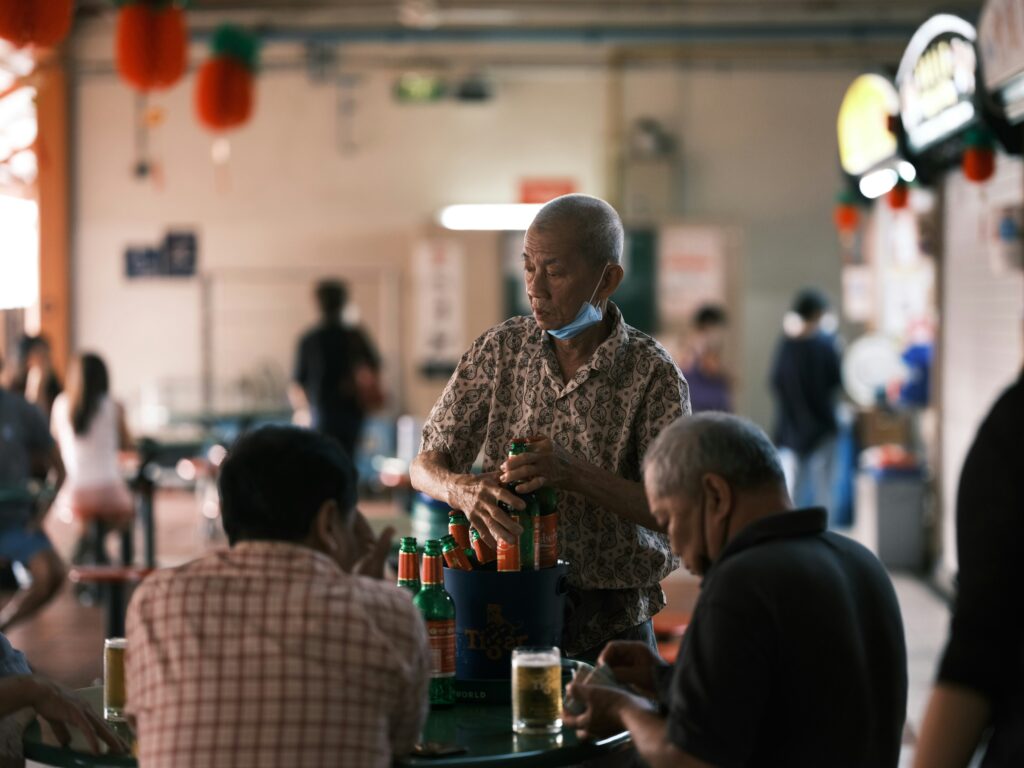
Embracing Singapore’s unique hawker culture is a key part of enjoying a local experience, but to navigate these food hubs properly, you need to learn a few tips and tricks. Here are a few things to keep in mind to help you enjoy hawker centres like a local:
- Reserve your seat: Competition for tables and seats can be high, especially during peak hours—locals “chope” (reserve) a table by leaving a small personal item on their chosen perch, such as a packet of tissue or a water bottle. If you see one, the seat’s already taken.
- Return your tray: Hawker centres operate on a tray return system, so after eating, clear your dishes and take them to the designated tray return stations. It’s non-negotiable etiquette—and good manners.
- Order with confidence: Try picking up some of the local lingo to help you order. For example, you can state whether you’re dining in (kai tau) or getting food to go (ta pau).
- Pick your payment method: It’s fine to ask if digital payments are an option, but many stores are still cash only, so keep some SG$5 or SG$10 notes on hand.
- Look for lines: A long queue is the sign of a superior stall, so don’t be deterred—whether you’re looking for a great chicken rice or decadent char kway teow, “chope” your table then get in line. Also keep an eye out for official seals of approval—Michelin Bib Gourmand awards and “A” ratings from the Singapore Food Agency, for example.
- Get friendly: Since space can be limited, sharing tables is common practice at hawker centres. You can ask to share the table—it’s only polite to say yes if you’re asked the same.
- Pace yourself: Don’t order everything from one stall—hawker centres are about variety. Do a lap of the centre first and identify a few things to try, then create a feast by ordering from different stalls.
- Explore the peripherals: The outer rings of hawker centres can hide some surprises—have a look to see if you can find fresh juices, made-to-order local desserts, or even an authentic local coffee.