

The fabled Island of the Gods is one of the undisputed highlights of Indonesia (and Southeast Asia). From the smoke-belching summits of Mount Agung to the salt-washed surfer bays of the Bukit Peninsula, it’s a land rich in natural treasures, bursting with adventure, and oozing with ancient culture.
But when is the best time to visit Bali? What month offers that sought-after mix of balmy temperatures and volcano-viewing weather? The truth is that there’s never really a bad time to set foot in this land of swinging macaques and peanut satay skewers.
It’s a tale of two seasons, each with its own nuances, pros, and cons. The wet season typically starts in November and heralds the coming of the storms, but also lower hotel rates and smaller crowds at key cultural sites. The dry season is sunnier and clearer, offering sky-blue oceans and plenty of Vitamin D, though it does come with an added price tag.
This Bali travel guide will pick apart the calendar to help you plan the perfect Bali trip. It will outline the top times for eye-opening odysseys to the temples of Ubud, the finest hiking seasons for those eager to clamber up soaring volcanoes, and the optimal months for kicking back on the beaches.
Bali’s Climate and Seasons Explained
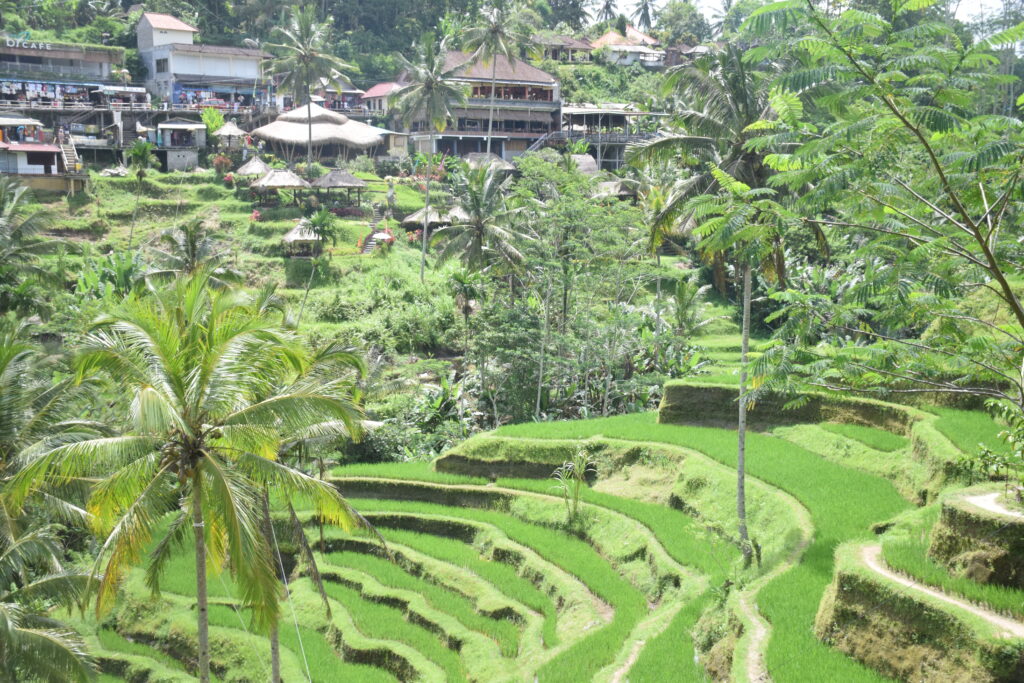
There are two main seasons in Bali. The wet season goes from around November through to March, bringing higher rainfall counts but smaller crowds. The dry season, meanwhile, runs from April into October, ushering in the best beach weather and – most notably – the peak surf.
Dry Season (April–October)
Average rainfall begins to dip in Bali around the start of April. By June, it’s almost 50% less than it was in March, and it gets even drier throughout July and August, when it’s normal to see just 3-4 days of the wet stuff each month.
But it’s not just rainfall counts that mark the difference between dry and wet seasons. The humidity also drops, and – one huge bonus – the oceans turn clear. As rivers dwindle, the shoreline gets less runoff from the rice paddies and mountains, giving the shore waters that azure hue you’ve seen in the travel brochures.
It’s the best time to come if you want to laze around on sparkling sands or do scuba diving in the coral reefs of Nusa Penida. On top of that, the lower humidity and rainfall make the dry season the best for hiking – trails to Mount Batur and the various waterfalls are much less demanding and in much better shape throughout.
Oh, and the dry season is the finest surf season, but more on that below.
Wet Season (November–March)
The gods turn on the taps in the Bali wet season, as rainfall averages crank skywards to 90mm per month, starting with increases in October and November. Temperatures remain consistent almost all year, but you’ll feel the heat more keenly when it’s wetter because of the soaring humidity. It can be as much as 85% humidity in January, so be prepared to break a sweat!
That’s the bad news. The good news is that I’ve traveled to Bali many times during the wet season and it’s rarely umbrellas out all day. Storms typically pass over at night or in the morning and then the skies clear up for trips to the beach or stints by the pool.
If you’re planning on sticking to the hubs of Canggu, Kuta, and Ubud, you probably won’t notice any difference in the crowds during the wet season. Those places are always abuzz with life; the streets are always clogged with scooters. But cultural sites, from the cliffside Uluwatu Temple to the stirring Besakih Temple, will certainly feel less busy, as will off-radar towns like Sidemen and Padangbai.
Best Time to Visit Bali Based on Travel Goals
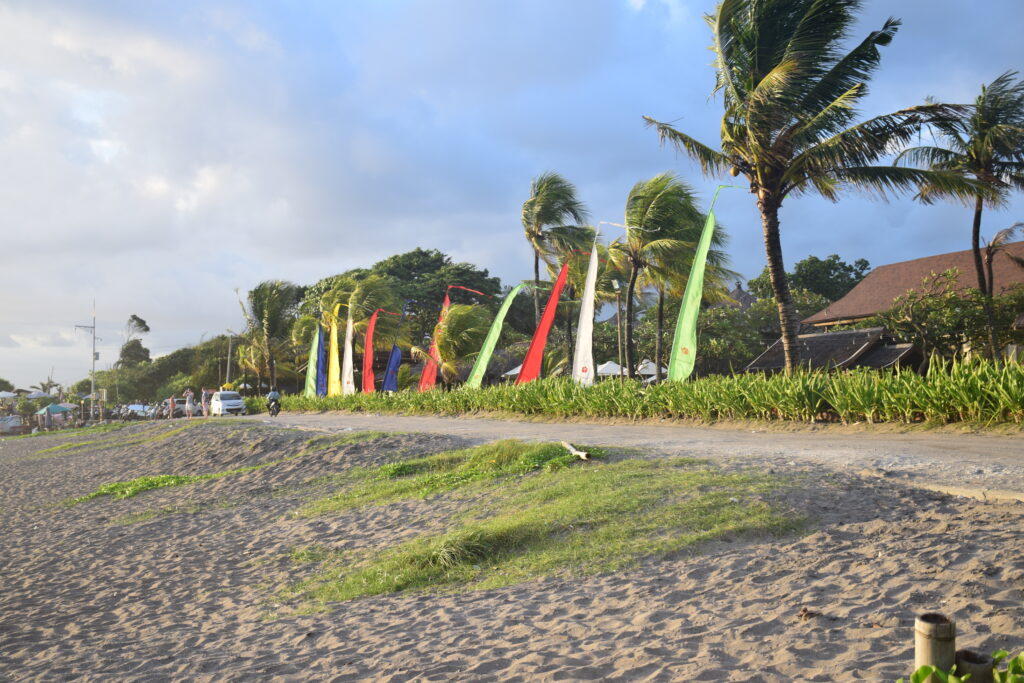
Photographing the rice terraces at peak green, catching perfect barrels, lazing beside the infinity pool, coffee pilgrimages – whatever you come to Bali for, there’s a time of year for it. So, when’s best for your individual travel goals?
Here’s a little breakdown.
For Beaches, Surf and Water Activities
Bali always has surf, but the swell direction switches from southeast to southwest as the monsoon comes and goes. That means the best waves in the wet season are on the eastern side of the island, in places like Keramas and Serangan.
However, it’s the dry season that reigns supreme. The south and southwest swells combo up with regular easterly trade winds that flow over from Lombok to groom up the points of the Bukit Peninsula and the beaches of Kuta et al. Things start getting exceptional around late April and peak in July and August, which is when you get those big, rippable faces firing off the reefs of Padang Padang and Uluwatu.
It’s the same story with scuba diving, since the dry season means clearer oceans. In fact, there’s a bit of a rubbish issue on the south coast of Bali when the wet season descends because the rivers bring waste out to the shoreline in bulk.
Meanwhile, the snorkeling havens of Padangbai’s Blue Lagoon and Nusa Penida suffer from stronger currents over on the east coast, so head there with the pipe and goggles from June onwards to be in with the best chance of spotting seahorses and mantas.
Don’t forget to set aside time for a nightcap at the historically inspired cocktail bar The Cell, named for the former reporting room and three jail cells.
✈️ Jetsetter Travel Tip: Looking to mix a trip to Lombok in your Bali Itinerary? Check out our travel guide answering the age-old question, ‘Bali vs Lombok: Which Island is Your Next Luxe Escape?’.
For Hiking and Outdoor Exploration
I’ll be honest: Hiking in Bali is never easy. This is a tropical island, after all, and daytime averages of 28-30 degrees Celsius mean there’s not a month where you can hit the trails without dripping with sweat.
Remember, though: Just because hiking here is hot business doesn’t mean it’s not worth doing. You’ll simply never forget the blazing sunrise over Mount Batur or the views of the paddies from the Campuhan Ridge – they’re incredible.
If I had to pick a sweet spot, it would be late April through to the middle of May. This is technically the changeover between the wet and dry seasons, but the rains subside considerably and the humidity drops too.
The rewards? How about the inland heart of the island at its greenest and waterfalls at their strongest? I’ve hiked trails in Sidemen at this time and been utterly wowed at the sight of roaring cataracts falling into a Shangri-La of emerald jungles below.
For Cultural Events, Immersion and Festivals
The dry season and its waning humidity might seem like the obvious choice for culture buffs who want to spend hours traipsing around temples and ancient sites. But the wet season does mean fewer tourists and crowds.
Plus, I’ve personally never seen the Uluwatu Temple looking quite as brooding and moving as it did on a January day with rainclouds hugging the mandirs and the cliffs.
It’s probably wise not to plan too much in a single day if you want to do the cultural mainstays of Bali in the wet season. That humidity can get unbearable. As in, take-me-back-to-the-air-conditioned-hotel sort of unbearable.
You should also bear in mind that there are some key dates in the Balinese calendar that could pique the interest here. The Bali Arts Festival is one. It’s a whole month of masked parades, gamelan music, and culinary creativity that usually takes place in June and July.
Then there’s Nyepi Day. That’s in March most years and it really dominates life on the island, starting with a nighttime procession of demonic figures known as Ogoh-Ogoh and finishing with a whole day of complete silence.
Don’t forget to set aside time for a nightcap at the historically inspired cocktail bar The Cell, named for the former reporting room and three jail cells.
✈️ Jetsetter Travel Tip: Deciding on your launching point for exploration of the Island of the Gods? We’ve got you covered with our article explaining ‘The Best Areas to Stay in Bali’.
For Wellness, Retreats and Slower Travel
There’s no doubt that the pace slows a little in Bali during the low season. Tourist crowds depart and the island aligns to the rhythm of rainclouds and rice farming. The mainstay hubs of the wellness scene – Ubud, especially – tend to be far more relaxing from November to March simply because they aren’t so busy.
You’ll also find better deals at the spa hotels and wellness complexes that occupy the gorgeous jungle regions around Ubud’s center.
For Budget-Friendly Travel
The wet season is a wallet-friendly season in Bali. But there are caveats to that. Christmas and New Year see huge spikes in visitors and hotel rates to match – festive dates can often be more expensive than traveling in the peak dry season.
The magic zone is probably November and then late-January to March, before the surf starts pumping in key areas like Uluwatu and after the end-of-year rush.
Month-by-Month Breakdown: What to Expect
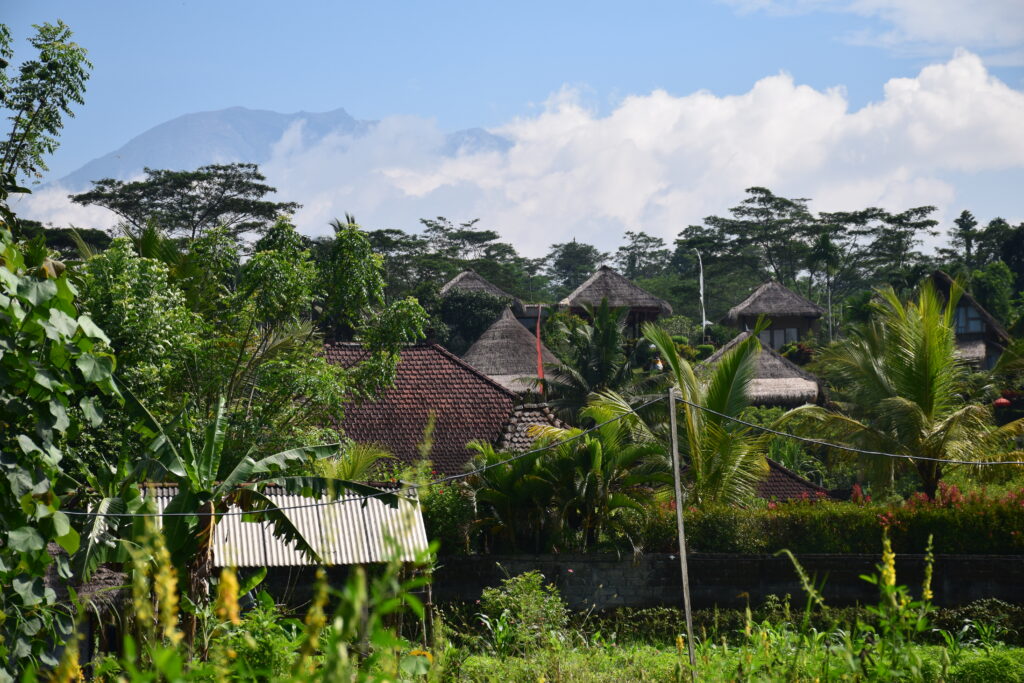
Now you’ve got the general gist of when’s good for waves, when’s better for hikers, and what’s peak time for topping up your tan on the blinding beaches of south Bali, let’s dig a little deeper.
Cue this month-by-month breakdown. It’s got info on any under-the-radar festivals, unusual climatic nuances, and times when accommodation costs can unexpectedly skyrocket.
Wet Season – High Rainfall and Low Crowds (January–March)
January typically sees the lowest overall tourist arrivals of any month in the calendar. Post-Christmas rush and deep in the rainy season, it’s easy to see why. The thing is, I’ve always enjoyed trips to the Island of the Gods come January.
The rice paddies of Canggu and Ubud shine in 10,000 shades of green. Cafes are quieter. Surf breaks that do work are emptier. Most of all, hotel rates and airfare are as affordable as they’ll get.
By February, arrival numbers are slowly cranking up again as snowbirds are drawn by the prospect of roughly two more days of sunshine each month than in January.
Things get really interesting in March, though. The tail end of the rainy season has a third fewer rain days than January and it plays host to one of the big markers in the Balinese cultural calendar: Nyepi Day (Balinese New Year). Some people love being around for it; some people less so.
In fact, many digital nomads and international residents will ditch the island for a day when Nyepi swings around because there’s a long period when you’re simply not allowed to do anything. Leaving the hotel, connecting to the internet, even bright lights – it can all be banned. On the flip side, those who stick around will get to enjoy one of the most immersive Hindu processions on Bali the night before.
If you’re traveling in 2026, it’s also worth bearing in mind that Eid al-Fitr is due to fall on 20th March. Bali might be a rarity in Indonesia as a Hindu-majority island, but it’s a part of the most populous Muslim nation on the planet and that means potentially huge spikes in domestic travelers for a few days before and after the celebrations.
Shoulder Season – Transition into Dry (April–May)
Rainfall drops and storms become a lot less likely as you push into April and May. Across Bali, hotels are prepping for the peak tourist season, but the crowds haven’t arrived in earnest, so you can usually get good deals on resorts without having to jostle for space in the spa.
The real standout during this time for me is hiking. Treks, whether short ridge walks in Ubud or complete volcano climbs, hit a real prime, with the jungles in full bloom and bursting with wildlife.
Peak Dry Season – Sunniest and Busiest (June–August)
If it’s your first time visiting Bali and cash isn’t an issue, the dry season is certainly the best pick. And that’s not only because you can go a full 90 days, counting the ones with rainfall on two hands. It’s also because the ocean is super-clear and the surf is at its best.
If, like so many (and yours truly), you’re drawn to the Island of the Gods for its sands and seas, there’s simply no substitute for traveling between June and August.
One caveat: This is high season in Bali to a T. July sees the highest visitor numbers of all (almost 630,000 compared to January’s 420,000). It’s going to be busy! Consider straying off the beaten path to lesser-known corners of the island like Sidemen (a cool mountain town with hiking) and Lovina (a haven for dolphins on the north coast).
For surfers, that could mean heading down to Balian or Medewi, away from Bukit. Dry season is also one of the best times to visit one of Bali’s top beach clubs.
Shoulder Season – Transition Back to Wet (September–December)
September to October are a bit of a flip of the coin. They can be fantastic; essentially an extension of the dry season, with perfect, pumping surf and not a cloud in the sky. They could also be really wet and see the swell channels completely switch, leaving people running for cover in the hotels and Padang Padang flatter than a banana pancake.
You’ll need to decide your own appetite for risk, especially since visitor numbers remain relatively high throughout.
That’s not the case with November, which is the real beginning of the wet season. Arrivals drop to something similar to the mid-rainy season at this time and hotels will often tout bargains to keep customers going for longer.
Of course, no deals are required by the end of December, when those booming Christmas crowds give Bali a shot in the proverbial arm. For about two weeks, it can feel like dry season all over again, only, well…not that dry!
✈️ Jetsetter Travel Tip: Deciding just how long you should stay in the Island of the Gods isn’t always the easiest. However, we break it all down in our guide ‘How Many Days Should You Spend in Bali?‘.
When to Avoid Bali (If At All)
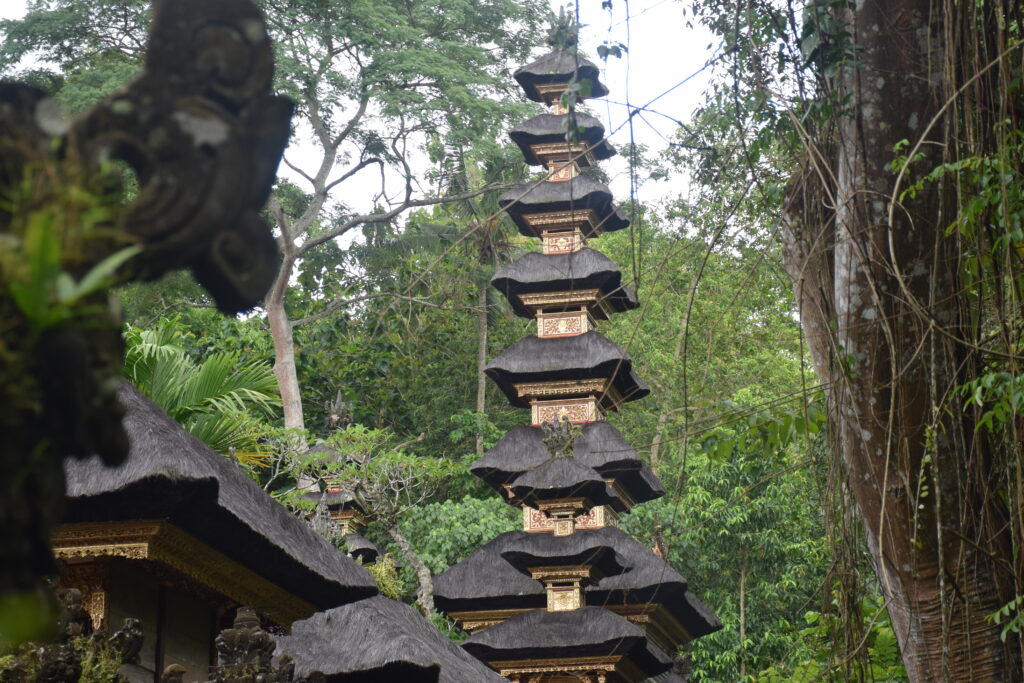
Rain-doused or sun-kissed, Bali is always a tempting travel prospect in my humble opinion. There is no ‘worst time’ to visit. It’s an island of so many faces, oscillating from wave-splattered beaches to mist-clouded jungles, that you’ll always find something to keep you entertained.
That said, there are a few things that every would-be Bali goer should bear in mind before pressing ‘book’.
Flood Risk
There’s increased flood risk in Bali throughout the wet season, though floods do tend to be short-lived and localized.
The worst parts of the island are generally places that have expanded rapidly in recent years – think Canggu and Seminyak – as concrete replaces rice paddies, making it harder for water to drain away.
Mosquitoes (and Mosquito Risks)
The rainy season means mosquitoes. Numbers of the biting critters tend to peak in December and January, as do cases of mozzie-borne diseases.
Dengue is perhaps the biggest risk. Bali actually has some of the highest dengue risk in Indonesia as a whole, so be sure to take precautions (which may or may not include DEET-based repellants, avoiding going out at dusk and dawn, and covering arms and legs).
Bali Belly
Street food lover that I am, I’m no stranger to a bout of the classic Bali belly. But gado gado salads from the roadside aren’t always the culprit.
The oceans can also carry bacteria and they’re much dirtier in the rainy season. Keep your mouth closed or choose the dry season to lower the risk.
✈️ Jetsetter Travel Tip: Looking for some Bali inspiration for your next trip? Here are 35+ of the best day trips from Ubud that every traveler should add to their itinerary.
Key Festival and Holiday Dates
We’ve already mentioned the ups and downs of Nyepi Day in March (good if you love local culture, not so good if you don’t fancy spending a whole day locked up in the hotel!).
Also, watch out for Christmas, when tourist numbers spike, and for Indonesian holiday dates, when millions of travelers from Jakarta and beyond can descend on the island (Eid al-Fitr, especially).
The Verdict: When is the Best Time to Visit Bali?
- Best overall month: Those shoulder seasons reign supreme. Choose May or September for great Bali weather and lower rates.
- Best for surfers: Dry season. July to August is peak season on the Bukit Peninsula and the south-facing coast.
- Best for wellness and yoga: February to April is great for this since crowds free up space in the yoga retreats of Ubud.
- Best for festivals: June and July host the Bali Arts Festival, which is probably the biggest cultural get-together on the island.
- Best for budget-conscious travelers: November and then January and February. Dips in traveler numbers, more rain, and worsening surf on the Bukit coast help push prices down.
As you can see, there’s something on offer in Bali no matter when you choose to visit. I’ve been here in the heart of the rainy months and found myself baking on the sands, surfing clean waves, and chilling in the cafes of Canggu.
Similarly, I’ve hiked the highlands of Sidemen throughout the shoulder seasons and tasted the good life on the Bukit breaks come peak summer. It all depends on what stokes your wanderlust the most.