

Bangkok and Phuket represent two of the most famous faces of Thailand. They’re each bucket-list outposts in the Land of Smiles in their own way; each tantalizing prospects for travellers eager to explore this world of temples and taste-bud-tingling street food, of alabaster-white beaches and palm-threaded shores. But which is better?
I’m here to tell you that there can be no winner when it comes to picking Bangkok or Phuket. I’ve spent months of my traveling life in the buzzing megalopolis of the Thai capital (Bangkok), and plenty of time soaking up the sun on the country’s largest island (that’s Phuket), and the biggest takeaway I can offer is this: They are very, very different destinations.
One is a vast cityscape, with a sea of steel-clad skyscrapers on top of an underbelly of bar-filled alleys and ancient Buddhist temples. The other is a salt-washed rock on the side of the Andaman Sea, where beach towns pulse with life, resort hotels offer R&R by the sands, and water sports abound. Both are incredible, but they’re hardly peas in the proverbial pod!
This guide will offer all the insight you need to make an informed decision on where’s best for your upcoming jaunt to Thailand. It’ll uncover the costs of both Bangkok and Phuket, which offer the best escape to nature, which is the hub of nightlife, and even judge which has that extra touch of luxury to impress the jetsetter traveller.
Affordability: City Sophistication or Island Indulgence?
Ever since the days of the Banana Pancake Trail (a famed hippie backpacking route that was born in the 50s and 60s), Thailand has been seen as a bit of a budget hotspot in Asia. That’s changed, slowly but surely, in the last few decades, and destinations like Bangkok and Phuket have been right there on the forefront of the transformation, touting 5-star hotels, sky bars, and slick villas for the more monied crowd.
Let’s dig a little deeper…
Bangkok
Bangkok is very much a city of two halves on the budget front. If you’ve got the baht, a taste of the high life awaits in high-rise hotels that have pools, cocktail bars on the roof, private spas, and nightly price tags of $250 per night or more to match.
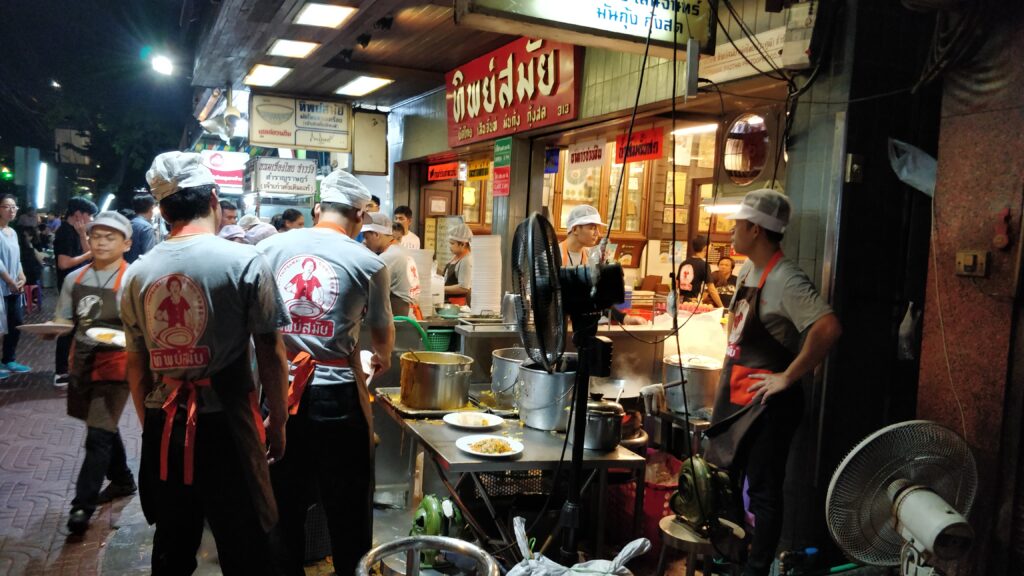
But there’s also a shoestring edge to the great city – Bangkok is famously backpacker-friendly. Go to quarters like Banglamphu, the home of the legendary Khaosan Road, and you’ll get hostel dorms for $20, not to mention street food plates (and I’m talking the best dang peanut noodles you’ve ever had here) for $1-2 a pop.
Adding to that, nightlife is cheap, and so is public transport. Overall, I’d budget around $1,050 for a week in Bangkok on a midrange budget, which includes accommodation, eating out, and a few activities each day.
Phuket
Aside from the cost of flights into Phuket’s sun-sprinkled beaches, this wave-sloshed corner of the Land of Smiles is probably just a smidgen cheaper than its urban counterpart to the north. The key thing to note is that Phuket is much more seasonal than Bangkok.
You’ll pay extra for hotels and flights during peak travel season – that’s the dry season (November to March), particularly around Christmas and New Year. And when I say extra, I’m talking sunshine premiums of 50%-100%. Of course, you can splurge in Phuket. Key tourist zones like Patong, Kata Noi and Kata have coastal hotels that can set you back $200 a night or more with ease in the height of the main season.
Go inland and bargains do exist, especially if you’re willing to trade the sandy west coast for the more industrialised east coast, staying in places like buzzy Chalong or Phuket Town. Overall, I’d budget around $120-130 per day – that’s about $875 per week – for this one.
Verdict
Phuket is a touch cheaper than Bangkok, but it can be unpredictable when the main dry season kicks in. I’d estimate a daily spend of about $120 for most midrange travellers down on the beaches, while Bangkok demands something closer to $150 per day.
From Sky Bars to Shorelines: The Nightlife Face-Off
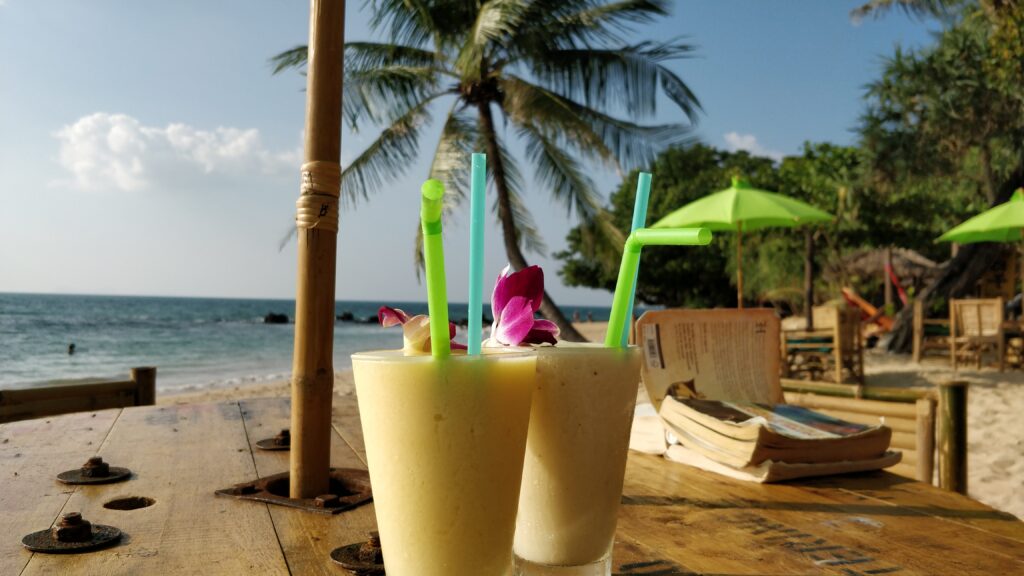
Up for a party? You won’t be disappointed with either Bangkok or Phuket. Both are rocking, rumbling hubs of Thai nightlife, but they do offer something a bit different. The capital has urban dive bars, speakeasies, and whole nightlife neighbourhoods (hello, Khaosan Road, old friend!). Phuket, meanwhile, is for beach parties and full moon shindigs.
Bangkok
Confession time: I was once pretty big on partying. The prospect of beer-soaked nights on the Khaosan Road was one of the driving forces behind my first-ever flight booking to Bangkok way back in 2011 (**sigh**). Without too much of the gritty detail, I’ll say that I was most certainly not disappointed by the Thai capital. It’s one of the most hedonistic towns I’ve ever been to, with more nightlife quarters than you can shake a plate of pad Thai at.
If you like backpacker bars that go on until dawn, get down to Khaosan Road, now a full-on party district where pumping bars spill onto sidewalks that are never, ever empty.
For something more refined, Sukhumvit has you covered. It’s home to so-called sky bars where you can sit, sip, and watch the twinkling city lights dip to nothing – Octave and Above Eleven are two of my personal favorites. Meanwhile, upcoming hipster quarters like Ekkamai and Thonglor offer more offbeat micropubs and café bars with craft cocktails and whatnot.
Phuket
The main difference between the nightlife in Phuket and the nightlife in Bangkok is that it’s spread across different beach towns on the island. Each has its own unique character and style; some refined and easy going, others heady and heavy and even downright gaudy.
The main hub for partying has to be Patong, but be warned, for it’s garnered a rep as one of the pillars of the Thai sex-tourism scene. So-called go-go bars dominate the main strip, though there’s also a good showing of standard beer halls, eateries, and street market stalls.
After Patong, Phuket Town has the liveliest thing going. It’s more local there, with fun dive bars like The Library and the buzzing night bazaar taking center stage. Long, wide Bang Tao Beach has emerged as something of an upscale area, though Kamala still has the lion’s share of chic venues.
Verdict
Neither of these spots is a nightlife desert. Far from it. Both are pretty frantic once the sun dips low.
Personally, Bangkok has to win this on account of the fact that it’s one of the most off-the-hook party cities in the world. Phuket, though, has plenty, and it caters to a wide array of hedonists, no matter if you simply want sunset cocktails overlooking the Andaman or a complete all-nighter fuelled by Chang beer.
Urban Jungle or Island Escape: Which Wins Outdoors?
No prizes for guessing where wins out here – will it be the beach-fringed tropical island on the Andaman Sea, or the sprawling city of over 10 million people? If you’re pining for the great outdoors, then Bangkok isn’t a top choice. Phuket still might not be the most outdoorsy of places in the Land of Smiles, but it does flaunt sparkling sands and palm-topped hills in place of traffic-clogged streets and skyscrapers.
Bangkok
Bangkok is a whopping 270 square miles of concrete jungle. It’s not – I repeat: not – for the lover of the great outdoors. The closest you’ll get to an escape to nature between the skyscrapers of Silom and the river markets of the Chao Phraya are the urban parks.
Don’t expect too much – the largest of them is Lumphini Park, but even that’s under half the size of Hyde Park, and often super busy.
When I pined for something quieter during my time in BKK, I’d hop on a train and get out to Kanchanaburi, a small river town in the mountains that line the Myanmar border to the east.
Phuket
While Phuket most certainly isn’t the wildest of the Thai islands, it’s still a far more natural destination than Bangkok.
The lay of the land is basically like this: A west coast threaded with gorgeous white- and yellow-sand beaches; an inland of rising hills draped in jungles, and an eastern shoreline pockmarked by tidal flats and marshes. The most remote of the sands await within the wonderful Sirinat National Park on the northern half of the isle. It’s a world of pine and almond forests that roll to meet empty shorelines.
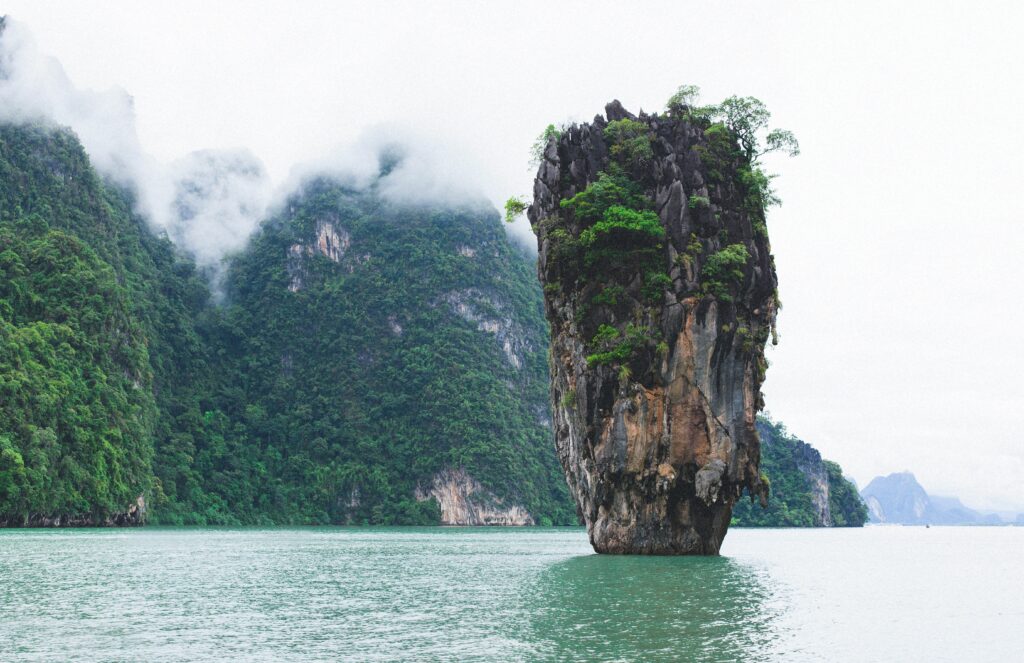
And whenever you want something even more untamed, Phuket is perfect for island hopping. Simple show up to Rassada Pier and cruise into Phang Nga Bay, where jutting karst rocks rise from the turquoise water.
Verdict
I wouldn’t personally choose Bangkok for a peaceful, nature-filled escape. It’s simply not that sort of place. Phuket, on the other hand, may not be Thailand’s most feral Robinson Crusoe Island, but it’s still home to undeveloped beaches (particularly its northwest coast) and has one foot in the gorgeous gulf of Phang Nga Bay, where hidden islands offer tropical paradise without too many crowds.
Transport: Getting Around Bangkok and Phuket
Before you can get a-tanning on the beaches or tasting your way through the street-food markets of BKK, you’ll have to navigate your chosen destination, whether that means hopping canal boats in Bangkok or renting your own set of wheels in Phuket. Let’s take a look at how you’d go about getting around both of these spots.
Bangkok
Bangkok’s transport system is surprisingly slick once you get your bearings. The BTS Skytrain and MRT subway make light work of the town’s notorious traffic, connecting most of the major neighbourhoods – from the malls of Siam to the nightlife zones of Sukhumvit.
A tap-in card (Rabbit card) keeps things simple, and rides usually cost less than a cup of iced coffee. For the bits the trains don’t reach (and there are actually quite a few of those places), there’s an army of tuk-tuks and motorbike taxis waiting on every corner, or just a click of an app away (Bolt and Uber are the two most popular).
Then there are the canal boats. Yep, Bangkok’s rivers double as urban highways – hop on a Chao Phraya Express boat and you can cruise past golden temples and markets for under $1! It’s hands down one of the best things to do in Bangkok. Getting to and from the airports is also easy: Suvarnabhumi has a direct airport rail link, while Don Mueang is reachable via shuttle bus or taxi.
One thing to be wary of: Rush hour in Bangkok can be hell, so avoid it if possible.
Phuket
Phuket is a very different story. There’s no Skytrain here, no metro, and definitely no river ferries. There has been a light rail network in construction for about a decade now, but the island remains all about the open road for the time being.
Scooter rental is cheap (around $8–10 a day) and offers total freedom to explore hidden beaches, though the roads can be chaotic, especially around Patong and Kata, and traffic accidents are unfortunately common. You’ll have to make sure you have all the right licenses and insurance to get on two wheels, too.
Alternatively, private taxis and Grab (Thailand’s equivalent of Uber) are reliable alternatives, though they are a lot pricier than in Bangkok. Another local favourite is the songthaew. Look for the bright blue, open-sided trucks that run fixed routes between the beaches and Phuket Town. They’re slow but super cheap, and they’re part of the island’s charm.
Verdict
Bangkok wins this one, but largely because it’s a city and therefore has one centralised transportation system. That’s not to say that it’s a glowing example of urban planning a la somewhere in Switzerland, but it is easier to navigate than Phuket.
Overall Luxury: Two Icons, Two Interpretations
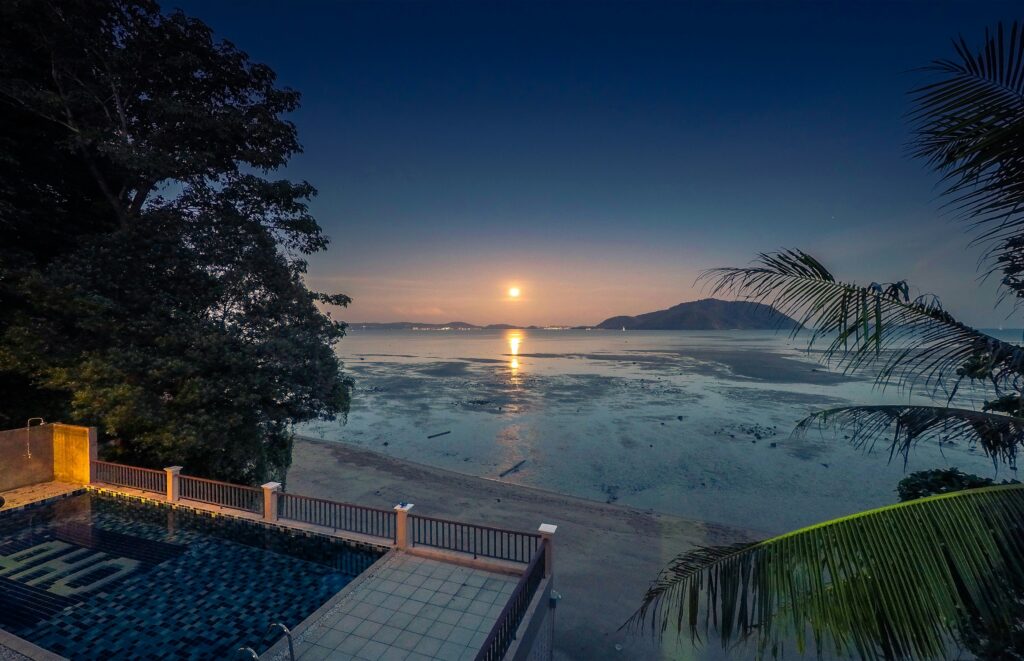
Jetsetters need not be concerned. Remember when I said that Bangkok and Phuket were right at the forefront of Thailand’s transformation into a more luxurious, exclusive destination over the last few years? I meant it. Ultra-stylish resort hotels, condo complexes, spas, and even Michelin-rated restaurants now beckon in both.
Bangkok
British Vogue wasn’t going out on a whim when they crowned Bangkok “Asia’s most hyped luxury destination.” This city can now rival Singapore and New York, London and Cape Town, with its offering of high-class living, with key landmarks like the Mandarin Oriental Bangkok, standing tall against the riverside in the company of ancient temples, offering a glowing pool and antique-filled rooms.
There’s the Four Seasons Hotel Bangkok, a 299-room oasis where sommeliers and fine-dining menus meet mud massages and bespoke muay Thai training programs. Prefer something more intimate? Bangkok’s boutique hotels are on the rise and found in every pocket of the city.
Backing that up is the abundance of cocktail-clinking sky bars (see the nightlife section above) and some of Asia’s best Michelin dining – check out Sorn, Thailand’s first ever three-star restaurant!
Phuket
Phuket certainly has the hotel names to match Bangkok. The Anantara Mai Khao was prim enough to feature in the latest iteration of lux hotel noir The White Lotus, for example, while Trisara is a seafront gem between Nai Thon and Bang Tao that has palms bristling out front and a real air of privacy about it.
Where Phuket can go one extra step is in its offering of private villas – more room on the island means more space to flop out and laze, enjoy bigger gardens, and views of expansive beaches.
When it comes to dining, there is a Michelin star here, but it’s just the one, though Phuket balances what it lacks in gourmet cooking with an array of world-class spa and wellness experiences.
Verdict
Luxury abounds in Bangkok and Phuket, two destinations that I’d probably put up there with the most jetsetter-friendly in the whole Land of Smiles. If you’re a foodie, not a yogi, go to the city. But if you like wellness treatments and more secluded relaxation courtesy of beachfront hotels, Phuket has you covered.
Timing Thailand: When Each Destination Truly Shines
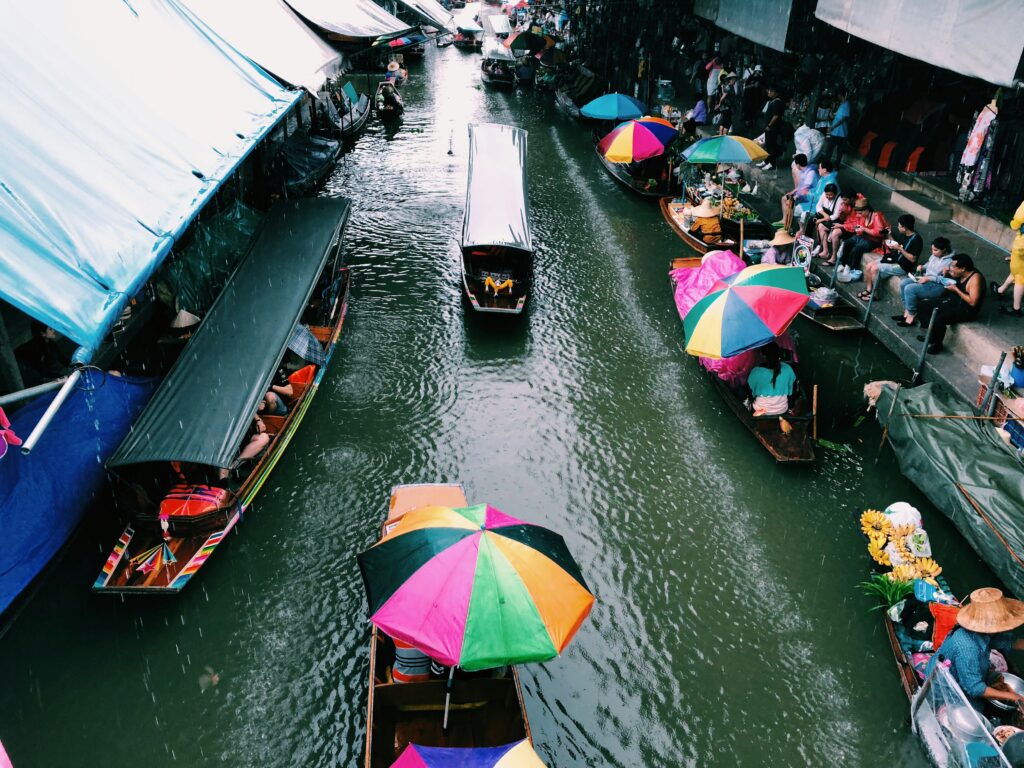
I’ve spent enough time dodging downpours on the Khao Lak coast (just north of Phuket) to know that timing can be everything in Thailand. Rainy season, dry season, burning season, public holidays – there are all sorts you should consider when booking. The thing is, the weather isn’t quite as important in one of our destinations as it is in the other.
Bangkok
The locals will tell you that there are three seasons in Bangkok. Early spring through to May is the hot season, followed by the monsoon season, which lasts until around the end of October, and then the cool season, between November and March. The transition from one to the other is not an exact science.
I’ve witnessed the coming of the rainy season in Bangkok as early as April – let’s just say I grabbed my pool towel pretty quickly! The thing is, the rains are rarely the enemy in the Thai capital. Even in the depths of the monsoon season, downpours tend to be short (ish) and very heavy. They often pass over in an hour or two, leaving blue skies and that lovely asphalt smell lingering for the rest of the day.
I personally think it’s a rather nice time to be in town, though you shouldn’t expect the same major dip in hotel rates and things, since Bangkok is now seen as a year-round destination in a way that Phuket simply isn’t. The peak season in Bangkok is from October to March. It’s drier but cooler, with average temperatures that stick below the 30 °C mark.
If I had to pick the best time to visit Bangkok, it would be in November. It’s the bridge between rains and cooler weather, but it has significantly less precipitation than just a month before. Plus, you won’t have to deal with the big Christmas and New Year crowds that inevitably flood the metropolis.
Phuket
Phuket offers a return to the classic tropical, two-season calendar. There’s a dry season, there’s a wet season, and you probably don’t need someone like me to tell you which is better for lazing on the beaches, sipping Sabai Sabais, and topping up your Vitamin D levels.
Many guides will say that the dry season in Phuket begins in November, but I prefer to say December ever since some torrential late-November downpours scuppered plans for a big laze down on Kata Noi Beach. The lead-in to the dry season can be marked by good weather and the occasional storm, while dry season proper (December to March) has an average of just 40-60mm of rain each month – it’s the real time for sunshine and sea splashes.
The flip side to all this is that you will see the predictable annual peaking and troughing of prices. Hotels and airfare to Phuket soar when the vacation season kicks in. That’s because this island is primarily geared toward beachgoers and sun seekers. It’s not like Bangkok, where business travellers and the like come regardless of the season or the rainfall counts.
Verdict
If you’re limited to traveling during the Thai monsoon, then it’s certainly worth considering a jaunt to Bangkok.
The city is generally better than the islands when it rains, simply by virtue of being a city. To put it another way, everything from museums to shops and sky bars remains open, while downpours on the beach can ruin the whole day in Phuket.
That said, if you’re a beach bum, Phuket is a must-visit, and you probably want to make your pilgrimage sometime between November and March.
Bangkok or Phuket: The Final Verdict

What are arguably Thailand’s two biggest draws could hardly be more different. One a seething, breathing megacity; the other a palm-topped isle with beaches and bumping beach towns.
Whether you prefer temples and tuk-tuks or palm trees and powdery sands really comes down to travel style. “Better” isn’t the right word here; it’s about what kind of Thailand you want to experience.
- For culture, temples, and big-ticket sights: Bangkok.
- For beaches and nature: Phuket.
- For foodies: Bangkok, with its stack of Michelin-starred restaurants.
- For relaxation: Phuket. Think sunsets, beach days, and lazing by the pool.
- For cost: Phuket is a touch cheaper, but be wary about when you travel.
There is, of course, the best-of-both-worlds option. Bangkok and Phuket are a mere 1.5 hours by plane away from each other, and there are now upwards of 80 direct flights each day.
So why not combine both a Phuket itinerary and Bangkok itinerary into one trip? Get your taste of the buzzing energy of the big city for a few nights, then jet south to unwind in the balmy sea breezes. That’s what traveling to the Land of Smiles is all about.