

We talk Bali’s changing traveller profile and the role of arts and culture in the contemporary hotel experience with Daisy Angus, founder of boutique retreat Oshom.
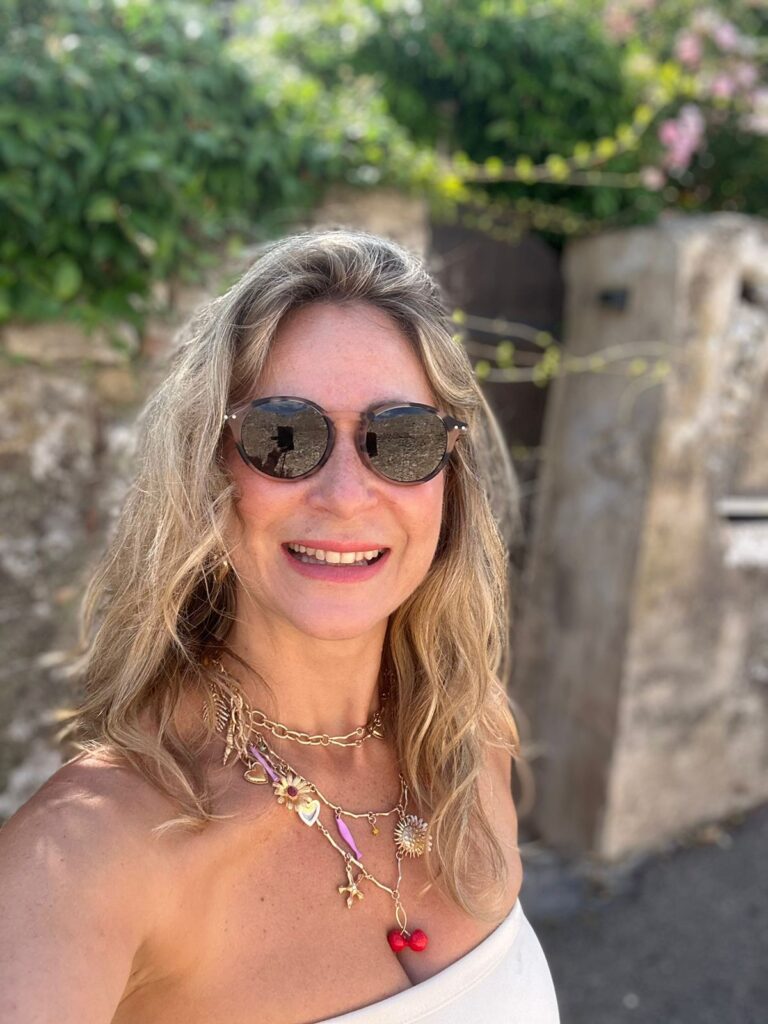
Oshom was born at the intersection of many worlds I’ve lived in; my multicultural upbringing, my years in luxury travel across Europe, and the creative, soul-driven community I’ve found in Bali. My background gave me a unique lens: I grew up between cultures, which taught me how to hold space for difference while finding common ground. In Europe, I designed high-end, deeply personalised travel experiences for over a decade, many of them centred around art, architecture, history, and storytelling. It gave me an eye for detail, a sense of pacing, and a reverence for beauty that tells a story.
When I stepped into my role as the first Events Creative Director at Nuanu Creative City, I was immersed in a radically new paradigm. Nuanu is an incubator for global systems of change, where education, art, technology, and spirituality are deeply intertwined. Being part of its early formation allowed me to not only shape its cultural direction through the Suara Festival but also to witness the birth of over 30 interconnected projects.
Oshom emerged as a natural extension of that creative ecosystem. I saw the need for a sanctuary within Nuanu – a place to rest, to reflect, and to reconnect with a quieter kind of luxury. Oshom became a way to weave everything I care about – art, intentional design, soulful hospitality, cultural integrity – into one space. It’s not a standalone property; it’s a portal into the Nuanu vision, and I’m deeply committed to its evolution as both a destination and a philosophy.
Oshom was originally a family villa – what processes needed to take place to transform it into the hotel it is today?
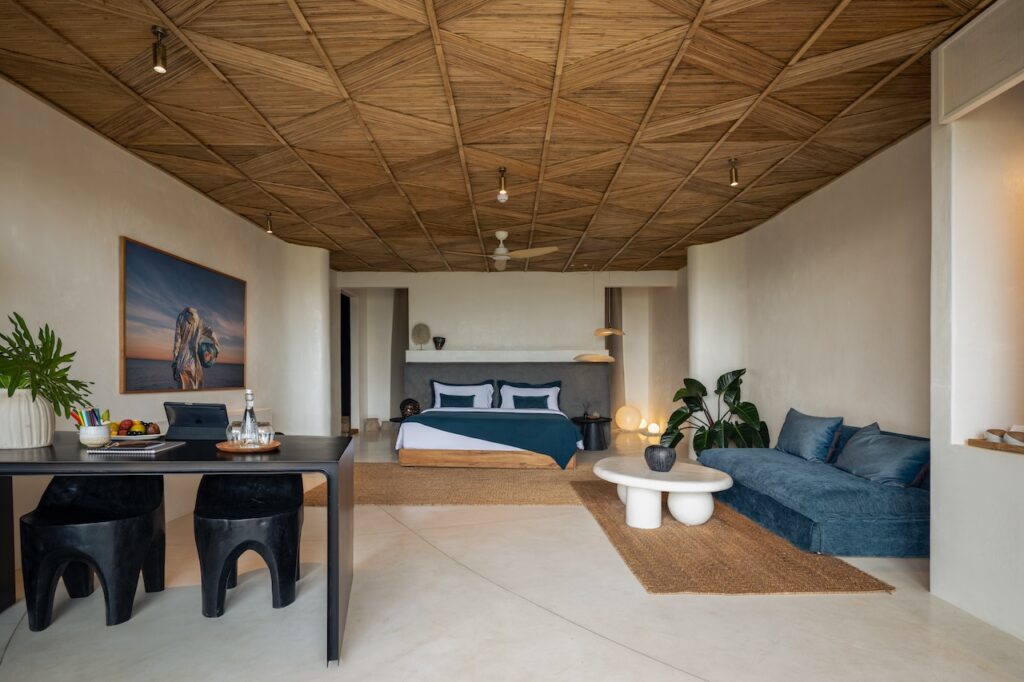
When I first took on the project, it was already an ongoing renovation of what used to be a private three-bedroom villa owned by our investor. I then collaborated closely with the talented women from CUB (Crafts United Bali) to completely reimagine the space and transform it into an 18-bedroom hotel. Inspired by the Japanese philosophy of wabi-sabi – the beauty of imperfection – we designed a sanctuary that preserved elements of Balinese heritage while reinterpreting them through a contemporary lens.
Every detail pays homage to the island’s artisans, incorporating time-honoured techniques and locally sourced materials to create a refined yet deeply grounded aesthetic.
Oshom Bali is described as a sanctuary where tranquillity meets creative expression. How did you balance these elements in the hotel’s design and guest experiences to align with Nuanu Creative City’s ethos of harmonious living?
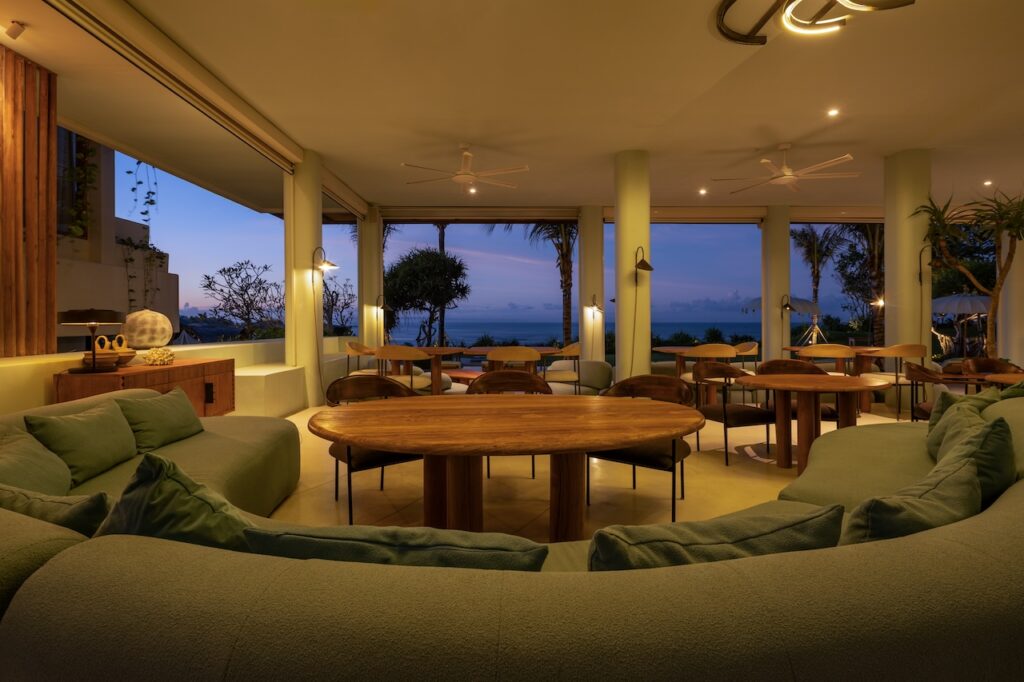
At Oshom, we believe that tranquillity and creative expression are not opposites, but complementary forces that, when held in balance, create space for deep presence and authentic connection. That philosophy is woven into every aspect of the guest journey, from architecture to programming.
Design-wise, we worked closely with Julie Noppe and Natalie Harvey of CUB (Crafts United Bali), alongside architect Pablo Luna, to create a space that respects and honours Balinese designers and artisans but viewed through a contemporary lens. The retreat sits between the Indian Ocean and a thriving mangrove forest, so the architecture intentionally flows with the landscape rather than imposing upon it. Curved concrete forms, bamboo “nests”, and organic materials like volcanic plaster, reclaimed teak, and Mount Agung lava stone help maintain a strong connection to place and nature. Even the absence of sharp corners in our design fosters a feeling of softness and flow.
That same philosophy carries into the guest experience. We’ve created moments for stillness (such as sunrise yoga with views of the black volcanic sand, in-room meditation nooks, and massages overlooking the ocean) paired with opportunities for inspiration and interaction. Guests might attend a poolside lecture by an artist-in-residence, join a cacao ceremony, or dance in the rain. Our artist showcases, creative workshops, and storytelling nights are designed not as performances, but invitations to participate, reflect, and connect.
Each of Oshom’s 18 accommodations includes thoughtful, creativity-enhancing features: a dedicated meditation space, a writing desk crafted by local artisans, a tea ritual corner with handmade ceramics, and even a disco ball in the wardrobe, a light-hearted reminder that play is also sacred. Even our smart lighting and sunrise-simulated curtains reflect our approach: subtle technologies that support natural rhythms and intuitive living.
You come from a luxury travel background; what did you see was missing in the Bali hotel and hospitality landscape that shaped your vision for Oshom?

After a decade working in luxury travel across Europe, I came to understand that true luxury isn’t about opulence or excess. It’s about presence, depth, and intentionality. It’s the quiet moment in an olive grove with a glass of natural wine. An unexpected conversation that shifts your perspective. The beauty of something crafted by hand, with care.
When I arrived in Bali and began exploring the hospitality landscape here, I was struck by how much of the market was polarised: on one side, ultra-luxury resorts offering polished, yet often impersonal experiences; on the other, barefoot retreats focused on wellness but sometimes lacking design integrity or curation. There was very little in the middle that offered both high design and soul.
With Oshom, I wanted to create a space that honours the principles of refined hospitality—attentive service, exceptional comfort, immersive design—but also infuses it with cultural depth, creativity, and play. A place where luxury feels human, not transactional. Where guests are not just pampered, but nourished mentally, emotionally, and spiritually.
How does Oshom Bali honour Bali’s rich cultural heritage while fostering a space for international collaboration and creativity?
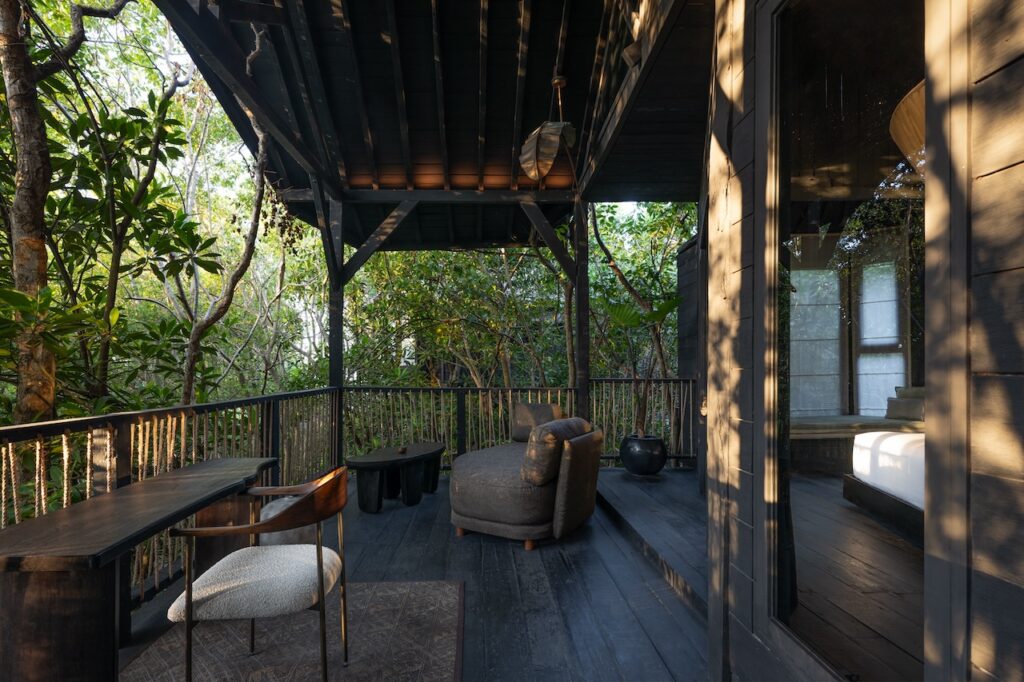
We see cultural heritage and creative innovation not as separate ideals, but as part of the same continuum. Bali has a deeply rooted tradition of artistry, ritual, and community expression; elements that are not just beautiful but profoundly relevant to today’s global conversations around sustainability, interconnectedness, and creativity. Our goal has always been to honour that heritage not through tokenism or aesthetic borrowing, but through respectful collaboration, storytelling, and co-creation.
From a design perspective, everything begins with the land and the local artisans who know it best. We’ve partnered closely with Balinese and Javanese craftsmen to source and create nearly every element at Oshom, from hand-drawn furniture and black sand plaster walls to banana paper pendant lamps. These materials carry stories, traditions, and techniques passed down through generations. Our bamboo “nests,” designed with Pablo Luna, draw on organic Balinese forms while reinterpreting them with a contemporary sensibility that speaks to a global audience.
Culturally, we see Oshom as a bridge between worlds. We host regular artist residencies and rotating showcases that highlight both Balinese and international creators, encouraging cross-pollination and dialogue. Our programmes invite local dancers, musicians, healers, and thinkers to share their knowledge with guests from around the world, not as performers but as collaborators. Guests might participate in a traditional weaving workshop in the morning and attend a fireside conversation with a regenerative designer or futurist in the evening. This layered experience fosters both reverence for Bali’s roots and curiosity about the world’s shared future.
Importantly, we are part of the wider Nuanu Creative City ecosystem, which is rooted in respect for indigenous wisdom while incubating global innovation. That gives us a powerful platform to support cultural preservation.
As co-director of the Suara Festival, you brought together changemakers like Zach Bush and Ari Rabik. How have these experiences shaped Oshom’s programming, particularly in its wellness and cultural offerings?

At Oshom, we’re deeply committed to offering more than just leisure—we aim to create cerebral experiences that engage the mind and spirit. That’s why thought leaders like Zach Bush and Ari Rabik are always top of mind and I wanted to carry that same intentionality into Oshom’s cultural and wellness offerings.
We’ve hosted poolside lectures with inspiring voices like Dorota Stanczyk, who has worked closely with Mindvalley, and AB Rogers, known for his innovative approach to design and human experience. These moments of dialogue and discovery are what set Oshom apart – a thoughtful balance between wellness, creativity, cerebral entertainment, and everything in between.
What guests experience now is just the first chapter for Oshom – what are you working on now in terms of your mangrove villas and beach bar?
We’re currently focused on building awareness and putting our name out there, while quietly preparing for the next phase of the project. Our beach bar is already operating in a soft-opening capacity, and we’re excited to officially launch it soon—it will be the first of its kind along the Tabanan coastline.
We also have a thoughtful design concept in place for our upcoming mangrove villas, though our current focus remains on refining what we already offer and strengthening Oshom’s presence as a unique destination. All these upcoming features are part of our vision to elevate and enrich the Oshom guest experience.