

Its coastline curves like a calligrapher’s flourish, etched with palm-shaped islands and continents drawn into the sea. Dubai is designed to dazzle — all futuristic sleekness and record-breaking ambition.
But if you want to discover something deeper, more grounded, pushing past its glitz and glam (and towering skyscrapers) and speaking to its humanistic side, countless cultural experiences reveal the heart of this global city (and emirate).
From its pearl diving legacy to its contemporary art community, here are 13 cultural experiences in Dubai that peel back a new layer and showcase a city with more soul than shine.
Wind-Tower Homes in the Al Fahidi Historic District
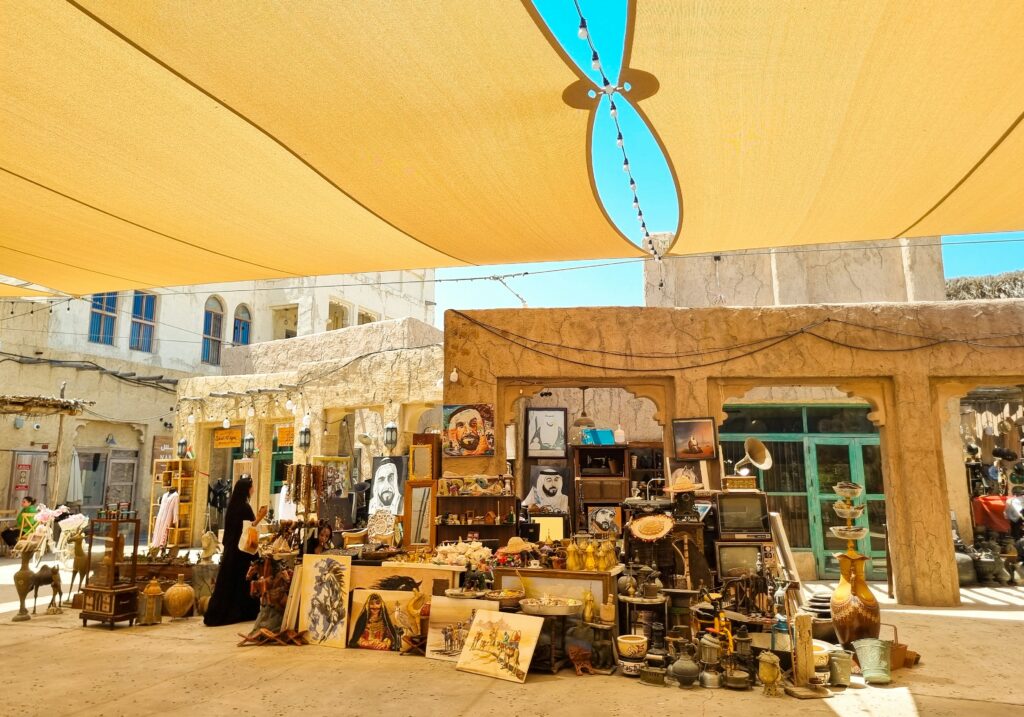
From the second you touch down in Dubai, it’s evident that smart, futuristic design is woven into the city’s DNA. Before Dubai built its tallest towers, it mastered cooling homes without a switch. Long before choreographed fountains and mall ice rinks, homes were cooled using desert logic and sea-breeze engineering.
The epicenter of it all? The Creekside Al Fahidi Historic District, where wind-tower homes showcase how form follows function (and indelible stop on any Dubai itinerary or layover).
These traditional towers, known as Barjeel, were imported from Egypt and Persia in the late 19th century. More than just clever ventilation, they became symbols of social standing and sustainable desert living. In a region with scarce resources and unforgiving summers, Barjeel embodied the shared wisdom of living in harmony with the wind, sand, and sun.
In the maze of low-rise, sand-coloured buildings, you’ll understand how thick walls once shielded narrow lanes from the sun’s glare. On the rooftops, chimney-like structures with wooden crossbeams jut out like toothpicks from slatted openings on all four sides – an ingenious design to catch the breeze and channel it downward.
✈️ Jetsetter Tip: A sip of rosewater- and cardamom-scented Qahwa in the shaded courtyard of XVA Art Café. No modern air-conditioning has ever truly managed to recreate that kind of cool.
Alserkal Avenue’s Indie Art Galleries and Design Studios
Within the industrial sprawl of Al Quoz, Alserkal Avenue is a former warehouse district reimagined as a cultural constellation of galleries, studios, performance spaces, and cafés. Corrugated steel, pivoting concrete walls, and semi-finished murals compel you to rethink the notion that modern architecture often lacks character. Since its founding in 2008 by Abdelmonem Bin Eisa Alserkal, the Avenue has grown from a handful of art spaces to over 70 creative businesses, including the influential Carbon 12, The Third Line, and the Jean-Paul Najar Foundation.
It’s a place for artists, curators, and communities to showcase, question, reflect, and reimagine. From influential Emirati voices to global experimentalists, you never know who you might bump into here.
My favourite area is Concrete, an OMA-designed brutalist space where projections ripple across vast white expanses. The nostalgia of vintage sofas, velvet drapes, and hand-painted film posters in Cinema Akil, Dubai’s only arthouse cinema, draws you back to the comforts of a more tactile world of celluloid.
✈️ Jetsetter Tip: Come during Alserkal Lates, when exhibitions stay open after dark and the district transforms into a lantern-lit labyrinth of talks, performances, and sonic experiments.
Interactive Tech and Design at the Museum of the Future
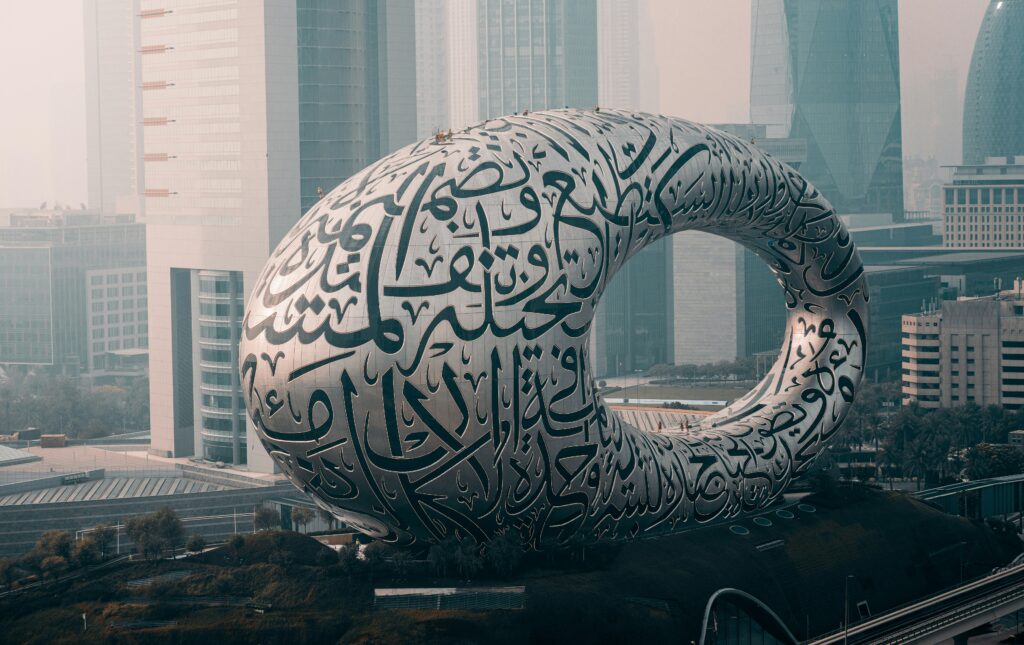
Suspended like a silver loop between earth and sky, the Museum of the Future stands like a portal into tomorrow. Part building and part sculpture, it is shaped by the Arabic script of a hopeful poem. Inside, exhibitions unfold like sensorial experiences: haptic walls that respond to your presence, AI-generated poetry, immersive pods simulating space missions, and future worlds shaped by climate tech and speculative design.
The museum is along Sheikh Zayed Road, a short walk from the Emirates Towers metro station. It traces the Gulf’s long legacy of storytelling and visionary design in a modern, alive space that reimagines what progress can (and should) feel like.
In the themed fifth floor, “Orbital Space Station Hope”, you’ll float through a spacecraft simulation cloaked in cosmic light and ambient echoes, with stars blinking over a 360° horizon. Several levels down, a futuristic healing garden offered an entirely different kind of immersion with scented trails, tonal frequencies and flora that shimmer as you approach.
A nod, perhaps, to the Islamic gardens of paradise, reimagined for a post-carbon world.
UNESCO-Tagged Emirati Craft at Al Shindagha Museum
Inside the Turath Centre at Al Shindagha Historic District, heritage lives in delicate threads of Talli. This traditional Emirati braiding craft was once used to decorate the collars, cuffs, and hems on women’s clothing. Mothers taught it to their daughters, and every bride had Talli in her wedding trousseau.
Today, this UNESCO-recognised art form keeps old skills and stories alive.
Watching local artisans arrange threads twined with metallic strands across soft cushions balanced on slender metal stands is like therapy for some, crossing and dropping them in a rhythmic motion – as effortlessly as a musician plucking notes on a Rebabah. When a silver zigzag of Sayer yaay catches the light, it conjures up images of a flash of lightning across dunes. Coupled with two shimmering lines of Bu-khostain running in perfect tandem, the sight is eerily reminiscent of caravan tracks in the desert.
✈️ Jetsetter Tip: Ask the artisans about the hidden meanings behind each Talli motif – who knows which theme you will learn about.
An Emirati Meal in a Restored Heritage Home
At the Sheikh Mohammed Centre for Cultural Understanding, guests are welcomed with genuine Emirati hospitality, seated cross-legged on low cushions atop Bedouin-style carpets, and invited to share a meal over conversation.
Dishes arrive on large platters: Machboos (spiced rice with meat), Harees (a creamy blend of wheat and lamb), and Luqaimat (crisp dumplings soaked in sticky date syrup). Everyone eats together, just as Emiratis have done for generations.
As Qahwa is poured into delicate Finjaan cups, its hosts provide a primer on Ramadan, weddings, school days, and daily life in the UAE. Nothing is off the table when it comes to deep dives into Emirati culture, including courtship, family roles and even why Bakhoor is burned after meals. The answers are generous, the mood relaxed.
✈️ Jetsetter Tip: Go during Ramadan when faith, flavour, and community unite in a sacred moment.
Bedouin-Style Desert Dining Under the Stars
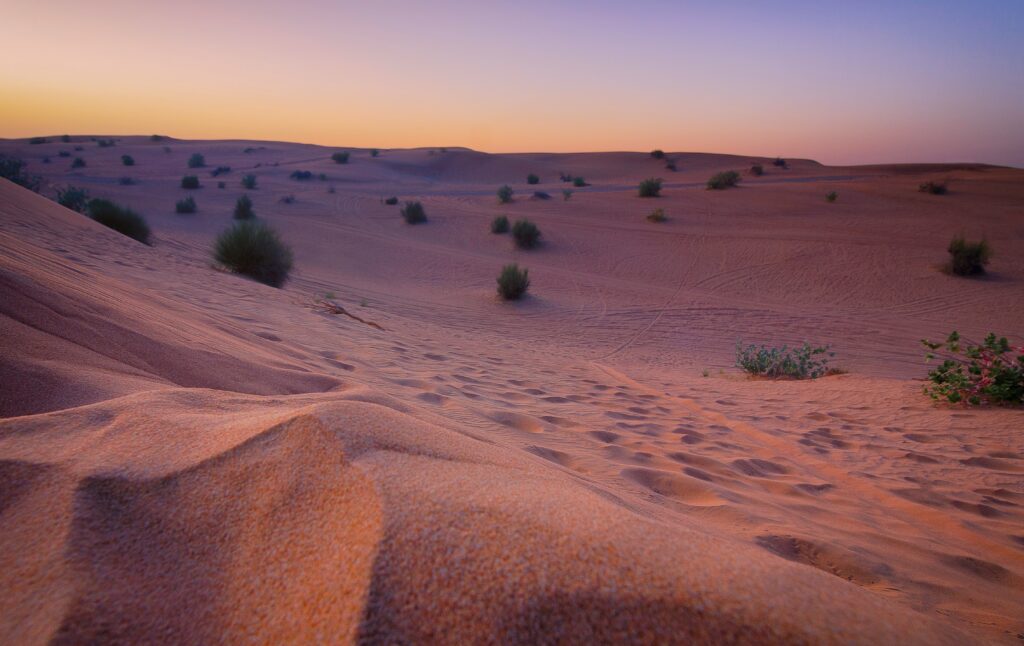
Just before sunset, a convoy of 4x4s leaves the city’s glitter behind to enter an endlessly wide-open landscape of pure amber. Far into this vast stillness, a Bedouin-style camp appears with low tents, lanterns, carpets, and the scent of spice. Dining under desert skies at iconic camps like Sonara and Al Khayma beside a crackling fire is about as close as you can get to the rhythm of nomadic life.
Each evening, as the sky deepens into black velvet, the lilt of Nabati poetry, stories loosely translated into English, and slow, graceful dance performances to the soft twang of the oud come in tandem with communal platters of grilled meats, saffron rice, warm bread, and sticky dates.
The night is generally capped off with a guide pointing out constellations once used for navigation, where you’ll be struck with the timeless beauty (and mechanics) of simple nature’s original GPS.
Thunder of Camel Hooves at Al Marmoom
Out in the golden sprawl of Al Marmoom, when the first rays of sun brush the dunes, the centuries-old tradition of camel racing springs to life — updated with robot jockeys and roaring 4x4s. One of the UAE’s oldest sports, born out of Bedouin life, goes back to when camels were treasured companions. Racing used to celebrate endurance, tribal pride, and community spirit.
There’s no better front row seat to this timeless sport than at Dubai’s largest camel race track, the Dubai Camel Racing Club, where sixty camels thunder out of the gates in pursuit of glory. It’s no dignified polo match; however, the sandy blur of rhythmic hooves, flying long legs, and necks stretching forward in sync with the shouts of trainers, who chase them in parallel in speeding SUVs, shouting encouragement through walkie-talkies, commands a raw, untamed energy that speaks to the essence of this Bedouin tradition.
Races usually run from 6 to 9 a.m. on weekends during winter. Bring binoculars, wear closed shoes, and stay a while even after the race. This is an early-morning ritual best savoured slowly.
Make sure to arrive before the races begin to spot the camels being groomed and saddled.
Live Falconry Displays in the Desert
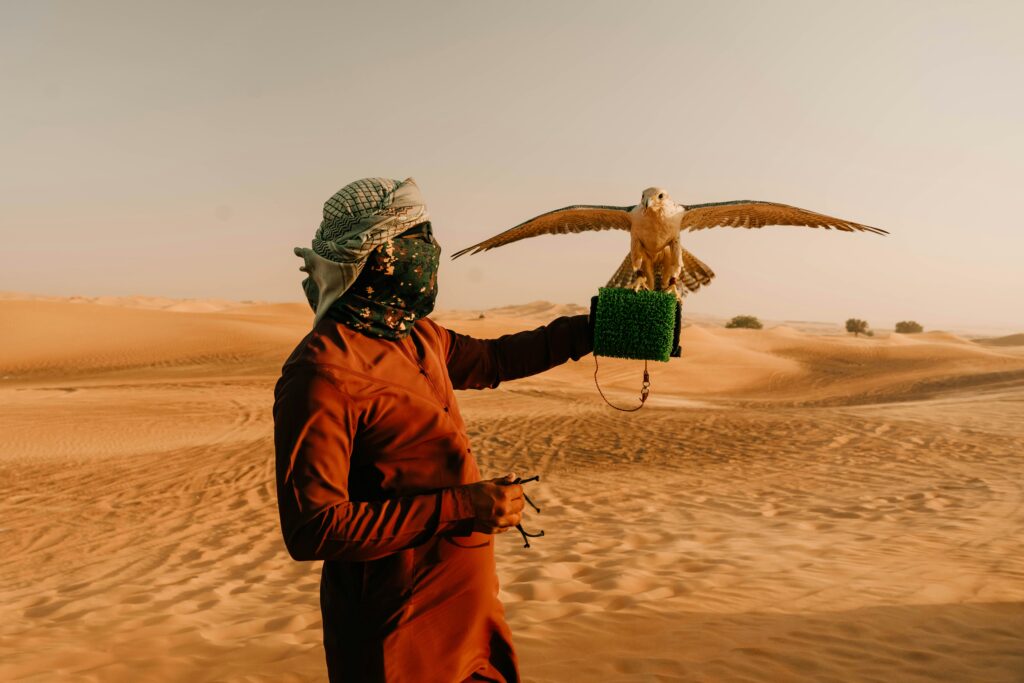
Live falconry displays in the Dubai desert, led by the likes of Royal Shaheen Falconry and Platinum Heritage, are a chance to witness a centuries-old Bedouin art of training birds of prey through trust, instinct, and subtle body language.
Once essential for survival in the arid deserts of the Arabian Peninsula, falconry dates back over 4,000 years. Bedouin nomadic tribes trained falcons to hunt hares and houbara bustards. It remains a strong emblem of Emirati identity, silhouetted on passports and banknotes.
At dawn, in the stillness of the dunes, expect a falcon launched into the air — circling, swooping, diving with razor-sharp grace, followed by efficient silence as it swoops to land on a gloved arm. You’ll sense an intimacy in the unspoken choreography between falconer and falcon — the flick of a wrist, a subtle lean of the shoulder, the briefest eye contact, one of nature’s greatest aerial predators responding to cues so nuanced they are almost invisible.
Pearl Diving Aboard a Dhow Boat
In the turquoise waters off Dubai’s coast, slip on gloves, grip your net bag, and dive…not in search of coral reefs but oysters. Led by expert guides, like Dive Mahara and Travel & Culture Services, aboard traditional dhow boats, the experience offers a rare, hands-on glimpse into a life ruled by tides and tradition.
Pearl diving lies at the heart of the UAE’s pre-oil economy — a legacy built on maritime grit, trade, and community. Divers once spent months at sea, plunging without equipment, their chants echoing over open water as they searched for treasure in the deep.
The first time I cracked open an oyster, fingers wrinkled and raw from saltwater, I half expected nothing. But when a tiny pearl rolled out, I knew what it must’ve felt like to risk everything for one precious moment.
Dhow Boats Taking Shape at the Al Jaddaf Shipyard
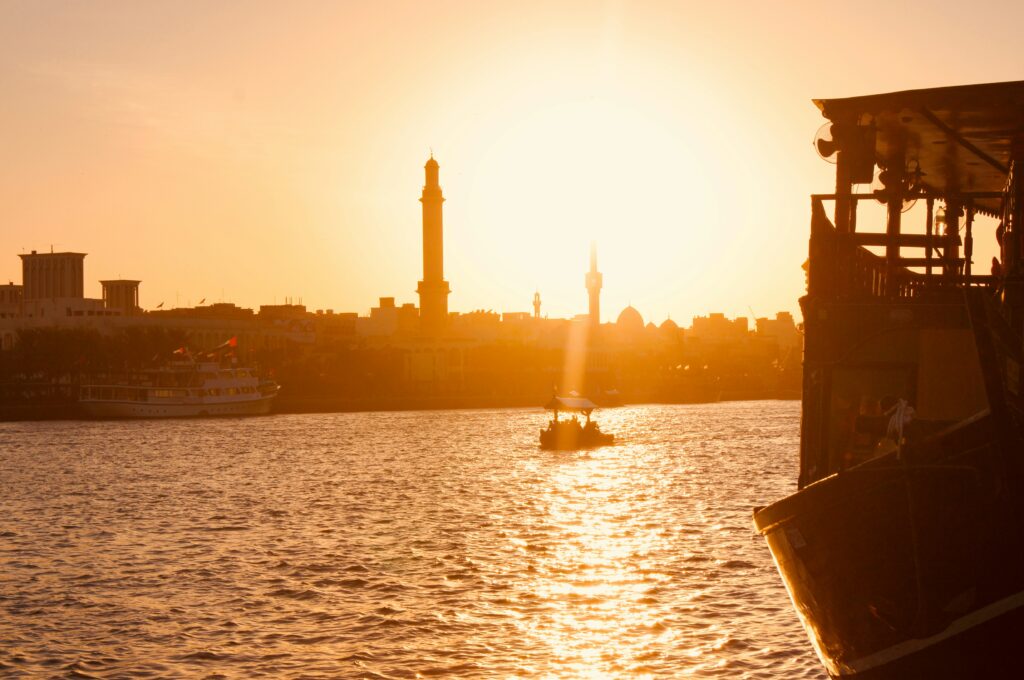
Scent of teak mingles with sawdust, and a thud of hammers echoes across the Dubai Creek at the Al Jaddaf shipyard. Craftsmen shape vast wooden dhow boats entirely by hand, with intuition and skill passed down through generations. Long before oil, it was the dhow that shaped Dubai’s fortunes — sailing to Zanzibar for spices, to Gujarat for cloth, and into the open Gulf in search of pearls. The bow and billowed sails remain an enduring symbol of iconic Emirati architecture.
There’s no signage, no opening hours. Simply stroll in on a weekday to explore the place for yourself. Don’t be surprised if you stumble upon workers coaxing planks into place with nothing but wooden mallets and their weight.
After your visit, hop on a wooden Abra across the Creek. It’s the most fitting way to leave a place shaped by water and wood.
Custom Scents at a Perfume-Making Workshop
In the studio of master perfumers at the venerated institutions of Oo La Lab or The Workshop Dubai, create a fragrance that’s entirely your own. Drops of saffron, sandalwood, citrus, vanilla, or aged oud, every vial is a personal story.
In the Gulf, scent goes beyond adornment. It blends memory, ritual, and deep-rooted hospitality. Attars are dabbed before prayer, bakhoor smoke drifts through homes to welcome guests, and bottles of fine perfume mark every rite of passage.
These workshops are nothing less than meditative retreats, where you can mix musky elixirs in soft, lit, soundless rooms, surrounded by glass bottles of raw ingredients. The tranquil intimacy of the process lingers with you long after, as each time you dab the scene on your wrist, it transports you back to the stillness of that sacred experience.
✈️ Jetsetter Tip: For ultimate relaxation and rejuvenation, make sure to check out our guide to traditional Islamic wellness experiences every visitor to the UAE should experience!
Art, Music, and Poetry at the Sikka Art & Design Festival
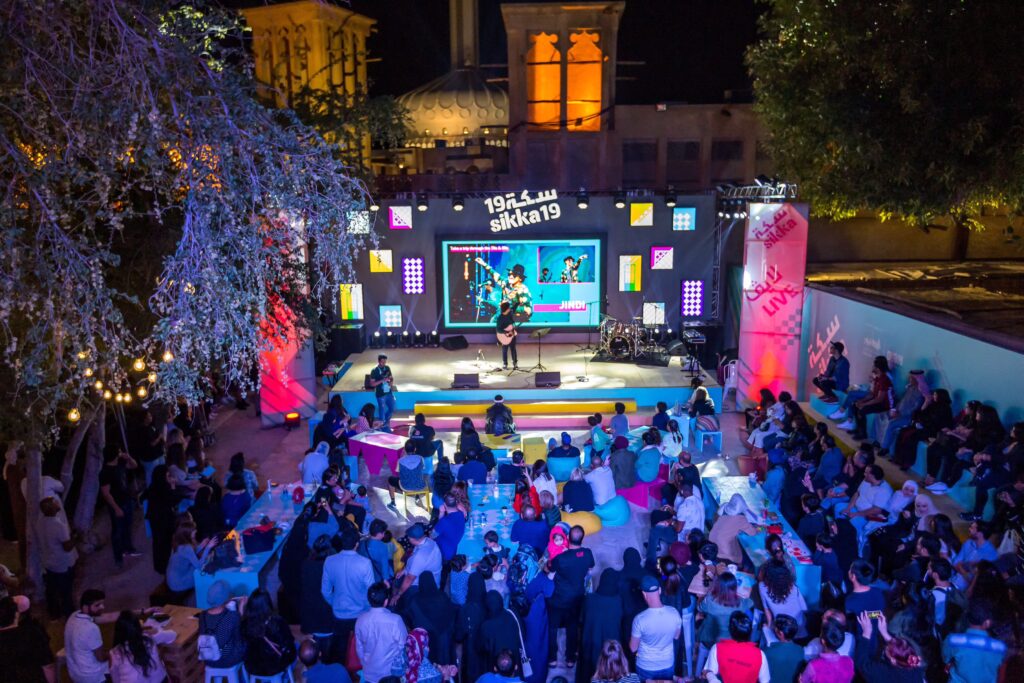
Image courtesy of the Government of Dubai Media Office.
Each spring, Al Fahidi Historic District’s lanes transform into an open-air showcase of art, music, and poetry with the Sikka Art & Design Festival.
Sikka, under the patronage of Her Highness Sheikha Latifa bint Mohammed bin Rashid Al Maktoum, began in 2011 as a modest exhibition to showcase Emirati and UAE-based visual artists.
It quickly became a multidisciplinary platform of workshops, music, poetry, film screenings, and large-scale installations. Entry is free. The festival runs for about ten days in March. Dubai Culture’s website has the annual schedule. Show up at golden hour and stay until late.
What I found special about Sikka is rooted in the Emirati cultural revival. It is a platform for emerging local and Gulf-based artists, designers, and storytellers who connect Emirati heritage with an experimental present. Two of my favourite experiences were digitally projected calligraphy and folk music with electronic beats.
✈️ Jetsetter Tip: Between shows, grab a drink at Make Art Café or browse local zines at XVA Gallery.
Emirati Hair Dance Performance
Two rows of roughly 20 men face each other, carrying thin bamboo sticks to signify spears or swords. Girls wearing traditional dresses stand at the front, tossing their long hair from side to side. Musicians play large and small drums, tambourines, and brass cymbals between the rows.
This is Al-Ayyala, the UAE’s most iconic folk performance, tagged with UNESCO Intangible Cultural Heritage status.
Originally a war dance, it is a cultural celebration symbolising peace, solidarity, and mutual respect.
Nothing prepared me for my first time witnessing Al-Ayyala in the Dubai Heritage Village. The men moved in unison like a single organism, and their hair flicked through the air like black silk in motion. The air, alive with rhythm and energy, the drums’ pulse pulsating through the ground beneath.
It’s an unforgettable display of tradition, where every flick of the hair and beat of the drum is a living testament to the strength and unity of the Emirati past and present.