

Whether it’s your first visit or your fifth, Hong Kong is a city that rewards curiosity — and preparation. With its layered geography, lightning-fast public transport, and mix of cultures, the city can feel exhilarating and overwhelming all at once. A little insider knowledge goes a long way in making your trip smoother, deeper, and more rewarding.
Hong Kong is also a city best explored by honing in on specific neighbourhoods. Each pocket tells a different story. Whether you’re drawn to the old-meets-new energy of Sheung Wan or the buzzing streets of Mong Kok, the Fragrant Harbour has something up its sleeve for every type of traveler. And come hungry and ready to fill up your suitcase with souvenirs: the food scene here is world-class, along with the shopping.
So before you hop on the Airport Express, wave down your first taxi, and toss back your first Bakehouse egg tart, here are the essential Hong Kong travel tips to hit the ground running and explore like a local.
Get App Ready: Download these apps to make Hong Kong a breeze
In hyper-connected Hong Kong, having the right apps downloaded before you land will save you time, confusion, and unnecessary detours.
Start with transport. Uber works across the city and even lets you book traditional red taxis. If you prefer to hail a cab the old-school way, HK Taxi Cards is a brilliant tool for showing your driver the name of your destination in Chinese. I’ve lived in Hong Kong for years and still rely on both apps.
Taxi drivers are friendly (mostly), but not all are confident in English — having your destination already typed in or translated can save you some back-and-forth. MTR Mobile is another must-have, giving you real-time updates and helping you plan your route on the city’s clean, efficient train system.
For food and weather: both Foodpanda and Keeta are the go-to for food delivery now that Deliveroo has exited the city. And don’t forget MyObservatory, the government-run app that provides real-time updates on rain, humidity, and typhoon signals (a must during summer).
Understand the Geography: Knowing Hong Kong Island From Kowloon

Don’t think of Hong Kong as just a single, compact city; it’s a patchwork of vibrant districts spread across Hong Kong Island, Kowloon, the New Territories, and a scattering of outlying islands. Understanding this layout will help you plan your trip more efficiently, especially when choosing where to stay and how to get around.
Hong Kong Island is the city’s beating heart, home to gleaming skyscrapers, buzzing restaurants, and iconic sights like Victoria Peak. If it’s your first visit, staying on the Island puts you close to the action. Look for accommodation between Causeway Bay in the east and Sai Ying Pun in the west — you’ll have easy MTR access, great dining, and walkable neighbourhoods like Central, Sheung Wan (including PoHo), and Wan Chai.
Kowloon, found directly across Victoria Harbour, offers a slightly grittier, more local feel — think neon-lit streets, bustling markets, and old-school charm. But it’s home to must-see landmarks too. Think Avenue of Stars, Chi Lin Nunnery, Nan Lian Garden, and (much) more. For convenience, base yourself around Tsim Sha Tsui or Mongkok. Both are well-connected and packed with energy (and incredible snacks).
Once you go beyond these zones, travel time increases significantly. Deep into the New Territories (closer to Mainland China), you’ll find nature, hiking trails, and traditional villages, while outlying islands such as Lantau, Lamma, Cheung Chau, and Peng Chau call for a day trip.
Getting Around Hong Kong: From MTR to Star Ferry
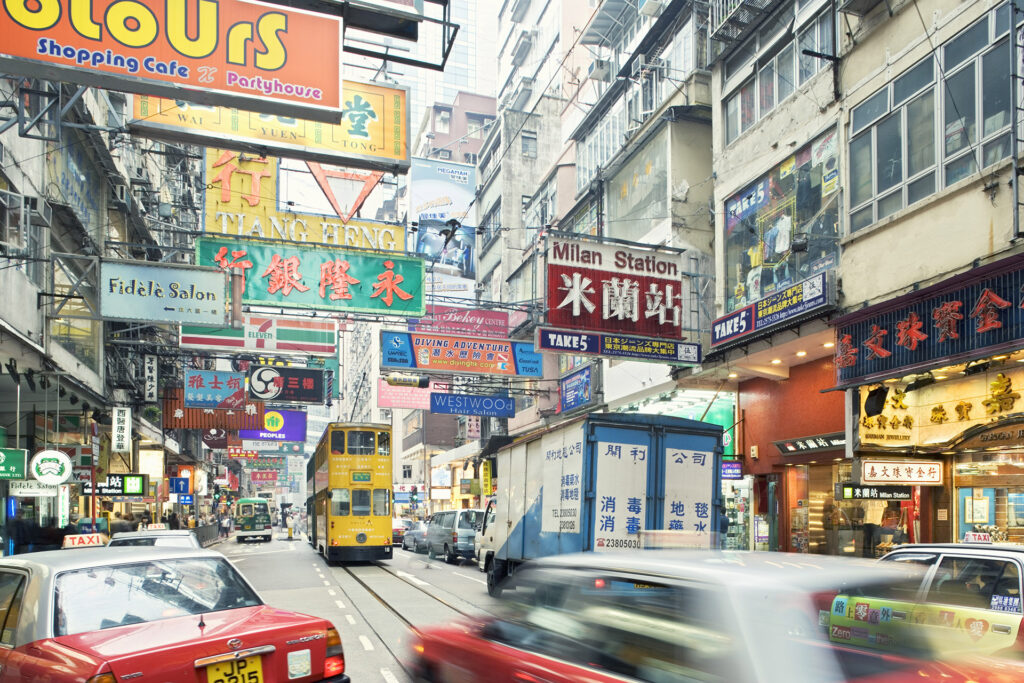
Navigating Hong Kong is far easier than it sounds. The city’s transport system is efficient, clean, and intuitive, whether you’re zipping between neighbourhoods or soaking in the views.
The MTR (Mass Transit Railway) is the fastest way to get around. It’s clean, punctual, and well-signed in English. Tap in and out with your Octopus Card for smooth travel. On Hong Kong Island, the MTR doesn’t cover all areas (primarily the southern and far-reaching eastern districts), so check if there’s a Citybus that gets you closer. Avoid peak hours (7 to 9 am and 5 to 7 pm) if possible.
Tempted to hop on a minibus? These speedy, 16-seater rides are a Hong Kong classic, but I’ll admit, even as a 10-year resident, they still make me nervous. Stops aren’t announced, and getting off requires shouting “yau lok” (“getting off”) to the driver. Brave souls only.
Beyond public transport, red taxis serve Hong Kong Island and Kowloon (while green taxis cover the New Territories and blue taxis cover Lantau Island). Simply head to a taxi stand, or raise your arm if the taxi light is on — just not on double-yellow-lined streets where pick-ups aren’t allowed.
For a more scenic route, ride the Ding Ding, the iconic double-decker trams found weaving in and out of traffic on Hong Kong Island (from Kennedy Town to Shau Kei Wan). Cheap, nostalgic, and perfect for sightseeing (just HK$3.30 per ride). Finally, don’t miss the beloved Star Ferry for under HK$5. I always go from Tsim Sha Tsui to Central for the best skyline views — golden hour is magic.
Mastering the Airport Transfer: Quick, Easy, and Seamless
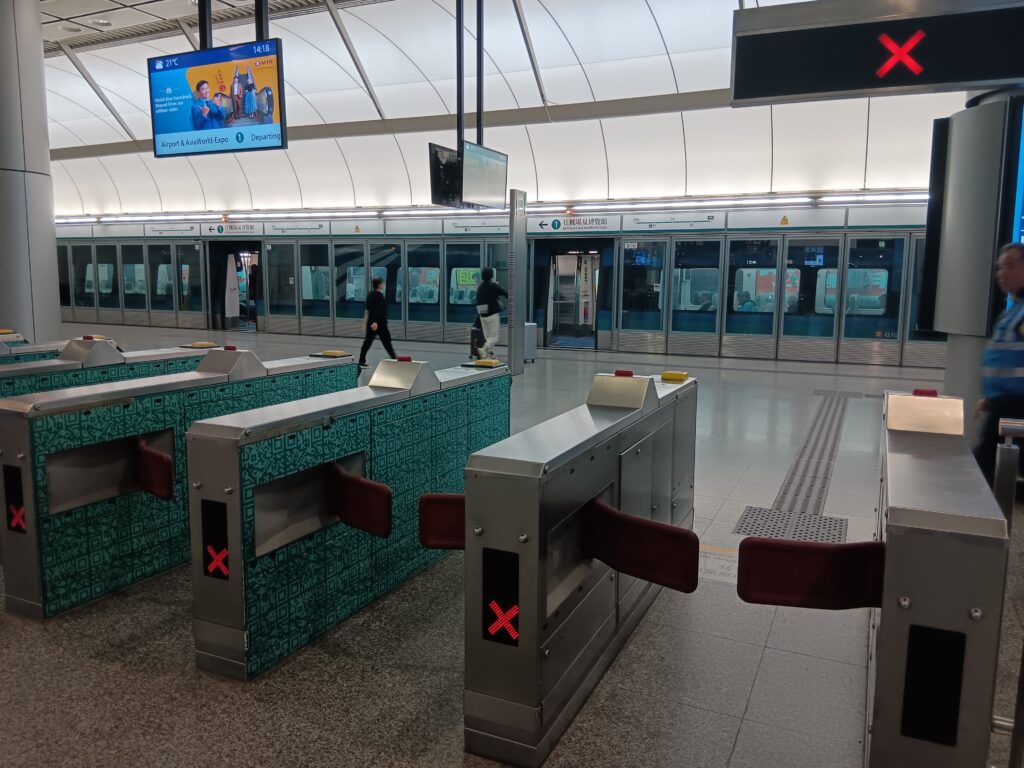
Touching down at Hong Kong International Airport is the easy part; getting into the city is just as smooth if you know what to do. The Airport Express is by far the fastest and most efficient option. In just 24 minutes, it’ll whisk you from the airport to Hong Kong Station in Central (inside the IFC Mall), with stops in Tsing Yi and Kowloon (located in ELEMENTS Mall) along the way. From there, taxis or the MTR can take you to your final destination.
Tickets can be purchased at the station, but it’s cheaper and more convenient to book in advance via Klook, where discounts are often available. And you’ll skip the queue at the counter. Trains run every 10 minutes from around 5:50 am to 1 am.
If you’re staying in a major hotel (or boutique hotel), check if they’re covered by the complimentary shuttle bus service from the Airport (for hotels located on Lantau Island mostly) or from the closest Airport Express station — a useful perk that takes you straight to the door, luggage in tow.
Alternatively, if you have heavy bags, are heading somewhere off the main line, or just want to cruise straight to your hotel, Uber or taxis are always on hand at the airport. But with the Airport Express, you’ll almost certainly beat them there.
The Octopus Card: Your Passport to Public Transport and Cashless Convenience
One of the top Hong Kong travel tips? Get your Octopus Card sorted as soon as you arrive. This reloadable card works across MTR, buses, trams and ferries but it isn’t just for public transport — it can also be used at convenience stores, supermarkets, vending machines, to pay for your coffee and most takeaways and even some taxis. It’s your all-access pass to daily life in the city and essential for any successful Hong Kong itinerary.
You can pick up a physical Octopus Card at any MTR Customer Service Centre, the airport, or most 7-Eleven and Circle K stores. Prefer going digital? Download the Octopus app and add a card directly to your phone wallet (Apple and Samsung supported).
Topping up is easy: for a physical card, use cash at convenience store counters or MTR top-up machines. For a digital card, simply add value through your app or linked wallet.
Personally, I love the freedom it gives me — from grabbing a bottle of water to hopping on a tram, all without fumbling for cash. Once you’ve tried it, you won’t want to go back.
Stay Connected With an eSIM or Local SIM: No Fuss, No Roaming Surprises
No one wants to scramble for Wi-Fi after landing in a new city. Thankfully, staying connected in Hong Kong is easy and affordable.
Several providers offer prepaid eSIMs tailored for travellers — check out Airalo or Nomad, for example. Some even allow you to set it up before you arrive, so you’re online the minute you turn off airplane mode.
Plans typically include local data (3–20GB) for around US$5–15, with options lasting from 5 to 30 days. Coverage is reliable and speeds are fast, especially in urban areas.
Prefer a physical SIM? You’ll find them at kiosks at the airport arrivals hall or any major convenience store in town. An option to explore is the 5G Discover Hong Kong Tourist SIM Card. This affordable, no-subscription plan brings you 12GB for HK$88 (7-day pass) or 24GB for HK$118 (14-day pass) and can be purchased at the Hong Kong Tourism Board’s Visitor Centre, at 1010 Centre, any CSL shop in town, or in convenience stores (7-Eleven and Circle K). Plus, coverage extends to Macao if you decide to visit for the day.
A little bonus tip for you if you’re like me, always on your phone, and end up running out of battery: you can rent a power bank at the convenience store. You’ll have to download the ChargeSPOT app, create an account to be able to scan to rent and pay a refundable deposit. You’ll then be charged per hour, but worry not, it’s super affordable.
Weather and Seasonality: Pack Smart and Be Prepared
Hong Kong’s climate shifts dramatically by season and understanding it can make or break your experience. From typhoon warnings to air-conditioned malls, here’s how to dress, plan, and travel with confidence.
Summer (June–September) brings intense heat and humidity, with July and August vulnerable to typhoons. Lightweight, breathable fabrics (think linen or cotton) and an umbrella for rain and sun are essential. Indoor venues blast air-conditioning, so bring a layer like a scarf or thin jacket.
Autumn (October–December) is the gold standard—dry, crisp, and mild. Pack short sleeves and a sweater or light jacket for evenings. Winter (January–February) stays mild and damp—layering is key, and you’ll want a lightweight coat for outdoor strolls. Spring (March–May) is warm and occasionally rainy, making a compact travel umbrella a smart companion.
Hong Kong uses a distinctive warning system for weather. The MyObservatory App issues real-time alerts, including Amber, Red, and Black Rain Warnings, plus Typhoon Signals 1 to 10. Travel will be disrupted when a Black Rain, or a Signal 8 or higher, is raised; ferry, MTR, and bus services may be suspended, while some supermarkets and restaurants may choose to close their doors.
Plan Around Local Festivals – Lanterns, Lion Dances, and Bun Towers
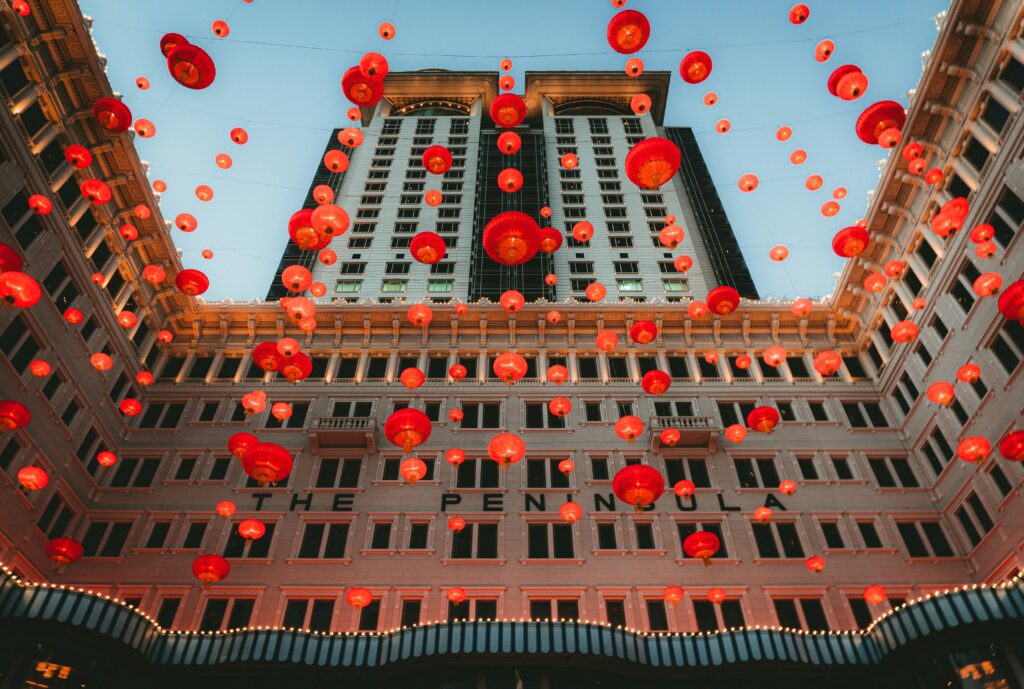
If you’re lucky enough to be in Hong Kong during a local festival, you’re in for something special. The city knows how to celebrate — with colour, drums, firecrackers, incense, and often a lion dance or two.
Chinese New Year (usually late January or early February) is the biggest celebration of the year. Think red lanterns, flower markets, and fireworks over Victoria Harbour. However, some shops and restaurants close for a few days, meaning the city doesn’t pulse with the same energy it usually does (allowing for quiet exploration).
In spring, the Cheung Chau Bun Festival is a quirky favourite — picture costumed kids parading through narrow streets and climbers racing up towers stacked with steamed buns. In autumn, the Mid-Autumn Festival lights up the city with lanterns, mooncakes, and a fire dragon dance through the neighbourhood of Tai Hang.
There’s also the Dragon Boat Festival in June (Stanley or Sai Kung are top spots to watch the races) and the Hungry Ghost Festival in late summer, where you’ll see smoky roadside rituals and paper offerings to wandering spirits.
Dates change each year since these follow the lunar calendar, so check in advance. But if your visit aligns, lean in. Hong Kong, at its most festive, is a feast for the senses.
Money & Payments: Cash is Still a Necessity
When it comes to Hong Kong travel tips, cash might not be king, but it’s still a useful backup. The local currency is the Hong Kong Dollar (HK$), which is pegged to the US dollar at a stable rate of around 7.8 HKD to 1 USD. Most shops, restaurants, and transport systems accept credit cards and contactless payments, but it’s recommended to always carry some cold, hard HKD in your wallet.
Visa, Mastercard and Amex are widely accepted in malls, hotels, and mid-to-upscale restaurants. Octopus cards cover public transport, convenience stores, and casual eateries. But cash can be surprisingly necessary—especially at local markets, small dim sum joints, or cha chaan tengs (local diners), many of which don’t take cards.
You can withdraw HKD from ATMs using international cards (HSBC and Bank of China are reliable options), or exchange currency in town (avoid the worst rates by skipping airport kiosks if you can wait). A currency exchange shop I’ve recommended to a few visitors is Little Girl Exchange in Sheung Wan (Shop A, G/F, General Commercial Building, 156-164 Des Voeux Rd. Central). It’s easily accessible if you’re staying in and/or visiting the central areas of Hong Kong Island and they offer good exchange rates, though it can be busy and a bit chaotic.
Mobile payments like Apple Pay, Google Pay, and AlipayHK are increasingly popular, but not always accepted by small businesses. If you’re staying a few days, sticking with a credit card, an Octopus, and a bit of cash is the sweet spot.
Many taxis still don’t accept cards or Octopus, so keep some small notes handy. Also, tipping isn’t expected—just round up the bill or leave a few coins at most casual places.
Mind the Manners: Politeness, Queues and Unspoken Rules
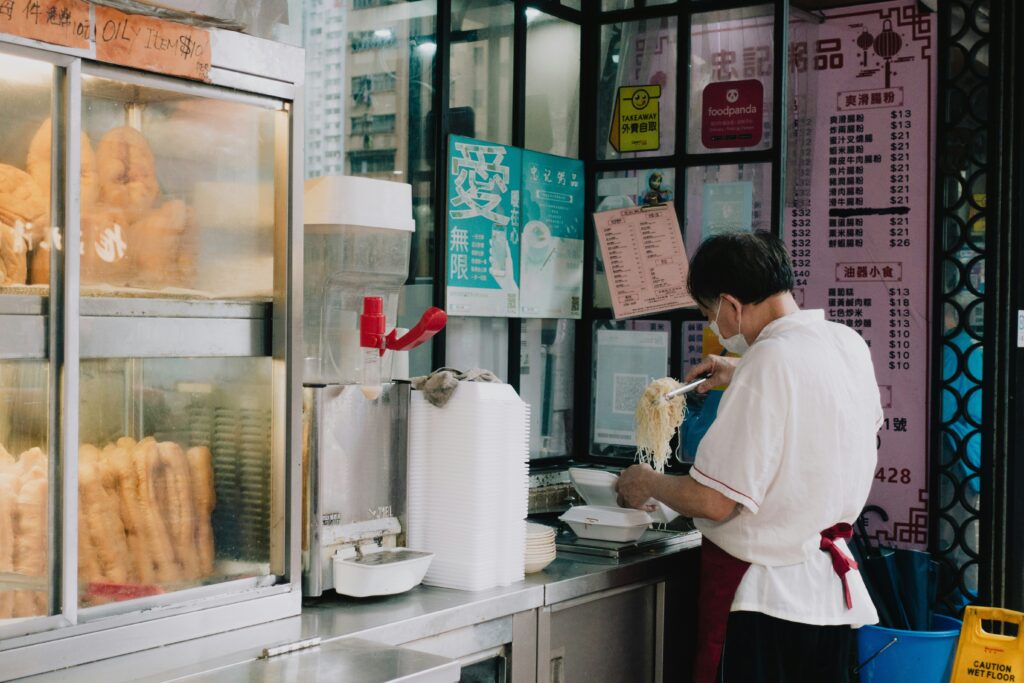
It’s easy to get swept up in the city’s speed, but a little etiquette goes a long way. Locals are generally polite and helpful, especially if you show respect in return.
Start with the basics: always queue (no cutting!) and stand on the right side of escalators to let people pass on the left. When offering or receiving something — a credit card, a receipt, even a business card — it’s polite to use two hands as a sign of respect. It’s a small gesture, but it’s noticed.
At restaurants, don’t stick your chopsticks upright in a bowl of rice (it resembles a funeral offering), and avoid pointing with them. If sharing dishes (common in local eateries), use the communal spoons or the opposite ends of your chopsticks.
Further, tipping isn’t expected in casual eateries or taxis, though some upscale restaurants may add a 10% service charge. Leaving small change is appreciated but never required.
Explore Beyond the City: Beaches, Hikes & Outlying Islands
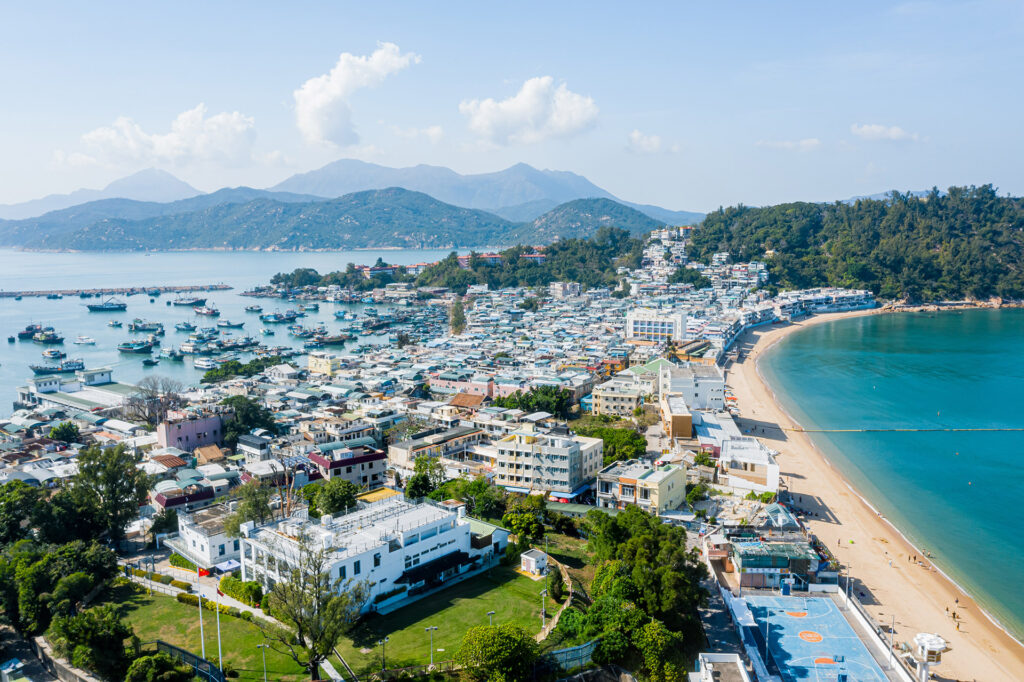
Beyond the skyline and shopping malls, nature reigns — with sandy beaches, green peaks, and laid-back islands just a taxi or ferry ride away. Did you know that 75% of the territory is actually undevelopable or protected green space?
If you’re short on time but craving a swim, a quick cab from Central will take you to Chung Hom Kok — a quiet, sheltered beach with soft sand and calm waters. Want something more remote? Tai Long Wan and Long Ke Wan in Sai Kung are breathtaking, though they’ll require a hike or boat trip to reach. Pack water, and make a day of it.
Hikers, skip the overcrowded Dragon’s Back and try The Twins and Violet Hill instead — a short, steep climb rewarded with sweeping views over Stanley. For serious legs and stunning ridgelines, tackle the Pat Sin Leng (Eight Immortals) trail up in the New Territories. It’s long, tough, and spectacular. And if you want something gentler, I always bring visitors up to Victoria Peak via the leafy Morning Trail.
Cheung Chau makes for the perfect island escape: think street snacks, seaside walks, and relaxed shopping streets. Grab a fresh mango mochi before you go.
The beauty of Hong Kong is that a day in nature here never feels far — and is truly one of the city’s best-kept secrets.