
Dubai’s skyline is a triumph of imagination. Yet what lies beyond its skyline is equally extraordinary, another kind of grandeur, a quieter kind of allure — one shaped by ochre deserts, mountain air and timeworn towns that tell the UAE’s older stories.
While the city reigns as a world-class hub of innovation and indulgence, some of the region’s most memorable experiences begin where its borders end. Drive a few hours in any direction, and the landscape transforms, ochre deserts dissolve into emerald oases and limestone mountains give way to coral bays.
Set out at dawn, and a different Arabian Peninsula unfolds vast, vivid, and alive with contrast. From the marble domes of Abu Dhabi to the fjords of Oman, these journeys trace the UAE’s hidden geographies, not just in miles, but in mood. Each offers a shift in light, sound, and sensibility – the hush of a mosque courtyard, the rustle of palm fronds in an oasis, the echo of waves in a wadi (ravine), the silence of the dunes at dusk.
This guide brings together eight of the best day trips from Dubai, a curated collection of experiences for travellers who want to expand their itinerary away from the city without the hassle of overnight stays.
Abu Dhabi
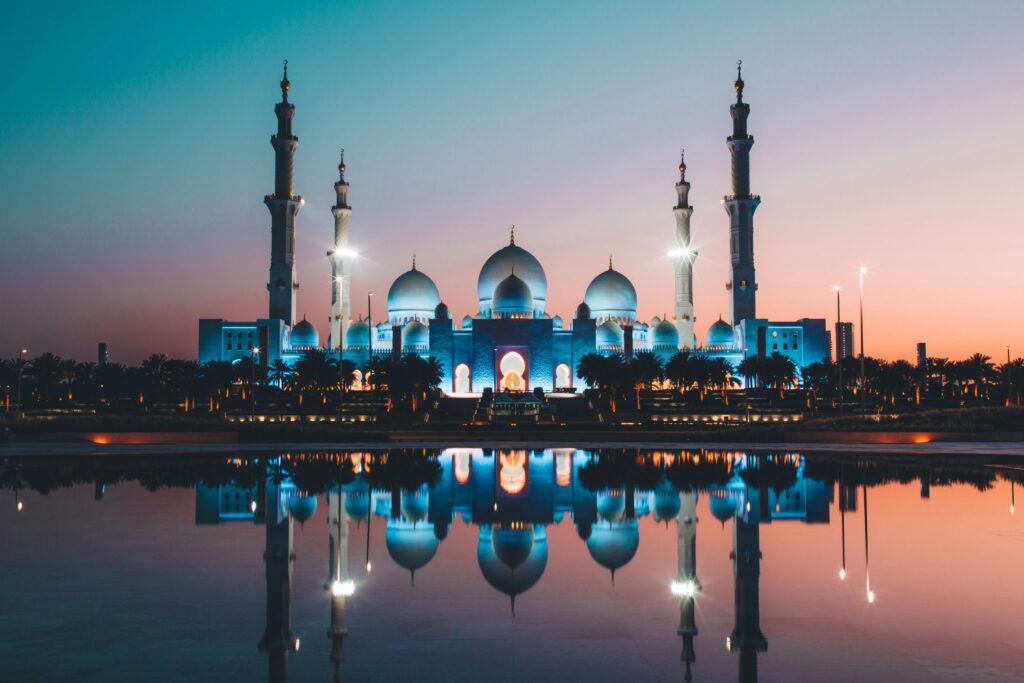
Perfect For: Culture seekers and architecture lovers, or first-time visitors drawn to the country’s grandeur.
The first stop on this journey of contrasts is Abu Dhabi, the UAE’s stately capital, where desert light meets the shimmer of the sea. A city of colonnades, courtyards, and reflective calm, it tempers Dubai’s intensity with poise, offering a glimpse into the federation’s quieter soul.
As the highway unfurls from Dubai, sand dunes flatten into calm horizons before giving way to Abu Dhabi’s ordered avenues and glistening domes. The city’s skyline is more measured – mosques, manicured corniches, and marble palaces mirrored in the still blue of the Arabian Gulf. The palette shifts from Dubai’s busy neon to a serene white.
Step into the Sheikh Zayed Grand Mosque, its marble floors inlaid with lapis and gold soothe like a whispered prayer while its glassy pools create an endless choreography of light and shadow. From there, continue to Qasr Al Watan, the presidential palace – part architectural marvel, part living museum for a glimpse into the philosophy behind the nation’s founding vision. The Louvre Abu Dhabi is striking in its architecture, even if you don’t step in for a full tour, while the Corniche invites tranquil seaside walks. If time allows, pause at the Etihad Towers for panoramic views of the city and the coastline.
Or simply spend your day at Yas Island, home to Ferrari World, Warner Bros. World, and Yas Marina Circuit for an adrenaline rush.
At Qasr Al Watan, join a guided walk to access its hidden gardens and then linger over lunch at the adjoining Emirates Palace, where the scent of cardamom coffee will turn your meal into a ceremony of quiet sensory indulgence.
Just under two hours from Dubai, Abu Dhabi is best explored between October and April, ideally with a private driver or a curated tour to move effortlessly between its palaces, museums, and shoreline promenades.
Al Ain
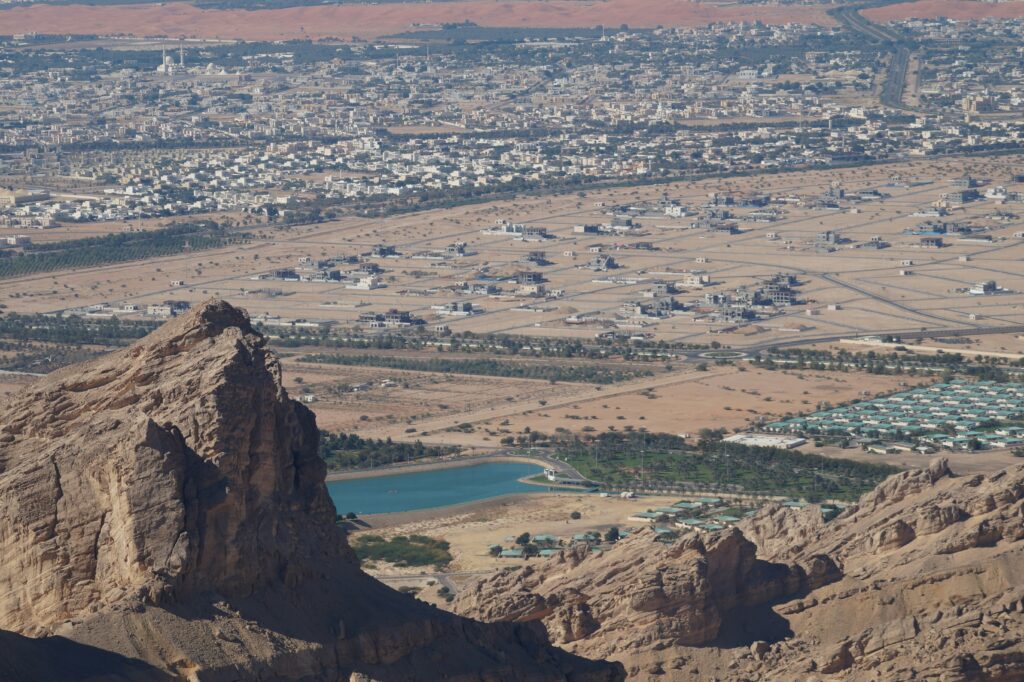
Perfect For: Families, history enthusiasts, and travellers seeking a gentler side of the Emirates — where heritage, nature, and learning come together.
From the capital’s coast, the journey turns inland toward the mountains, trading the shimmer of the Gulf for the scent of dust and date palms. Al Ain, also called the UAE’s Garden City, is a world of lush oases threaded with ancient waterways. A UNESCO World Heritage Site, Al Ain safeguards the region’s earliest traces of civilisation, a testament to the ingenuity that coaxed life from arid stone and shifting dunes.
As you arrive, the city reveals itself in soft gradations, palm canopies in fading gold set against the distant rise of the Hajar Mountains. It’s here that your exploration starts, at Al Ain Oasis, where the lattice of the falaj irrigation system still feeds thousands of palms and the air hums with the quiet of running water. Continue to Al Jahili Fort, its sculpted walls glowing honey-gold in the afternoon light. Once a defence post on the caravan routes, it now shelters exhibitions devoted to explorer Wilfred Thesiger and the early desert expeditions that mapped this vast silence.
A short drive leads to Al Ain National Museum, where Bronze Age pottery and Bedouin artefacts trace the region’s human arc. Then climb the sinuous road up Jebel Hafeet, the limestone sentinel that watches over the city, its curves revealing the ever-widening views of the desert until the whole oasis lies like a mirage below.
For families, the Al Ain Zoo and Al Ain Adventure Park offer a lighter interlude. Those drawn to authentic local experiences can arrive at the Camel Souq by dawn when traders call out prices in rhythmic Arabic and the first light gilds the dunes.
About ninety minutes from Dubai, Al Ain is best explored between October and April, ideally by private car, allowing you to explore at your own pace.
Sharjah
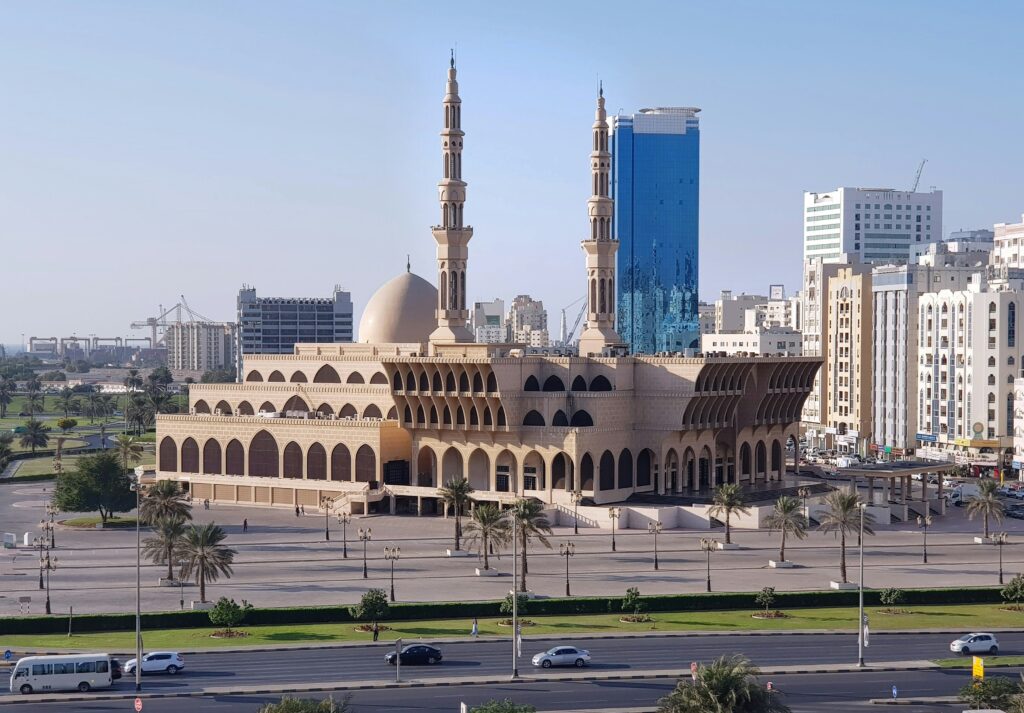
Perfect For: Art lovers, cultural purists, and reflective travellers seeking depth over dazzle.
Leaving the inland oases behind, the route curves towards the Gulf once more to an emirate that tells its story through calligraphy and courtyards, Sharjah, UAE’s cultural capital. It is a city that speaks in textures and rewards the traveller who listens closely.
Minarets glint beside mangroves, and galleries hide in narrow alleys. Here, time moves with deliberation, the city’s pulse measured in its calls to prayer and the turning of pages. Make your first stop in the Heart of Sharjah, a restored heritage quarter where merchant houses and wind towers recall the rhythms of pre-oil life. Al Hisn Fort and Souq Al Arsah frame this district filled with the scent of oud and old paper. From there, step into the Sharjah Museum of Islamic Civilisation, whose domed halls and arabesque tiles hold centuries of art, faith, and science under a single roof.
Nearby, Sharjah Art Museum balances this tradition with modernity, its galleries a dialogue between the regional masters and contemporary voices. Cross the causeway to Al Noor Island, a tranquil pocket of sculpture gardens, butterfly pavilions, and lagoon views or head to Wasit Wetland Centre, a nature reserve on the city’s edge, where flamingoes and herons wade through the olive waters.
As evening unfolds, swap the galleries for the promenade. Join locals at Al Majaz Waterfront, where fountains rise and fall synchronised to music and the Corniche buzzes with the laughter of families and the chatter of cafes. For a quieter rhythm drift to Al Qasba, its canals mirrored in soft light, or return to the heritage quarter, where calligraphers trace verses under the hum of lanterns and the city seems to pause between tide and twilight.
Less than forty minutes from Dubai, it can be visited year-round but feels most inviting from October through May, and is best explored with a private car or through a guided cultural tour that allows you to linger in the museums.
Hatta

Perfect For: Nature lovers, photographers, and travellers craving open air.
As the coastline fades in the rearview mirror, the road eastward climbs through desert plains towards the mountains, where the air thins and the palette shifts from blue to russet. The murmur of the city falls away, and in its place comes silence, broken only by the whir of a passing falcon or the crunch of gravel under your wheels. Enter Hatta, Dubai’s highland refuge and one of the most evocative contrasts in the Emirates, a pocket of rugged beauty.
Start your circuit at Hatta Dam, rent a kayak and drift across the still jade-green waters as sunlight pools between the mountains of volcanic rock, or linger on the promenade to watch shadows lengthen over the turquoise basin. Continue to Hatta Heritage Village, a restored cluster of stone and mud-brick dwellings that recall life from a bygone Arabia. Beyond the village lies the Hatta Wadi Hub, a playground for soft adventure – mountain biking, archery, ziplining, and hiking along trails etched into copper-toned rock. Those seeking gentler pursuits can visit the Hatta Honey Bee Centre to learn about local apiculture or wander through farms where pomegranates and figs thrive in the desert soil.
Arrive early to feel the mountain light. For a taste of Emirati mountain hospitality, stop at a roadside cafe for sweet karak chai before you turn again towards the city lights.
Roughly ninety minutes from Dubai, Hatta is best visited between October and April, ideally by private car so you can stop freely at mountain viewpoints and hidden wadis along the way.
Ras Al Khaimah
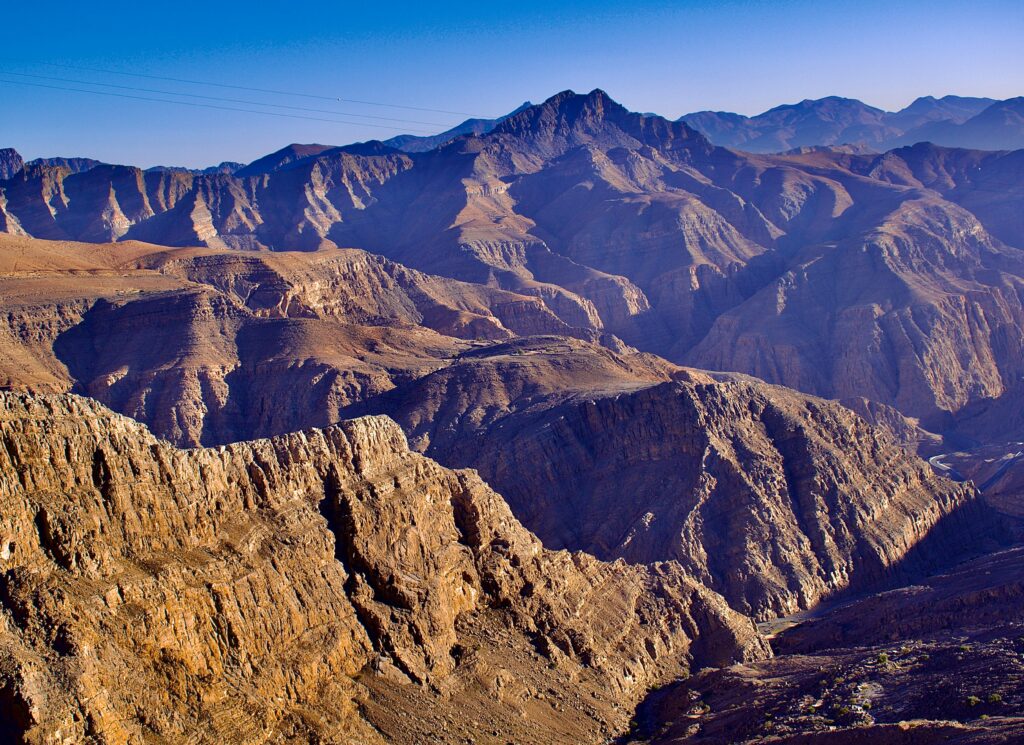
Perfect For: Adventurers and travellers drawn to landscapes that feel both untamed and storied.
From Hatta’s folded valleys, the passage north winds toward a different kind of beauty, Ras Al Khaimah, where mountains plunge toward the sea and the landscape feels raw, uncurated and profoundly elemental.
The approach to this region is cinematic; the Hajar Mountains draw closer until the horizon hardens into a wall of slate and copper. The road begins to coil upward in a series of hairpin bends towards Jebel Jais, the UAE’s highest peak, and the air grows cooler and cleaner with every turn. At the summit, the Jais Flight Zipline, the longest in the world, sends you gliding across a canyon of shadow and light, a blur of wind and exhilaration that ends in awed silence. If you’d rather take it slow, linger on the terraces or at 1484 by Puro, the country’s highest restaurant, watching the mist drift through the valleys as the mountains fade into clouds.
Back on lower ground, as the landscape softens into salt flats, visit Dhayah Fort, a coral-stone stronghold perched on a hilltop. Climb its worn steps to take in the sweep of desert and sea, the same vantage once used to watch for traders and invaders along this northern shore. A short drive away, the abandoned fishing village of Al Jazirah Al Hamra stands in spectral beauty, its coral-block houses and carved wooden doors bleached by sun and salt. For contrast, the resorts of Al Marjan Island offer calm cobalt bays ideal for snorkelling, paddleboarding, or diving, while watersports centres line the sand with kayaks and sails.
Just under two hours from Dubai, it is best explored between October and April, preferably with a private driver or a bespoke adventure tour operator.
Fujairah
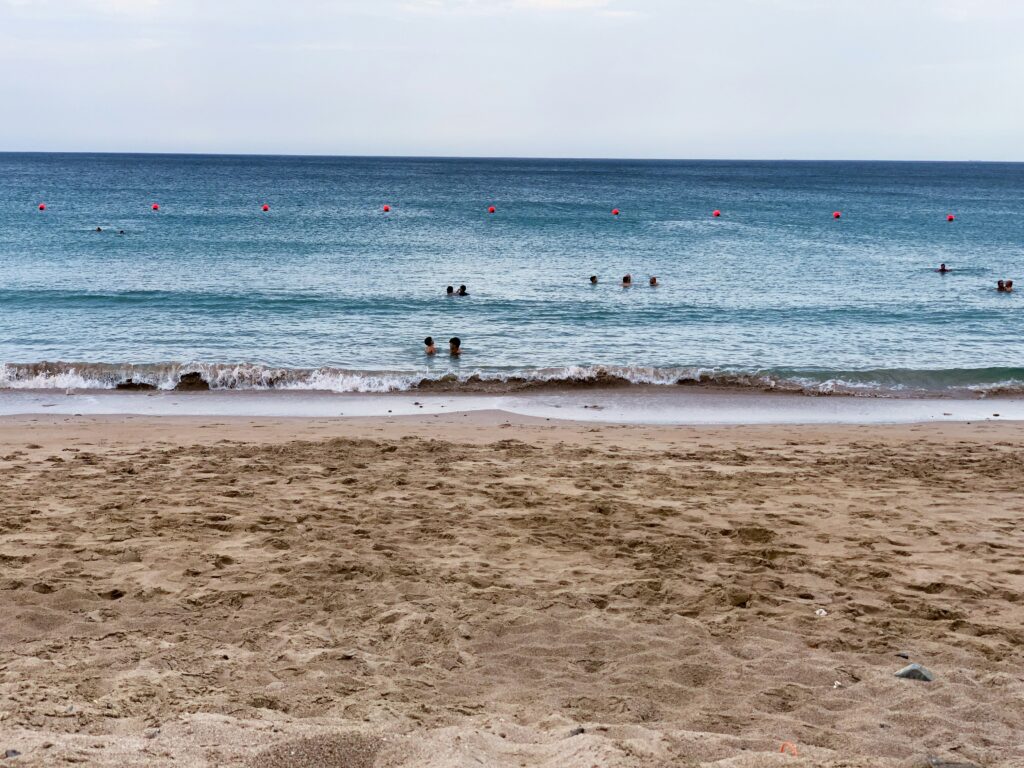
Perfect For: Swimmers, snorkelers, underwater photographers and seekers of unhurried beauty.
From the northern peaks, the track swings east toward the Gulf of Oman, trading wind-carved ridges for the slow roll of surf. The air shifts, salt, diesel, and seaweed mingle on the breeze, as fishing boats rock gently on cerulean waters and the mountains taper into sand.
Begin at Fujairah Fort, its weathered watch-towers, once a shield against coastal raids, now stand guard over a city that still feels part harbour, part hamlet. A short drive north leads to Al Bidyah Mosque, a tiny 15th-century structure, its squat domes glowing softly against the mountains. Nearby, the Heritage Village preserves echoes of Emirati life by the sea, huts, clay pots, and tools that speak of endurance and the tide.
Follow the coastal road to Snoopy Island, a coral-rimmed outcrop beloved by snorkelers, where translucent waters reveal schools of parrotfish and turtles gliding through shifting shafts of light. Spend a languid afternoon here, between sea and sand, the line between the two beginning to blur.
Return to Fujairah early evening, when it is at its loveliest – the dhows sailing back with the day’s catch on a sea deepening to indigo against mountains burnished gold in the fading light.
About two hours from Dubai, it is best visited between October and May, most comfortably with a private car, allowing you to trace the shoreline in your own time.
Musandam, Oman
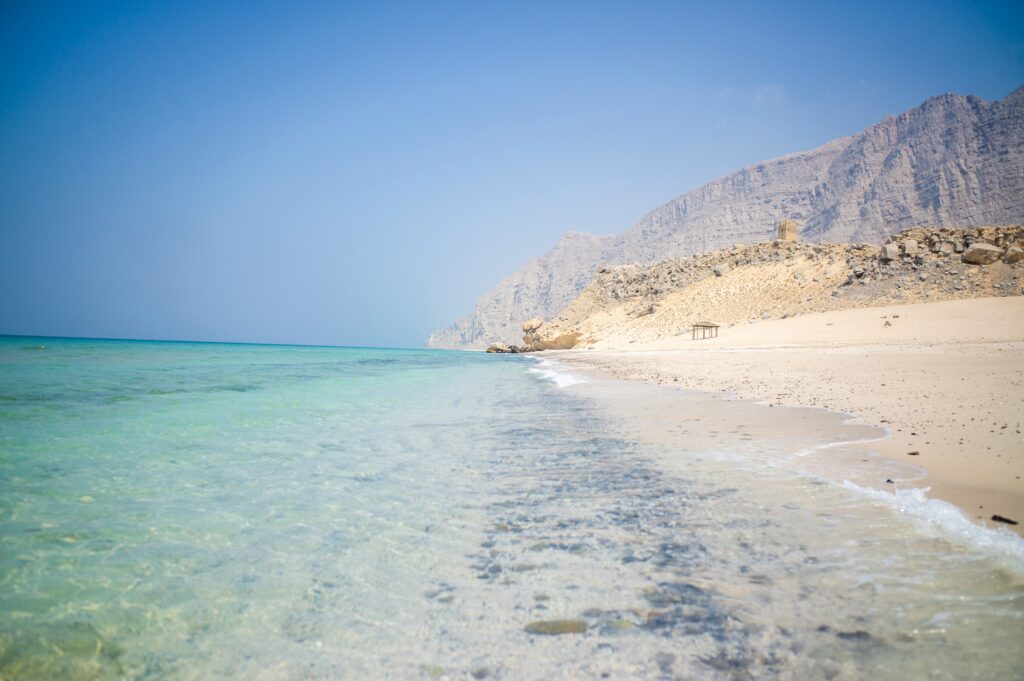
Perfect For: Intrepid explorers, dreamers, and travellers seeking vastness and quiet awe.
Beyond Fujairah’s calm shores, the trail threads north towards the tip of the Arabian Peninsula, where the mountains break into the sea, you’ll find Musandam – an Omani enclave cut off from the mainland, often called the Norway of Arabia for its labyrinth of fjords – a fitting ode due to its towering limestone cliffs that plunge into water.
Cross at Dibba, where the drive itself becomes part of the experience, cliffs on one side, cobalt sea on the other. From the harbour, board a traditional wooden dhow, its polished teak deck shaded by woven palm fronds, and set out into Khor ash Sham fjord, a deep blue corridor of sea and mountain. Dolphins trail the boats here, sleek arcs of silver slicing through water so clear you can see the coral beneath.
As the dhow glides deeper into the inlets, silence grows profound, broken only by the lap of waves and the call of seabirds nesting high on the cliffs. As the dhow anchors in a sheltered cove, you can swim or snorkel, diving from the deck into the cool depths, or simply stretch out on cushions with a cup of sweet Omani chai. Lunch arrives – platters of freshly grilled fish, saffron rice, and crisp salads served to the soundtrack of wind and water. Later, as you drift back toward Dibba, the light turns liquid, washing the cliffs in silver and gold until the mountains seem to dissolve into their own reflection.
About two and a half hours from Dubai, including the border crossing, Musandam is best visited from October to April, ideally through a licensed tour operator who can handle permits and dhow arrangements seamlessly.
Dubai Desert Conservation Zone (Desert Safari)

Perfect For: Nature and wildlife lovers, photographers, romantics and anyone who craves the desert’s vast stillness or enjoys experiential travel.
Not every escape from Dubai means leaving it behind. Just forty-five minutes from Downtown, the road gives way to the sand, the air warms, and the desert begins to breathe again. Here lies the Dubai Desert Conservation Reserve, a 225 square kilometre protected wilderness area that safeguards the fragile ecology of the Arabian sands and the Emirate’s wild heart.
Your morning safari begins in open-topped vintage Land Rovers, led by expert conservation guides who read the sand like a map, tracing oryx tracks, pointing out hardy desert plants, and sharing stories of the Bedouin who once crossed these lands by starlight. The air is cool, the light soft as silk, and the dunes shift from rose to amber to pale gold.
As the sun climbs, Bedouin-style breakfast is served in a shaded camp. As the faint sweetness of dates scents the air, Arabic coffee brews over coals, and warm bread puffs gently on the griddle. Nearby, falconers showcase the desert’s oldest partnership, of bird and man, in a demonstration that feels both timeless and transcendent. By late morning, the sand burns white and the air thrums with heat, the city shimmering faintly on the horizon, a mirage of glass returning as you drive back.
While the morning safari is the most accessible, its more popular versions – sunset safaris and overnight stays or hot air balloon flights at dawn reveal the landscape in changing light and rhythm (along with the cultural heart of Dubai). Yet, it is in these quiet morning hours that the desert feels most intimate.
The Dubai Desert Conservation Reserve is popular from October to April and is accessible only through authorised eco-safari operators.