

Diverse, opulent, rooted in tradition yet proudly ambitious — the UAE capital continues to rise through the ranks, strategically bridging East and West across the realms of trade and tourism.
Whether you’re around for business or pleasure, a first-timer or repeat traveller, there are a number of top attractions in Dubai that should form the core of your trip. And while several of our picks have contributed to its “city of superlatives” moniker, it’s not all about checking off a list of record-breakers.
As a global city that more than 200 nationalities call home, it weaves a cultural fabric that is uniquely its own. You could be perched on a camel in a natural reserve, sipping sundowners 210 metres above the sea level, and haggling over gold in a storied souk within a span of 24 hours.
Here, we explore ten of Dubai’s must-see attractions, each worth a visit and true to its nickname ‘Dar Al Hay’ – City of Life.
Ain Dubai

After months of speculation around what prompted its extended closure, Ain Dubai is back in business and more popular than ever (turns out, its hub was in dire need of a structural upgrade). One of the many attractions landing the city a spot in the record books, this gleaming observation wheel on the artificial Bluewaters Island is the world’s largest — at 250 metres in height, it dethroned the 167-metre High Roller in Las Vegas upon launching in 2021.
Now operating all year round, this architectural icon is a unique vantage point to take in the sheer grandeur of Dubai’s skyline over a ride that lasts 38 minutes per revolution. You’ll look out onto Palm Jumeirah – another man-made island – as well as landmarks like the sail-shaped Burj Al Arab, taking in 360-degree views from inside one of 48 air-conditioned cabins, each of which is designed to hold up to 40 passengers. And with the wheel rotating from 11 am on weekends and noon on weekdays, there’s plenty of time to take a spin.
To make the most of your ride, however, it’s best to plan your visit between 5 pm and 7 pm — this way, you can catch the moody last rays of sun drifting away, replaced by the city’s dazzling lights as darkness falls. Across four tiers, tickets start at AED 145, but in true Dubai fashion, there are a number of VIP packages on offer, best suited to bigger groups or anyone marking a special occasion. For families of four, meanwhile, it’s worth purchasing the Family Pass that’s offered at a discounted rate of AED 415.
Al Fahidi Historical Neighbourhood
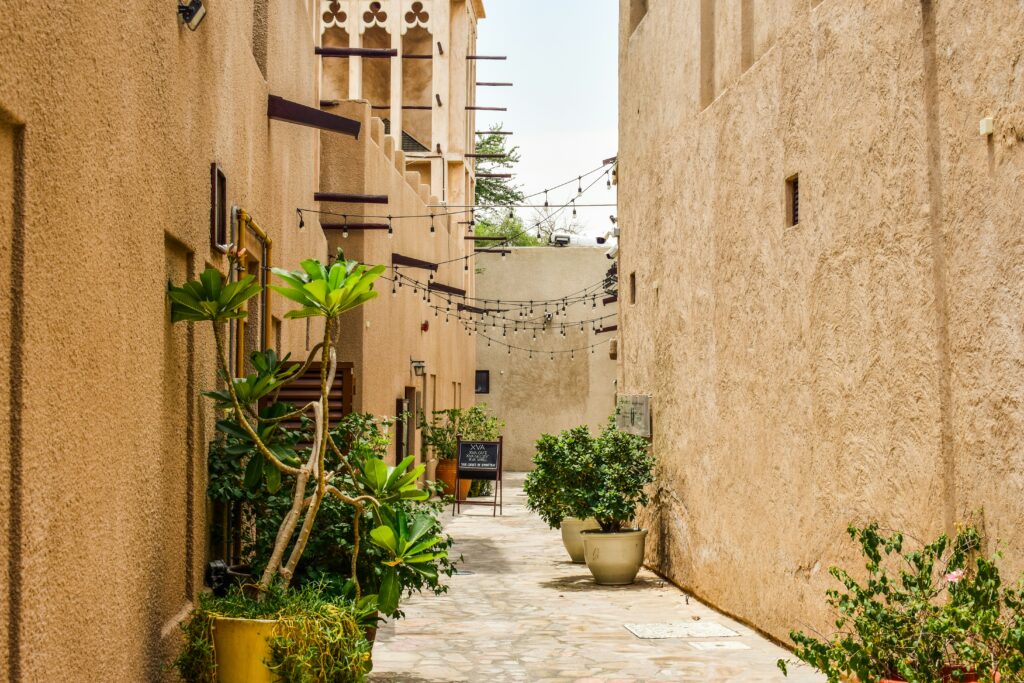
Al Fahidi Historical Neighbourhood and its modest surroundings are what longstanding residents call “the real Dubai” — and rightfully so. Its traditional wind towers and ancient coral mansions may stand in the shadow of the city’s towering skyscrapers, but they still speak to the Emirati way of life before the arrival of oil-funded wealth, arguably making them more significant than any steel-and-glass structure out there.
Start at the Sheikh Mohammed Centre for Cultural Understanding if you’re a first-timer. The daily programmes at this institution introduce tourists to local customs and traditions through talks and tours that are more practical than preachy. Outside, the labyrinthine alleys of Al Fahidi beckon with independent craft stores, contemporary murals, and hand-carved wooden doors concealing a couple of wonderfully niche museums.
A meal at the original outpost of Arabian Tea House is also a must-do. Arranged around a courtyard, this quaint eatery has been serving Emirati fare since 1997, so expect to refuel on authentic dishes done right – hearty lamb machboos and mildly spiced chebab bread included – before heading to where it all began, the Dubai Creek.
Separating two of the city’s oldest areas, Deira and Bur Dubai, this natural body of water has played a key role in its origin story, enabling trade with merchants from Iran, India, and East Africa, thereby driving Dubai’s evolution into the leading trading hub that it is today. It is here, at the banks of this creek, that you can hop aboard an old-timey abra boat, crossing the waterway alongside daily commuters for a bargain AED 1 to access souks where gold, spices, herbs, and teas abound.
Aura Skypool
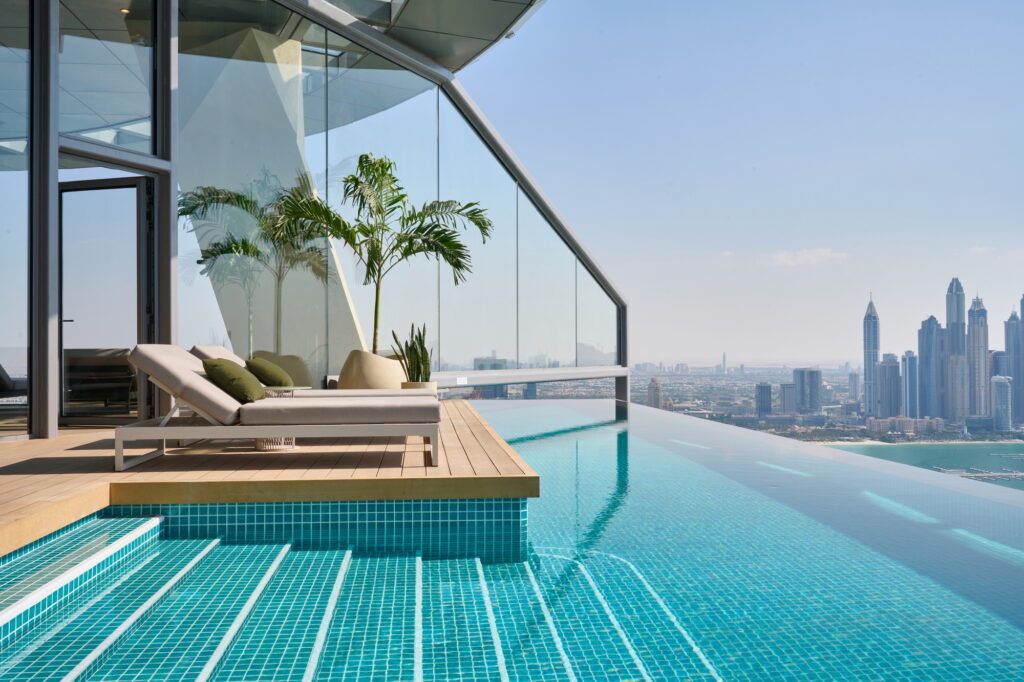
Leave it to Dubai to compete with itself — as of October 2025, Tattu Dubai hosts the world’s highest infinity pool, Tattu Sky Pool, taking over the top spot that Aura Skypool once occupied. The latter, suspended 200 metres in the air, is still quite the icon, drawing both tourists and residents to the 50th floor of Palm Tower on Palm Jumeirah island with its wide array of wellness and entertainment experiences and, of course, those killer views. Take a lap, and you’ll see everything from Burj Al Arab and the fronds of Palm Jumeirah to Ain Dubai spinning steadily in the distance.
Like most indulgences in this city, a visit to Aura will cost you. The Full Day Pool Experience, for example, is priced at AED 875 per person — and that’s not including food and beverages. And while sunset sessions carry an obvious appeal, they do tend to attract influencer types who are only there for the ‘gram. The Sunrise Pool Experience, in contrast, gets the insider’s seal of approval. At AED 225, it’s not only a better deal, but also cooler and quieter in comparison.
It’s worth noting that the best cabanas and daybeds at this swanky infinity pool are both pricey and get booked up months in advance, especially during peak season, but if you plan to spend more time soaking up the views, then save yourself the splurge. In fact, find a little corner of the pool to yourself and spend your hard-earned cash on food and drinks instead (like Aura’s signature cocktails, Pan-Asian bites like the Gochujang Cauliflower Popcorn and Chicken Karaage Sliders repeatedly win rave reviews).
Burj Khalifa

To say that Burj Khalifa put Dubai on the map would be an understatement — 21 years after its construction began, this cloud-skimming beauty is still the tallest building on Earth, standing at a staggering 828 metres in height. Whether you’re a photography enthusiast, an architecture buff, curious about Dubai’s cityscape, or simply new to the city, it belongs on any Dubai itinerary for unparalleled views of the city, the desert beyond, and the Persian Gulf (known as the Arabian Gulf in these parts) on a clear day.
Structurally, it’s an absolute feat of engineering; the Y-shaped core and 330,000 cubic metres of concrete collectively guarantee enhanced stability against gravity and strong winds. Be warned, though: nearly 5,000 visitors flock to Burj Khalifa every day, so a little planning to seamlessly reach its sky-high observation deck comes recommended.
By booking online in advance, you can bypass the queues and maximise your time up in the air. At AED 399, Gold tickets to Burj Khalifa’s At The Top are steep, but worth every penny — while welcome refreshments and a VR experience are nice perks, it’s essentially priority access to the world’s highest observation deck at level 148 that you’re spending money on.
Early birds and budget travellers, however, are better off opting for sunrise views at a more affordable AED 159, kickstarting the day at levels 124 and 125. Either way, consider taking a stick of gum in tow. As someone who has accompanied more than my fair share of first-timers to the top, I can almost guarantee that your ears will pop during the ascent due to the abrupt change in air pressure.
Deep Dive Dubai
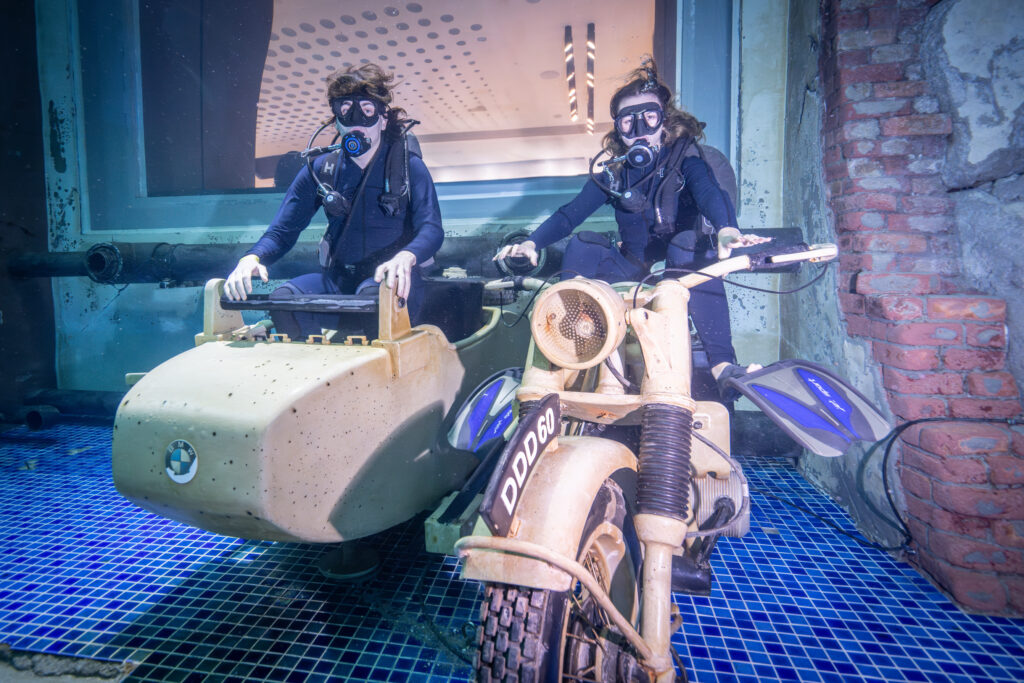
In the city where nothing feels too ambitious, deeper depths mirror higher heights at Deep Dive Dubai, verified by the Guinness World Records as the deepest dive pool in the world. Holding 14 million litres of freshwater – the equivalent of six Olympic-sized swimming pools – and reaching an impressive depth of 60.02 metres, this thrilling attraction gained viral fame when Will Smith captured his dive for his 2021 docuseries Best Shape of My Life mere days before its debut.
Unlike your typical dive, there isn’t any marine life in sight. There is, however, an abandoned sunken city, complete with storefronts, streetlights, ATMs, an underwater library, arcade games, furnished rooms, motorbikes, and a submerged Mercedes-Benz shrouded in a post-apocalyptic feel. Aim for a morning plunge, if possible. While the water temperature is maintained at an optimal 30ºC, visibility is best early in the morning, when surfaces are calmer and crowds are minimal, especially on weekdays.
There are a number of ways that you can experience Deep Dive’s superlative status, as it caters to all skill levels, ranging from absolute beginners and non-certified freedivers to advanced technical divers interested in specialty courses like trimix diving. The seemingly bottomless chasm, incidentally, isn’t just for adrenaline seekers.
Snorkelling offers a top-down view of the submerged city from the surface of the water, making for an activity that the whole family can enjoy together. Just be sure to keep an eye on time if you’ve made other plans, as the facility is located in Nad Al Sheba — in the absence of Dubai Metro stations, this neighbourhood is often a victim of traffic congestion.
Dubai Desert Conservation Reserve

Far from the urban sprawl of Dubai is the vast wilderness of deserts that seem to go on forever, once inhabited by the Bedouins who roamed in search of water and greener pastures. Today, a standard desert safari is a popular way for adventurers to enjoy their otherworldly beauty, centred around adrenaline-packed activities with quad biking, sand-boarding, and dune bashing over and across rolling sand dunes in a 4×4 vehicle. For travellers seeking a glimpse into the UAE’s past, though, a culture-centric version would be a better choice, such as those under the Heritage Collection umbrella by Platinum Heritage.
Led by a dedicated conservation guide, these sustainable excursions through the Dubai Desert Conservation Reserve comprise the likes of Camel Desert Safari and Bedouin Culture Safari, and, depending on which you choose, take you back in time by way of vintage Land Rovers, native wildlife exploration, falconry performances, stargazing, and camel rides. Come dusk, you’ll retreat to a torch-lit Bedouin camp, where an Emirati feast is accented with distinctly local traditions like storytelling and the yola weapon dance (one of the ultimate cultural experiences that reveals the heart of Dubai).
An overnight stay in the desert takes this experience up a notch — the combination of ultra-clear starry skies followed by a spectacular sunrise and hot air balloon flight before breakfast is the stuff of dreams. Remember that nights and early mornings in the desert can get surprisingly chilly. The temperature drops as low as 10°C in winter, so pack a sweater or light jacket if extending your stint in the sand sounds appealing.
Dubai Mall

The retail apocalypse may have struck America hard, but in Dubai, megamalls are where luxury shoppers, big families, teenagers, and tourists congregate. And at a colossal land area of 1,124,000 square metres, Dubai Mall is the one to beat, particularly if you have an entire day to spare. Over 1,200 stores aside, it houses an Olympic-sized ice rink, a full-fledged Chinatown, an immersive digital art museum, an aquarium where sand tiger sharks roam the waters, one of the world’s largest indoor VR parks, and even the remains of a 155-million-year-old Diplodocus longus dinosaur. True story.
It’s also adjacent to Burj Khalifa in Downtown Dubai, an area perpetually choked with traffic, so do yourself a solid and take the metro’s Red line to the Burj Khalifa/Dubai Mall station if possible. Additionally, store your shopping bags using the Shop and Drop service — you won’t want to lug them around the mall, especially during peak season, when dodging crowds is part and parcel of any visit. Planning to splash out on a multitude of designer goods? Remember to claim a VAT refund on your purchases at one of the Planet Tax Free counters in the airport.
A landmark that has brought people from all walks of life together since 2009, Dubai Fountain is another reason to linger in this glitzy vicinity. Among the largest choreographed fountains worldwide, it’s back in the spotlight after an upgrade that called for a five-month pause, now dazzling curious tourists and casual passersby with improved precision and new blue tiles that seem to glow beneath the surface of the water. Bonus: viewing the half-hourly shows from the surrounding promenade is always free.
Museum of the Future

Like a number of contenders on this list, innovation and imagination come together at the Museum of the Future, which managed to garner attention worldwide before it even opened its doors. Outshining some of Dubai’s most recognisable skyscrapers on the arterial Sheikh Zayed Road, this torus-shaped institution is contextually rooted through Arabic calligraphy that envelopes the building across 1,024 stainless steel panels, collectively representing the 1,024 bytes of data in a kilobyte.
As for the message it conveys? Inspirational words that reflect Dubai’s aspirations painstakingly converted into the slanting thuluth script before being incised into the building’s facade and replicated on its interior walls.
Inside, visitors are teleported to the year 2071 – coinciding with the centenary of the UAE’s founding – with the help of immersive exhibits that are spread across five zones on a fixed, self-guided path. This way, you can move at your own pace as you try your hand at ultrasonic therapy, engage with a robot dog, and journey to a fictional space station. An installation by the name of The Library is a personal favourite as it stores the genetic code of over 2,400 species in rows and rows of neon-lit jars, as is Earth Dreams, a fantastical series of data paintings that imagine a world in which AI, human memory, and the rhythms of nature merge into one.
Still, it’s the Museum of the Future’s strikingly engraved exterior that draws museumgoers of all ages, so book your spot online in advance, especially considering tickets are allocated to specific time slots. Don’t skip the viewing deck on level 2, either — this unique vantage point translates into stunning photographs.
Palm Jumeirah
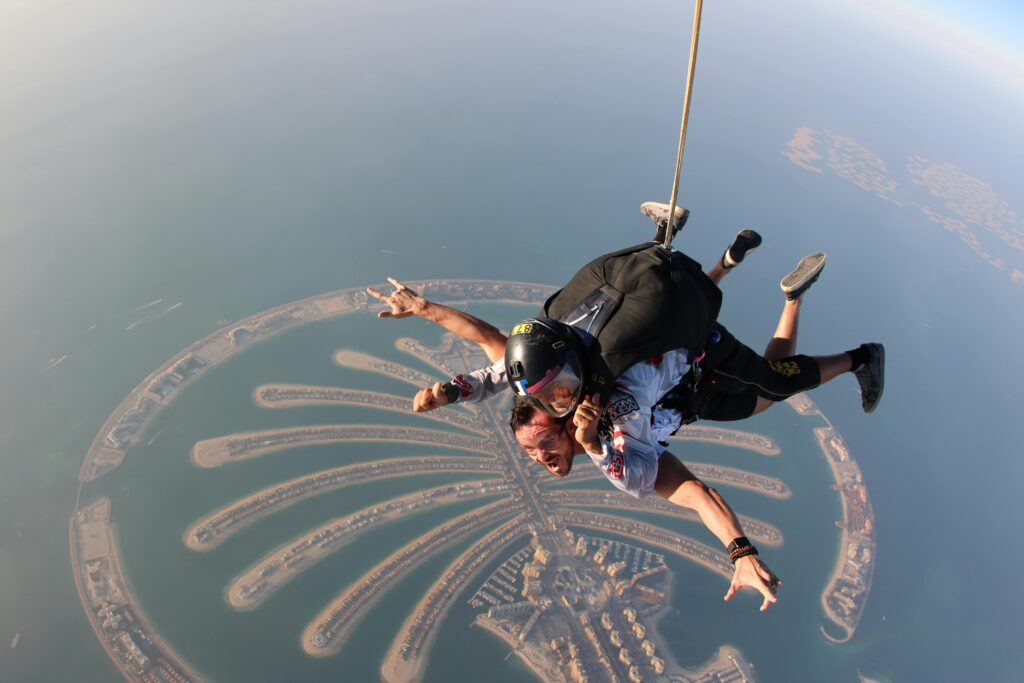
Home to the aforementioned Aura, Palm Jumeirah is an architectural statement in its own right, stretching into the Persian Gulf in the shape of a date palm tree — five kilometres at that. Those looking for 360-degree views of this artificial island but not into the trendy feel of an Insta-famous infinity pool can head to The View on level 52 of Palm Tower instead. Standing 240 metres above the ground, this viewpoint grants entry for only AED 110, making it one of the cheapest observation decks in Dubai.
Alternatively, you can disregard your budget (and any fears) entirely, free-falling at over 200 kmph over the island for AED 2,749 thanks to the team at Skydive Dubai. A symbol of the city’s ambition, Palm Jumeirah was created using 120 million cubic metres of sand dredged from the seabed back in the early 2000s, but remains the definitive adult playground.
Atlantis The Royal, for starters, is located on the crescent and has been dubbed the world’s most ultra-luxury experiential resort. It’s no wonder, then, that some of the most celebrated chefs – Heston Blumenthal and Gastón Acurio included – have set up outposts at this lavish property, as has the legendary Italian-American restaurant Carbone.
Elsewhere, a spice-laden culinary experience with a side of theatrics awaits at Trèsind Studio, the first and only Indian restaurant to boast three Michelin stars (you’ll find this 20-seater at St Regis Gardens). Superlatives of a different kind continue at the 54-acre Aquaventure World, the largest waterpark in existence. With Dubai alternating between summer and summer lite, it offers over 105 ways to cool off every day of the year.
Ski Dubai
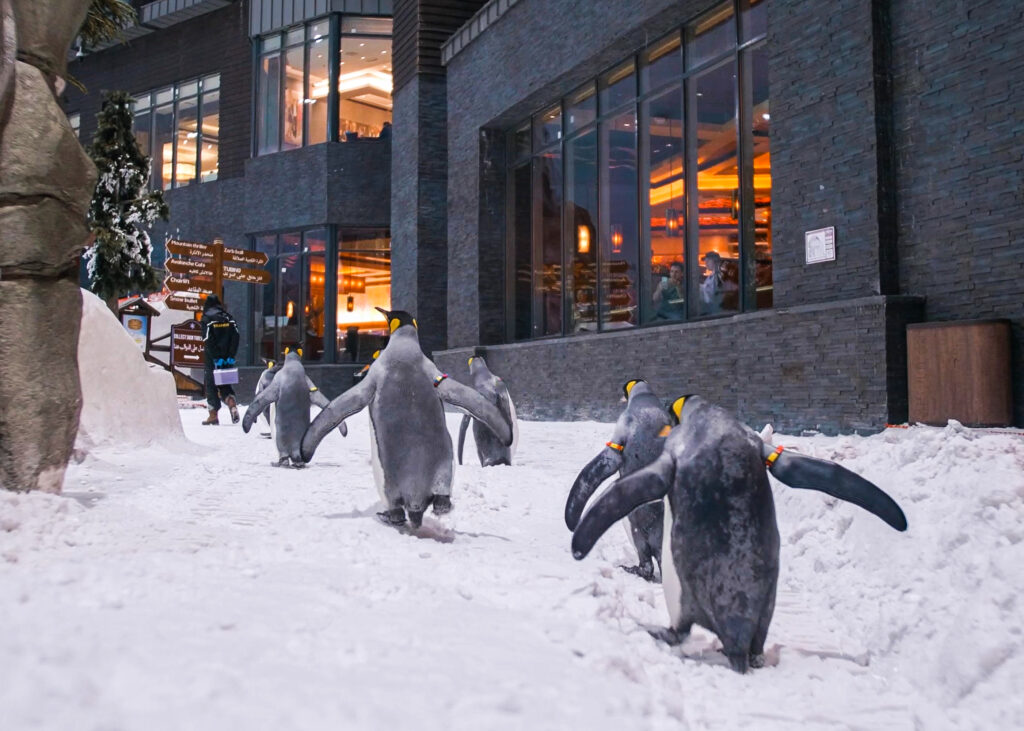
Only in Dubai can you ski on a beach holiday in the midst of a desert, so, even 20 years since its arrival, the novelty of Ski Dubai never wears off. All you have to do is show up at Mall of the Emirates, a megamall accessible via the Dubai Metro. Operating year-round, the indoor ski resort will provide all the gear and equipment you’ll need. Needless to say, Ski Dubai remains globally renowned — not only was it the first indoor ski area in the region, but also the first worldwide to feature a black diamond run, cementing the fact that nothing is too far-fetched for this city.
Maintained at a temperature of -2°C (regardless of what’s happening outside), this 22,500-metre facility features a chairlift, five runs that vary in difficulty, and 6,000 tonnes of soft and powdery snow that feels remarkably like the real deal. And if that wasn’t surreal enough, there’s even a café halfway down the slope in case a craving for hot chocolate strikes.
Further north, Infinite Ski in the Al Quoz neighbourhood is the region’s first Maxxtracks ski centre, offering an alternative to skiers keeping up their training during the off-season, but for families and animal lovers, Ski Dubai has an obvious edge. One word: penguins.
While the encounters with these bipedal birds have raised eyebrows among animal advocates over the years, they’re certified by Global Humane, the world’s largest certifier of animal welfare practices. The recently launched Ultimate Penguin Experience takes it a step further, offering guests an immersive encounter that is designed to foster a deeper understanding of their natural habitats and the urgent need for conservation. Opt for the Snow Premium pass if you want to do a little of everything — it includes unlimited access to all the rides at Snow Park, too.