
There’s nothing quite like watching the passage of time, especially in a place as achingly ancient as the Australian Outback.
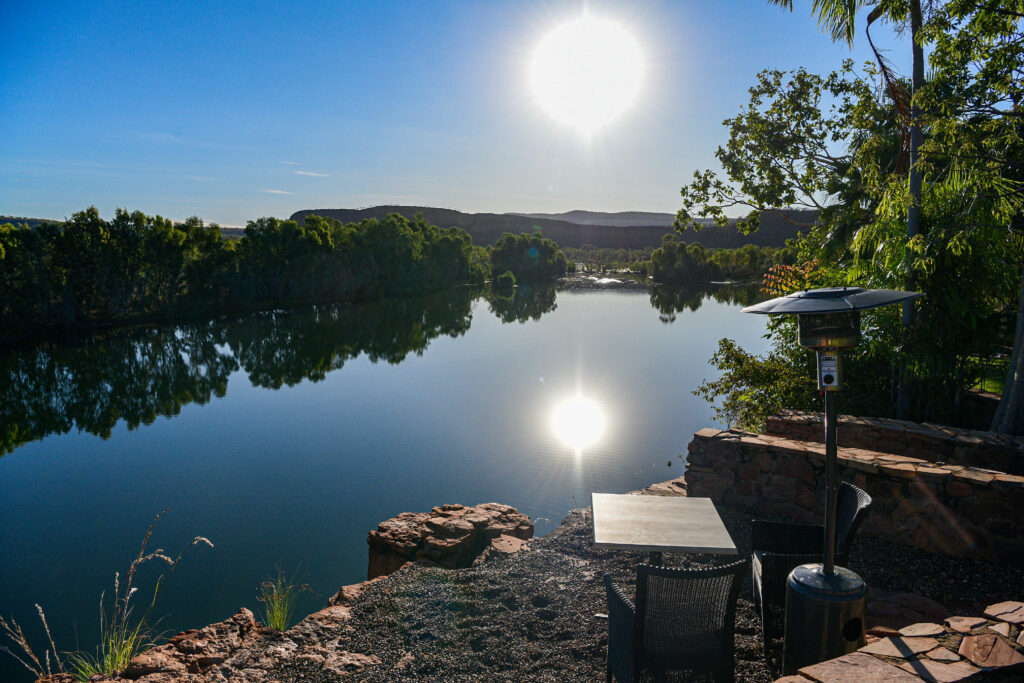
The honey-hued light, like the drawing of a theatre curtain, slips across the broad valley below us, through which passes the meandering Chamberlain River like a shimmering serpent navigating a sunburnt landscape towards inky darkness.
As guide and station ranger Adam pours me a glass of chilled Chardonnay, he points down the valley at a series of twinkling lights. “There’s the homestead. It’ll be dinner time soon.”
Day 1: El Questro Homestead – Luxury Amid the Rugged Kimberley
As reluctant as I am to leave this remarkable viewpoint, known as Branco’s Lookout, the idea of dinner under the stars at El Questro Homestead is all the motivation I need, and minutes later we’re rambling our way down a steep, rock-strewn path in a station Land Cruiser, crossing the Chamberlain – the waters high after steady rains the week before – at a steeping-stone ford as darkness swallows up the world around us.
If you revel at the chance to delve into nature blessed with spectacular beauty and unique wildlife, the Australian Top End, which stretches from the Indian Ocean in Western Australia to the Coral Sea in Queensland, just might be the destination you never knew you needed to visit.
An incredibly varied landscape shaped by tumultuous seasons that alternate between a fiery furnace and a monsoon’s deluge, the Top End offers a chance to commune with flora and fauna found nowhere else on Earth, and to delve into a place that has broken hearts and backs, tested sanity, and inspired poets and dreamers.
However, you can explore this challenging country in comfort thanks to a clutch of historic, indulgent lodges and stations, the first of which, El Questro, a member of Luxury Lodges of Australia, we arrived at earlier in the day after a 90-minute drive through a rocky, undulating moonscape from the tiny airport at Kununurra.
A Station Steeped in History and Comfort

Located in Western Australia’s East Kimberley region, El Questro is arguably the most famous of the tourism-forward stations of the Top End.
This sprawling 283,000-hectare property (that’s two and a half times the size of Hong Kong), with its deep gorges, thermal springs, tumbling waterfalls and lush rainforest, was established in 1903 as a working cattle station but has evolved since then into an unrivalled tourism destination thanks to its rugged beauty and its position on the Gibb River Road.
On our way back to the Homestead, El Questro’s luxurious, all-inclusive lodge, which has welcomed everyone from Elton John and Kylie Minogue to Nicole Kidman and Keith Urban, we pass through The Station, which caters to the cutting-edge 4x4s and caravans that ply the seasonal, mostly unpaved Gibb River Road route between Wyndham and Derby.
In the last light of dusk, I spy families barbecuing and kids playing touch football before we wind past the El Questro landing strip and arrive at the Homestead, where it’s cocktail hour in the elegant, homely lounge with its broad fireplace and rich leather armchairs.
Remote Luxury With a Wild Soul
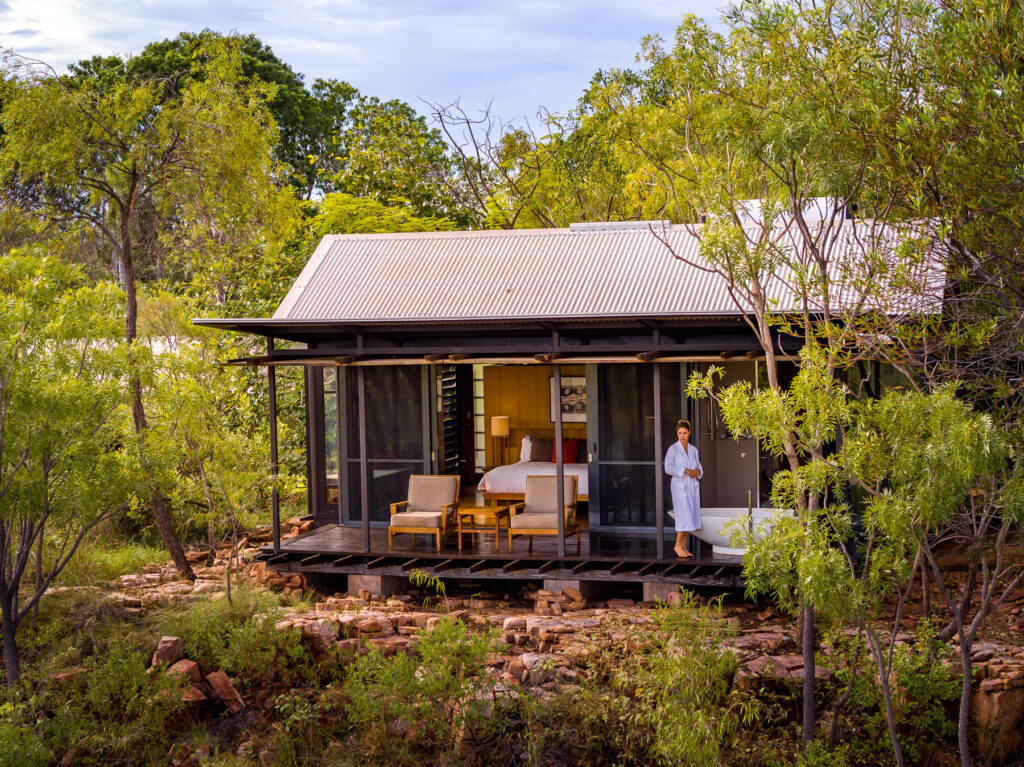
Our room, Paperbark, is one of just 10 luxurious suites cantilevered over the Chamberlain and features a deep soak tub and a balcony with panoramic river views.
After settling in, we join our fellow guests for cocktails laced with locally distilled gin, followed by citrus barramundi ceviche and slow-cooked water buffalo infused with wild thyme, served at a communal table set under the stars.
Day 2: Learning From the Land – Indigenous Connections and Culture
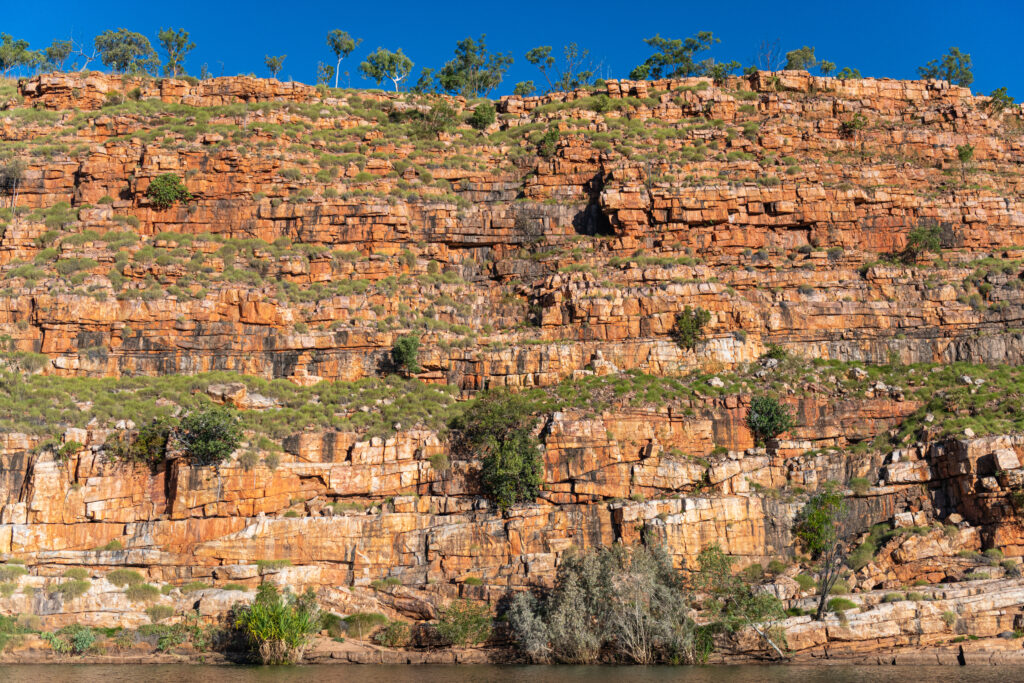
I start my day early the next morning, soaking in the views of the river and orange cliffs that remind me of stacked Tetris blocks in a quiet moment of reflection that’s followed by a unique insight into the land’s Traditional Owners and the recent land deal that has played a role in their re-empowerment.
The Injiid Marlabu Calls Us Experience
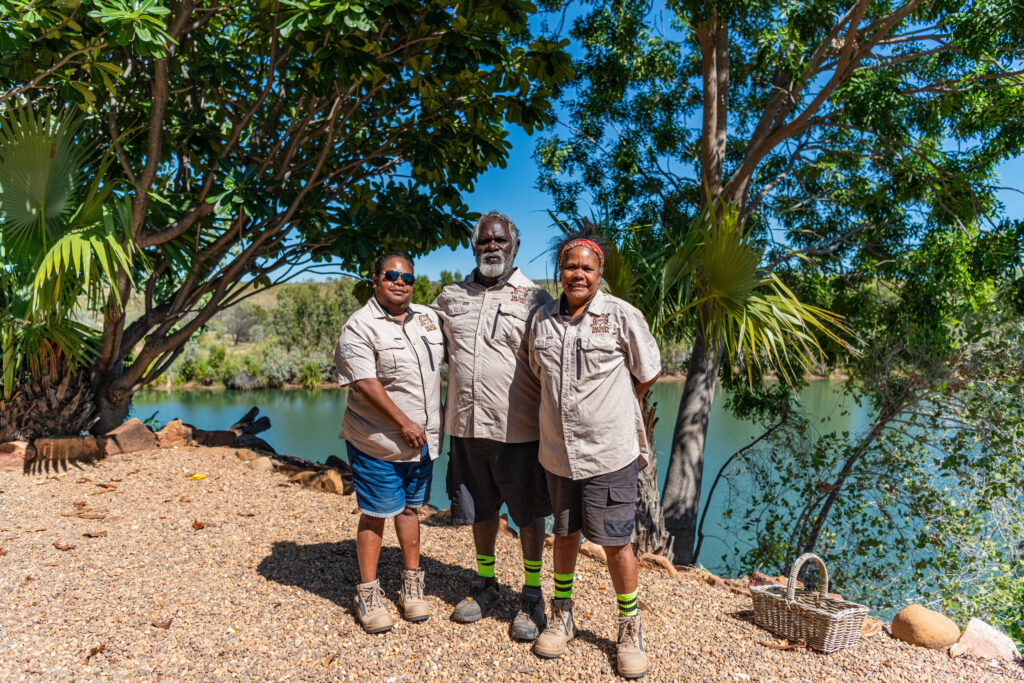
During the Injiid Marlabu Calls Us experience, conducted on a corner of the Homestead’s sprawling riverside lawn, Nelson, Mary and their daughter Channel, members of the Ngarinyin people, the Traditional Owners of El Questro or Marlabu, guide guests through the history of the land and its rich ancestral heritage.
The first “on-country” family-run Aboriginal experience offered at the station, this fascinating introduction tells of Nelson’s mother (for whom the Injiid Marlabu cultural group is named), a Mananbara or cultural leader who had an intimate knowledge of the land and lived a traditional nomadic life before being sent to a reserve outside Wyndham.
A strong believer in Neardi or the spiritual connection with country, in Wyndham, she was instrumental in establishing St Joseph’s School, at which Nelson and later Channel studied.
Stories of Spirit and Survival
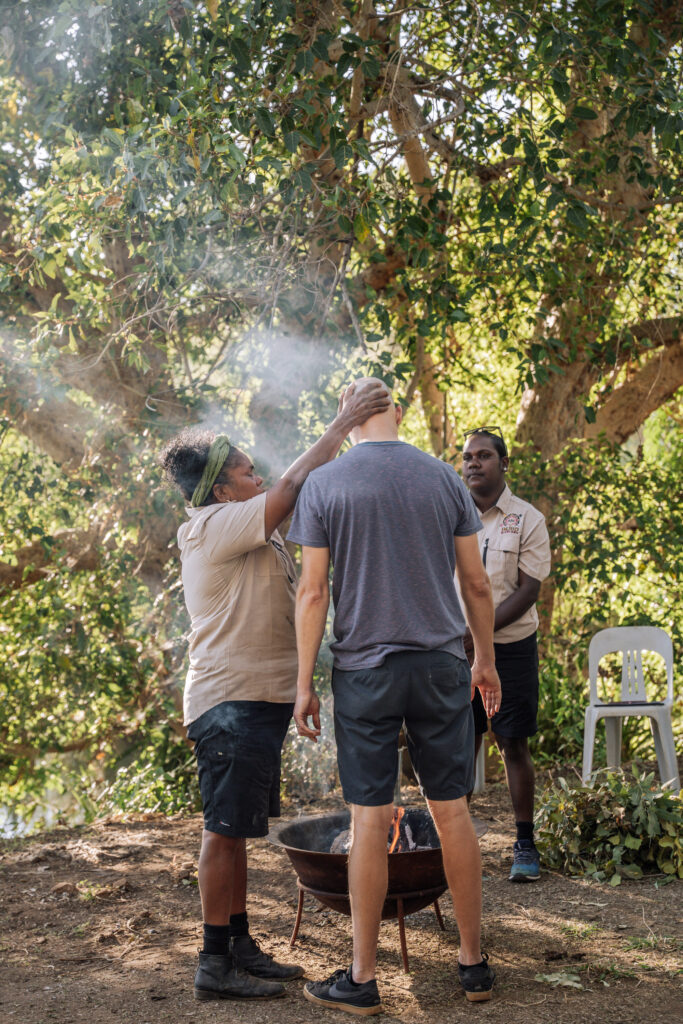
We learn how animal totems found in nature define the personalities of newborns, and about the role rivers like the Chamberlain play in the lives and storytelling of the Traditional Owners.
“This is sweet water, healing water,” says Mary, looking to the river below. “The river is sacred, living water that gives life, and we need to protect it.”
Nelson also explains the challenges Aboriginal communities face, including high suicide rates, strumming a guitar and singing a moving song he wrote about the two brothers he lost, before discussing the recent landmark land deal that saw El Questro’s owners, the G’Day Group, return the station’s 165,000 hectare pastoral leases to the Ngarinyin. The group will now lease the land back for tourism purposes in a significant step towards reconciliation.
The cultural exchange finishes with a smoke ceremony, with Mary whispering a personalised blessing into each guest’s ear as purifying smoke billows from a campfire, a black and white portrait of Injiid looking on.
A River Cruise Through 1.3 Billion Years
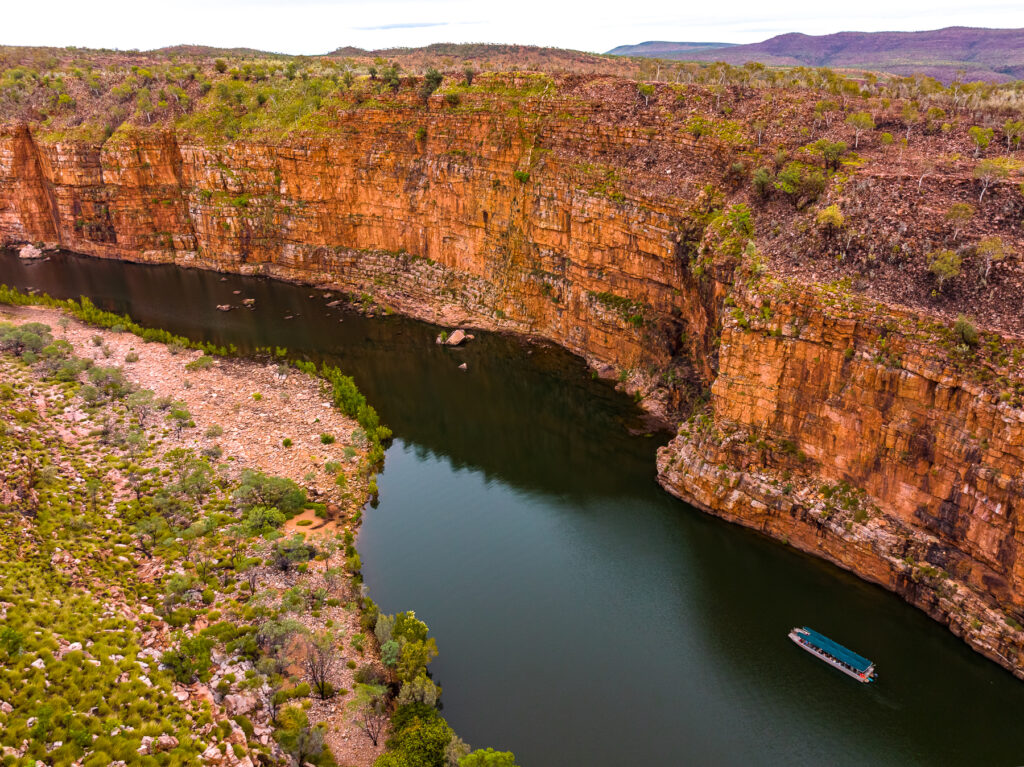
Late that afternoon, we delve into the sunbaked landscape once again, this time on a leisurely cruise down the Chamberlain River with ranger Ian in search of the property’s lurking crocodiles.
It’s a stunning afternoon, with the cloudless sky the vivid blue of a child’s crayon as we cruise mirror-calm waters flowing between 1.3 million-year-old terracotta-hued cliffs.
As we near one side of the river, passing a magnificent native Kimberley rose tree, its first blossoms vibrant pink against the reddish rock, we discover a statuesque rock wallaby, the size of a well-loved housecat, bathed in amber late afternoon sunshine.
Ian tells us these shy little wallabies navigate tiny paths and cracks in the aeons-old stone, hidden by the abundant spinifex grass (the little marsupial’s favourite snack), to reach this all-important water source, risking predators in both the water and air in the process.
Wallabies, Kites, and Crocodile Waters
As a mating pair of whistling kites soar and swoop overhead (one of more than 100 endemic bird species), Ian shows us where bacteria, left from when the rainy season produces waterfalls that plummet from the plateau above, leave charcoal-like stains on the cliff face.
Always an urbanite, I keep a keen eye out for the station’s two crocodile species – freshwater or “freshies” and the larger saltwater or “salties”, and I once again marvel at the Australian knack for simplifying something so formidable.
It’s thought there are approximately five crocodiles per kilometre in the Chamberlain and nearby Hunter River systems, but unfortunately, on this cruise, they’re proving even shier than the rock wallabies.
Before it’s time to return to the Homestead, we pause in the lengthening shadows of the cliffs to cast pellets of fish food into the water. The shadows of huge fork-tailed catfish and barramundi pass beneath the boat, but it’s the archers, tiny, determined little black-on-yellow fish, that command our attention.
The cheeky Toxotes chatareus have turned their natural adaptation of spitting water in a powerful jet, which they use to dislodge insects from low-hanging vegetation, into a command for snacks, and their aim is impressive.
By the time we head for home, armed with chilled beers, each of us has been zapped in the face with river water at least once.
Day 3: Emma Gorge & Zebedee Springs – Natural Wonders of the Top End
Our final day at El Questro Homestead starts with a bracing hike up Emma Gorge. At first light, we trundled down the station’s dirt roads and through several flowing streams, back to the main highway, from where Emma Gorge Resort (part of the El Questro collective) is a further 40-minute drive.
In the resort’s car park, where the morning air is perfumed with eucalyptus and from where the trail into the ancient gorge begins, a young dingo, an indigenous wild dog, play fights with a lawn sprinkler while rangers watch on, and it’s hard not to imagine this natural predator curling up on a fireside rug at the end of the day just like a domesticated dog.
Once the dingo notices the attention his antics are attracting, he slips silently back into the bush.
A Gorge Worth the Climb
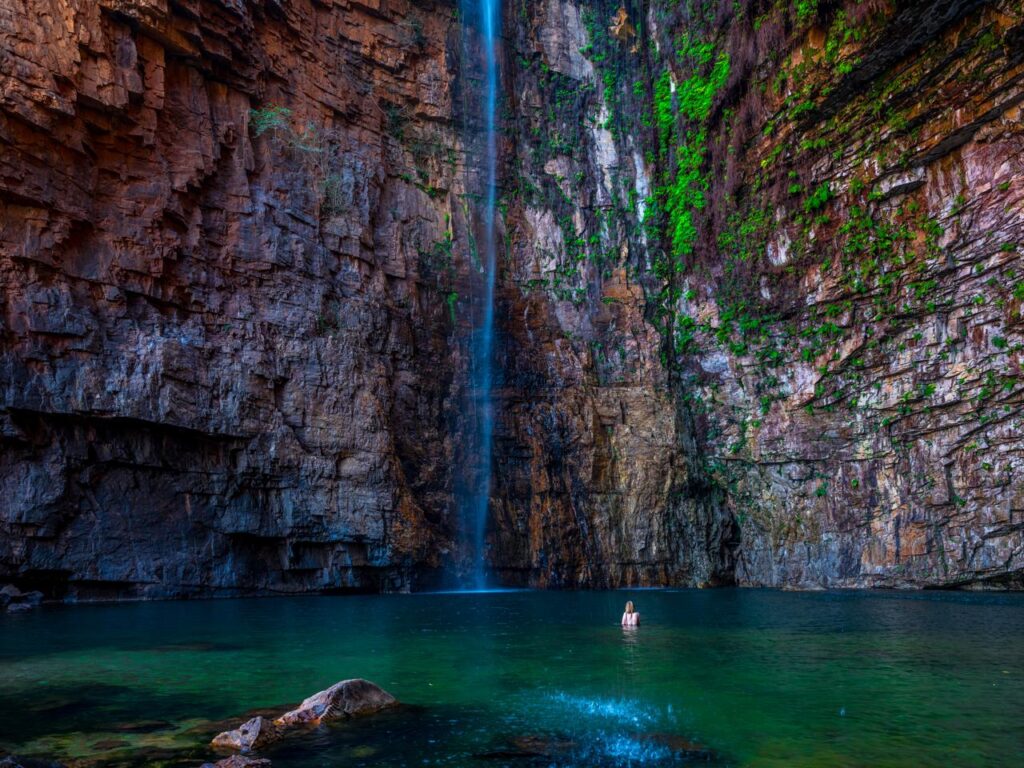
We follow Georgia, a young guide from Sydney, onto the trail, climbing up a boulder-strewn riverbed, leaping across the occasional bog, clambering over ancient slabs of weathered stone and gingerly stepping across slick river stones in the last remaining pools. Every year, after the tumultuous rainy season, the El Questro team needs to ‘rediscover’ the 1.6 km track through the gorge, with the flood waters literally moving mountains as they descend.
Our sweaty efforts are rewarded at the top of the gorge, where a 65-metre waterfall casts rainbows above a shaded pool into which we all leap. Supplemented by a natural hot spring hidden in a rocky alcove, the water is crisp, clean and utterly invigorating.
Soaking in the Serenity of Zebedee
We took another dip that afternoon, this time much closer to the Homestead. We venture down more rib-rattling roads and past tubby baobab trees that look fit to burst, to Zebedee Springs, another El Questro drawcard.
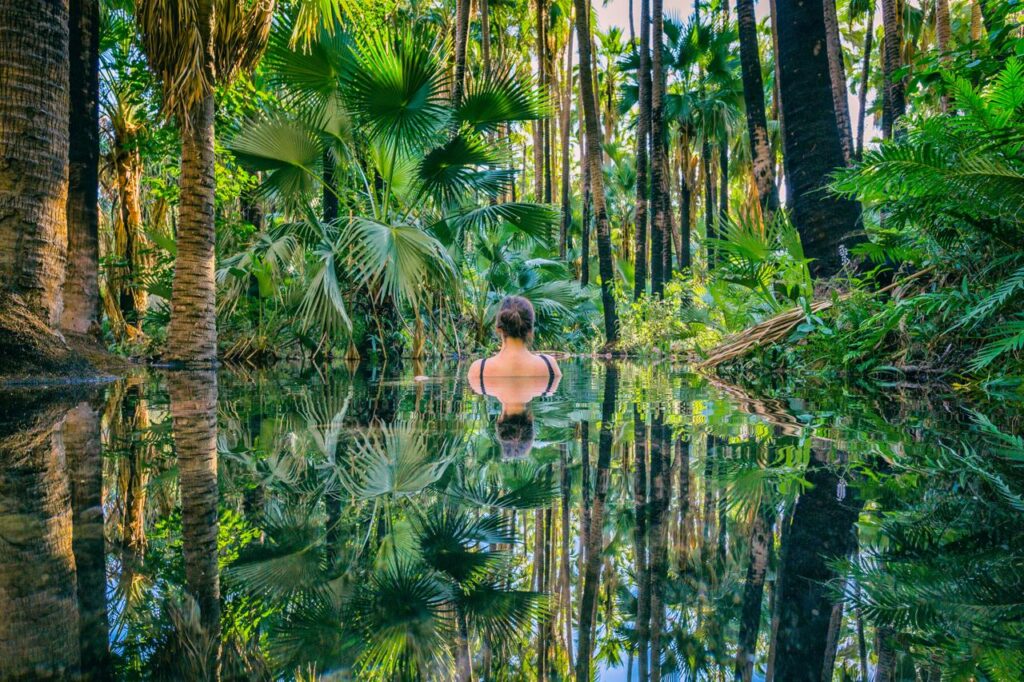
While the springs, hidden in a thick corpse of Livistona palms, are open to the public, there are times reserved for Homestead guests, and as the afternoon sun bathes the canopy in treacle, we slip into the still, mirror-clear waters, canned cocktails in hand, taking a perch on pillow-soft palm roots, to soak.
The serenity continues that night during a private dining experience set on the cusp of the cliffs overlooking the now inky dark Chamberlain, where we feast on slow-cooked lamb shoulder paired with a superb Tasmanian pinot noir.
With the Southern Cross soaring above like diamonds cast on navy blue silk, it’s a magical last moment before our journey continues east, back into the Northern Territories.
Day 4: Into the Northern Territory – Journey to Bullo River Station
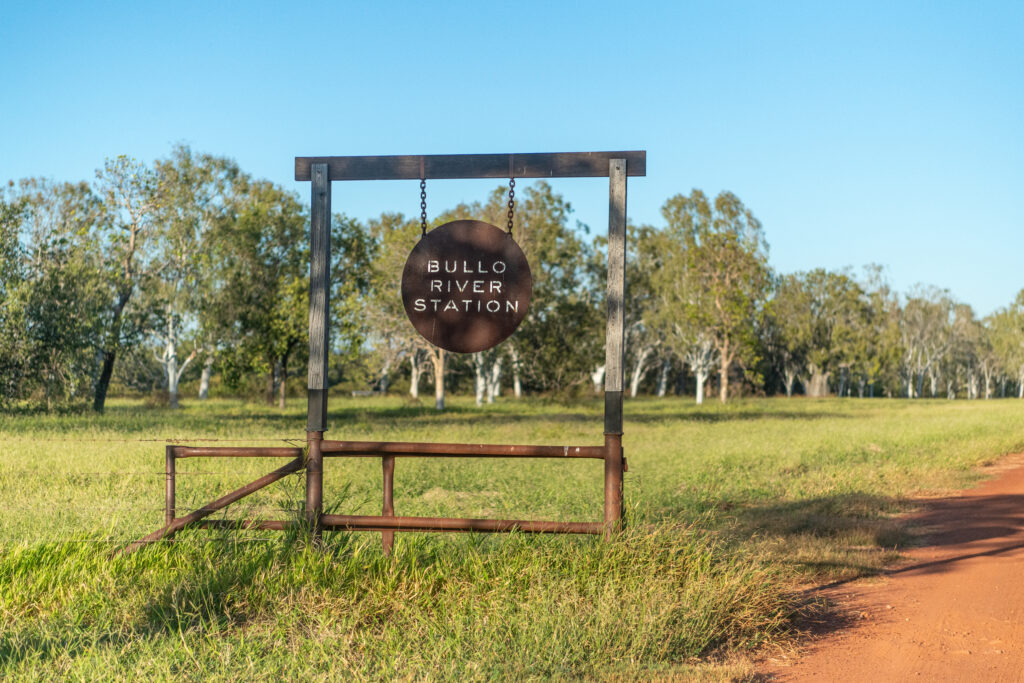
Back in Kununurra the next morning, we’re met by Emily from Bullo River Station, another member of Luxury Lodges of Australia, who takes us east, deep into the Outback, passing great rust-coloured peaks with veins of blood red ochre at the posted (and rather liberating) 130 kmph.
It’s a three-and-a-half-hour drive from Kununurra to Bullo River (although many guests fly directly to the station’s landing strip), much of which is spent on the station’s “driveway”, which, at 79 kilometres, is one of the longest in the Territory.
While we wait for a trio of Road Trains – articulated stock trucks with three trailers a piece – to lumber up a tricky section of the driveway (the station has just completed a muster and the trucks will take the livestock to the port in Darwin), we lunch at the top of an escarpment, a vast patchwork of browns, reds and dark greens spreading below for as far as the eye can see.
Once we’ve given the road trains a head start, we follow, delving down into glades of gum trees punctuated by child-high termite mounds and, despite recent controlled fire operations conducted by helicopter, emerald-green shoots, the result of a recent unseasonal rainstorm. Nature, even here in the Outback, has a way of rebalancing itself with surprising agility.
Off the Grid, But Not Off the Map

At the station, we’re greeted by manager Sandi, who splits her time between seasonal Bullo River and station owners Julian and Alexandra Burt’s Margaret River winery, Voyager Estate. Sandi embodies the Outback spirit, with bright eyes, a dry wit and a quiet determination.
We settle into our luxury outback accommodation, one of a dozen cosy guest rooms (the station is currently renovating both its accommodation wing and its historic homestead, built by Yugoslav stone masons from locally quarried rock, in time for its 2026 season) and, as the light drains from the sky, we join our fellow guests, a couple from Sydney, around the fire pit for cocktails and a delicious alfresco meal of Bullo River beef in a rosella reduction, cooked by New Zealand consulting chef Travis Martin.
If El Questro is where Crocodile Dundee would go on holiday in search of creature comforts, then Bullo River is where he’d call home.
Unlike El Questro, Bullo River is still a working cattle station, and early the next morning, as mobs of wallabies bound through a chilly mist that hugs the ground, I join the station’s “ringers” or novice cowboys (and girls) at the stockyards to watch the brahman cattle being loaded onto the road trains, bound, eventually, for Malaysia and Indonesia.
The station is also experimenting with Wagyu breeds that will be used exclusively by the station kitchen and Voyager Estate.
Day 5: Wildlife, Water, and Wilderness at Bullo River
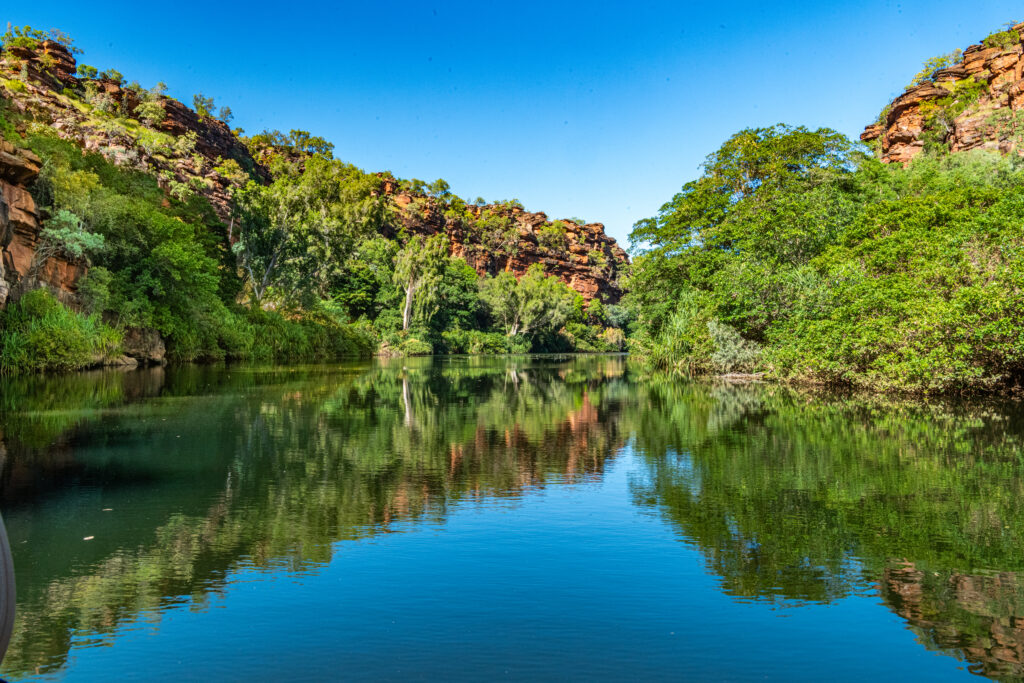
While Bullo River, with its varied landscapes ranging from alluvial floodplains and rocky sandstone gorges to sweeping eucalypt woodlands, retains 2,500 head of cattle, it’s a tiny number for a property that, at over 161,000 hectares, is more than double the size of Singapore.
In fact, cattle grazing takes up only 15% of the property and this is all part of a plan, enacted by the Burts in partnership with the Australian Wildlife Conservancy (AWC), to revert the land to its original state while protecting the Bullo River, the 80-kilometre fenced-off entirety of which exists within the property’s borders.
The ground-breaking collaboration with the AWC means a significant swath of the property, which is naturally hemmed in by two mountain ranges and the broad Victoria River (into which the Bullo feeds), has been dedicated as a conservation zone in which AWC scientists monitor endemic wildlife populations, advise on fire and weed management, and help reduce pests, including feral cats, using ingenious little AI-driven canons that shoot poisoned pellets at any detected felines.
A River Cruise With a Wild Edge
Bidding farewell to the ringers, we make for the river, taking to the water in a little flat-bottomed electric boat, our eyes peeled for crocodiles as well as resident Red goshawks and Wedge-tailed eagles.
My wife Angela tries her hand at trawling (the station is a popular fishing spot with a strict catch and release policy) and nabs a fat Barramundi that, unfortunately, manages to wriggle its way free before it can be drawn from the water.
It’s the epitome of tranquillity on the river, as vibrant Rainbow bee-eaters and pink galahs swoop overhead, wallabies rustle among the weeping paperbarks, and a dazzling Blue-winged kookaburra pauses on an overhanging mangrove branch to examine us before continuing on its way.
While we do spy one juvenile croc sunbathing, his mouth set at a maniacal grin, George, the dominant salty that calls this stretch of the river home, remains elusive.
Sustainable Tourism and Off-Grid Living
Despite its cowboy persona, Bullo River is no stranger to tourism and has been welcoming guests since the early 1990s, deciding to maintain the allure of the Outback cattle station, combined with contemporary conservation practices, rather than dedicate itself entirely to tourism, as El Questro did.
This includes investment in banks of state-of-the-art batteries and arrays of solar panels (the number of which will be doubled in the coming years), rainwater collection tanks and an extensive garden, all essentials for a station that operates completely off the grid.
Dinner Under a Baobab
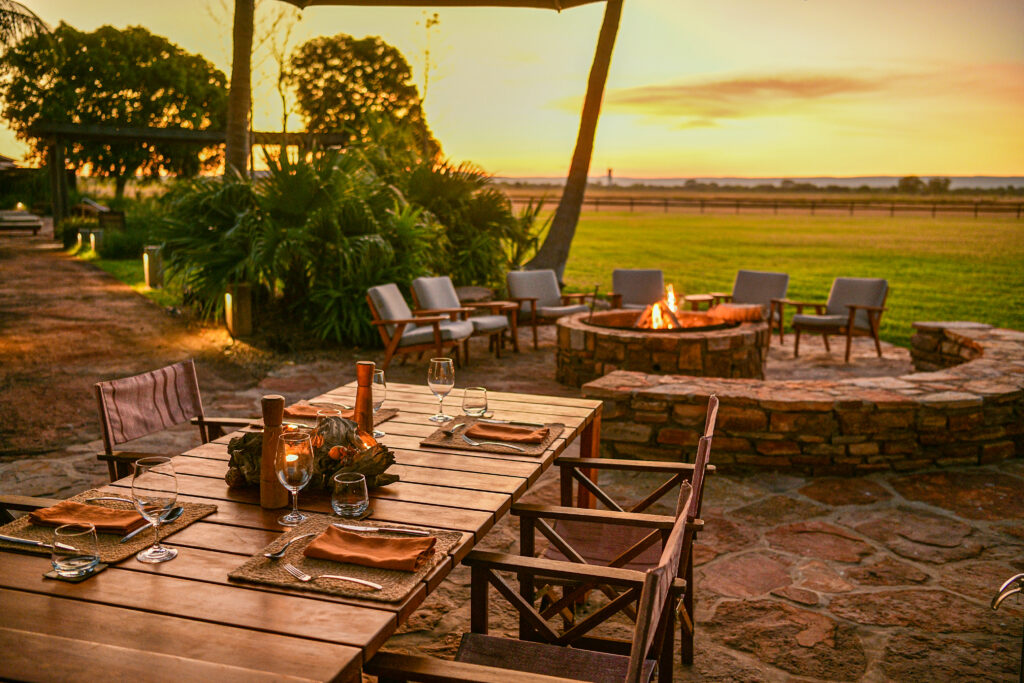
During a captivating dinner served beneath a towering baobab tree (many of the property’s baobabs feature carved inscriptions, some dating from over a century), I hear more about one of the station’s former owners, Sara Henderson, a tough and controversial figure (at least locally) who wrote books about her time on the Bullo River and about the challenges and beauty of this remarkable corner of Australia, one that is completely cut off from the outside world during the rainy season.
“People say to us how brave we are, fighting the wilderness, braving the isolation of the Outback,” said Sara in one of her many novels. “But these are easy opponents, compared with drought. To watch your land shrivel and die, year in and year out, to see beautiful fields turn to dust bowls, to watch your animals starve and die. To suffer all this, only to be then washed away in a flood, your home and your family treasures lost and destroyed. And then to pick up the pieces and start again. The farmers of the South are brave!”
Dining on a moreish beef stew and exquisitely dense onion dampers cooked by Travis over an open fire, curious wallabies watching on from the edge of the fairy lights, I can empathise with Sara; while the station is an unforgettably beautiful place, I’m sure it could also be a lonely one, so far from others, and at the mercy of the elements, especially during the annual floods.
Day 6: Billabongs, Birdlife, and Conservation Wins
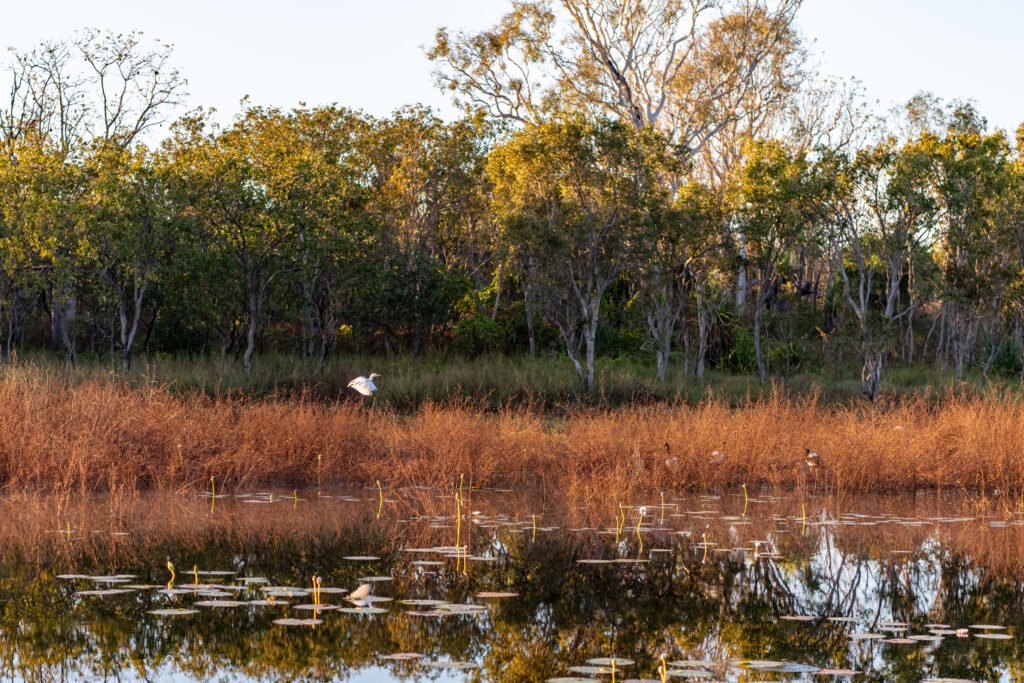
Water plays such an important role in the Top End – too little or too much and you go out of business (or worse). But it’s not only important for cowboys and cattle but also for the wildlife, and early the next morning, I follow Emily through knee-high grass bejewelled with dew to a peaceful billabong that resembles a Monet painting and which has been revitalised by the AWC.
From a bird hide that branches out across the still waters, we watch chubby magpie geese, azure kingfishers, infinitely elegant egrets and proud sea eagles swoop and dart through a layer of mist that lingers just above frisbee-sized lily pads.
By afternoon, we’re looking down from the property’s highest point to another vital water source, this one named Lake Leslie, another conservation success story. From one of two private dining pavilions that have been constructed atop a rocky range, we can see a large portion of the property, from the distant Victoria River to the equally distant Homestead, the Bullo winding between.
Once a dust bowl, Lake Leslie has been revived, and from our vantage point (while tucking into the best beef pie I’ve ever eaten), we watch great flocks of little corellas wash down like silver confetti from the trees lining the water before returning, en masse, to their roosts.
Crocodiles, Dingoes, and Raw Nature
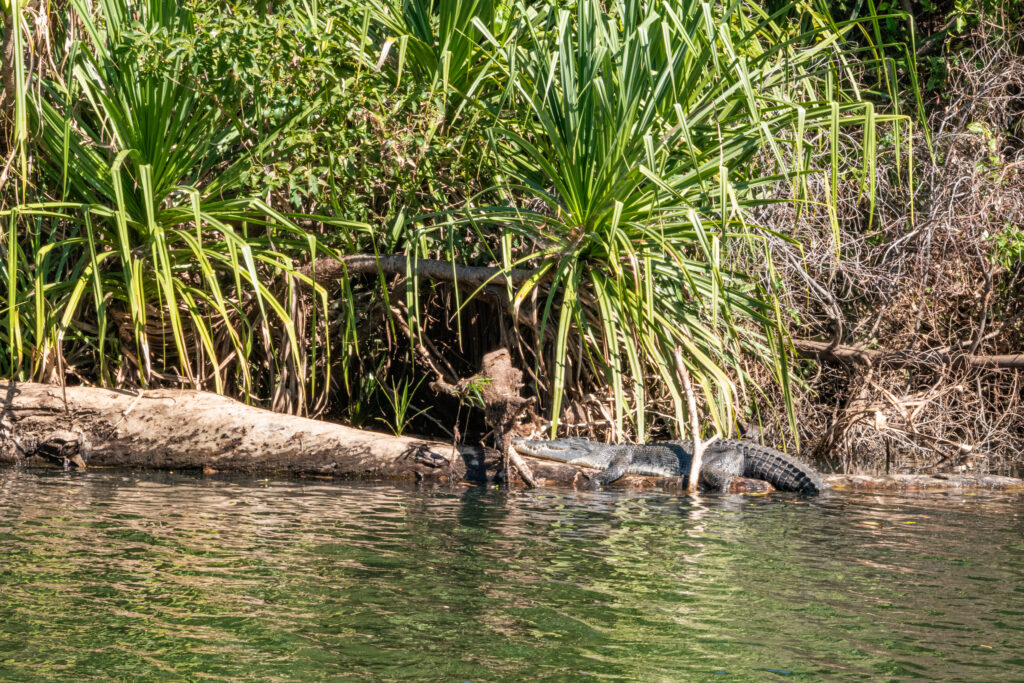
Headed back to the homestead to pack for our early morning departure, we stop by the aptly named Crocodile Point just in time to watch two salties battling it out in the brown river water while another, at almost twice the size, takes an unexpecting wallaby, pausing, as if for effect, half way through devouring it only metres away.
It’s said that for every crocodile you can see, there are 12 you can’t see, so I keep clear of the river’s edge.
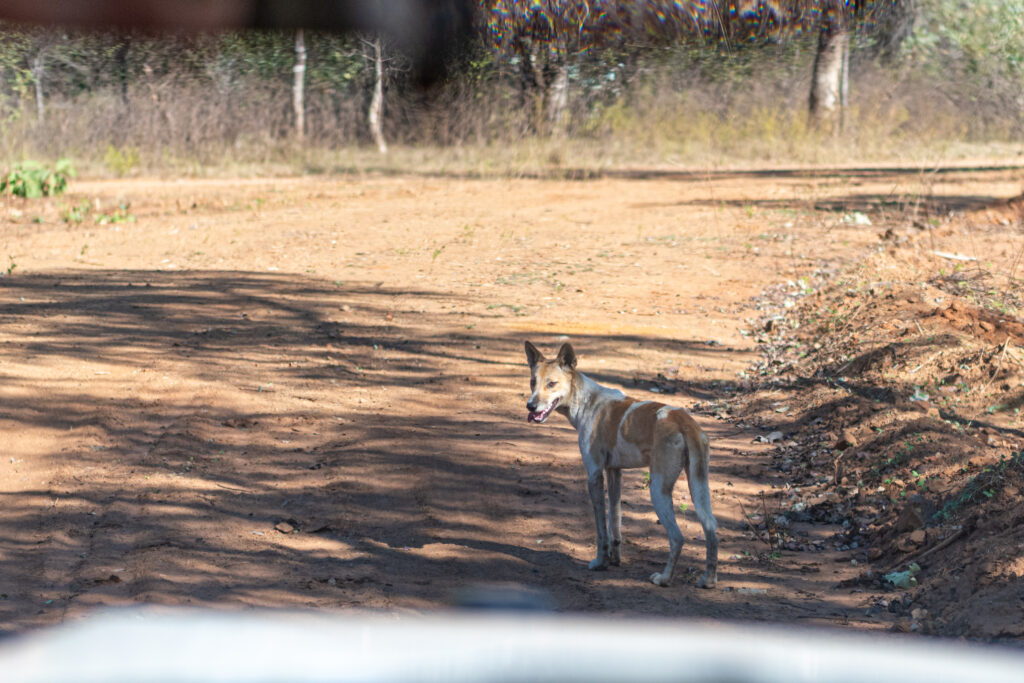
On the winding red dirt road back to the homestead, we pause to watch a dingo that Emily has not seen before. The youthful canine is stalking a wallaby and doesn’t acknowledge our presence until the dust from our progress washes over the 4×4, allowing the cute marsupial to make a bounding escape. Only then does the dingo look at us, a grin on his face, as if to say, “There’s plenty more where that came from”.
The Lasting Magic of the Australian Outback
Thanks to tourism initiatives like El Questro and Bullo River Station, this remarkable land is being preserved, not just for its Traditional Owners and its current residents, but for generations to come.
While it might be a landscape fraught with dangers and beset by challenges, it’s still one of the most awe-inspiring destinations I’ve ever visited.